
Finding the best vegan pasta brands can be harder than it sounds. While many dry pasta products are naturally vegan, some fresh and specialty pastas contain eggs, milk, or other animal-derived ingredients. The good news is that there are plenty of tasty vegan pasta brands to choose from today.
In this guide, we compare popular plant-based pasta brands based on taste, texture, ingredients, protein, fiber, gluten-free options, cooking performance, and value. Whether you want traditional wheat pasta, high-protein vegan pasta, chickpea pasta, lentil pasta, or gluten-free vegan pasta, you’ll find a suitable option here.
We’ll also explain how to tell if pasta is vegan, which ingredients to avoid, and which brands are best for different needs. Our goal is simple: help you choose a vegan pasta that fits your diet, budget, and taste.
Quick Answer
The best vegan pasta brands offer a good balance of taste, texture, nutrition, and value. Barilla is a strong everyday choice, while Banza stands out for high protein. Jovial is a popular gluten-free option, and De Cecco is ideal for traditional pasta lovers. Your best choice depends on your needs, including protein, fiber, gluten-free requirements, ingredients, budget, and cooking performance.
Best Vegan Pasta Brands at a Glance
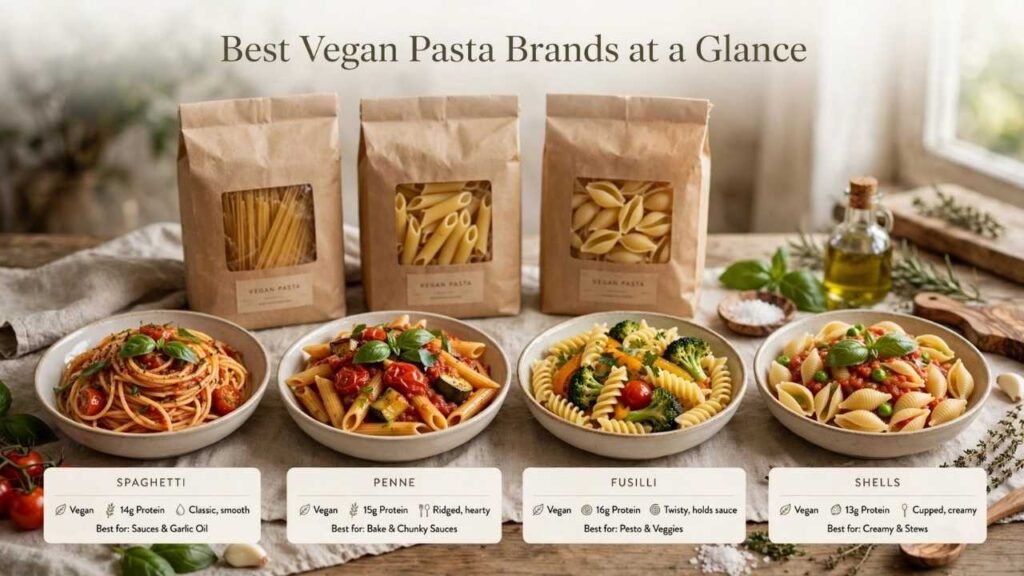
Choosing the right vegan pasta brand depends on what matters most to you. Some brands are better for traditional taste and texture, while others focus on protein, fiber, or gluten-free ingredients. The table below gives you a quick look at our top picks so you can find the right option without reading every review first.
| Brand | Best For | Main Type | Gluten-Free |
| Barilla | Best Overall | Durum wheat | Some varieties |
| Banza | High Protein | Chickpea | Yes |
| Jovial | Gluten-Free | Brown rice | Yes |
| De Cecco | Traditional Taste | Durum wheat | No |
| Colavita | Budget-Friendly | Wheat | No |
| Explore Cuisine | Legume Pasta | Beans/lentils | Yes |
| Ancient Harvest | Alternative Grains | Quinoa | Yes |
| Tinkyada | Rice Pasta | Brown rice | Yes |
These plant-based pasta brands offer different flavors, textures, prices, and nutrition profiles, making it easier to choose based on your needs.
The Best Vegan Pasta Brands
Barilla — Best Overall
Barilla is a strong choice if you want familiar vegan pasta with a classic taste and texture. Its range includes everyday shapes such as spaghetti, penne, fusilli, and ditalini. Barilla also provides vegan recipe ideas using its pasta, including pesto pasta, mushroom pasta, and pasta e fagioli.
One important point is that not every Barilla product is vegan. The company states that some products contain eggs, milk, or gluten, so shoppers should check the label of the exact product they plan to buy. Barilla also offers gluten-free, chickpea, and red lentil pasta.
Best for: everyday meals, traditional pasta lovers, and families looking for an easy-to-find option.
Banza — Best High-Protein Vegan Pasta
Banza is a popular choice for shoppers who want high-protein vegan pasta without giving up the convenience of regular pasta. Its main ingredient is chickpeas, making it a useful option for people looking for plant-based protein and more fiber in their meals.
Compared with traditional wheat pasta, chickpea pasta has a different taste and texture. It can have a mild bean-like flavor, so it may take some time to get used to if you normally eat durum wheat pasta. Still, it works well with strong sauces such as tomato, pesto, and creamy vegan sauces.
Banza is also a useful choice for people searching for gluten-free vegan pasta. As with any packaged food, check the current product label for ingredients and allergen details.
Best for: high protein, fiber, gluten-free diets, and people who want a filling pasta option.
Jovial — Best Gluten-Free Vegan Pasta
Jovial is worth considering if you need gluten-free vegan pasta but still want a familiar pasta experience. Its grain-based pasta options make it useful for people who cannot or prefer not to eat wheat. Brown rice pasta is one of the better-known choices in this category.
Rice-based pasta can have a softer texture than traditional durum wheat pasta, so cooking time matters. Keep a close eye on it and avoid overcooking if you want a firmer bite. It can work well with simple tomato sauces, pesto, vegetables, and other vegan pasta dishes.
Jovial is especially useful for shoppers searching for gluten-free pasta brands, organic pasta, and plant-based alternatives. However, product ingredients and certifications can vary by product, so check the current package before buying.
Best for: gluten-free diets, rice pasta lovers, and shoppers wanting a simple wheat-free option.
De Cecco — Best Traditional Pasta
If you want vegan pasta that tastes close to traditional pasta, De Cecco is a brand worth considering. Its classic Italian-style pasta is based on familiar wheat and semolina ingredients, giving it the taste and bite many people expect from conventional pasta.
This makes it a good choice for shoppers who are less interested in high-protein alternatives and simply want a dependable pasta for everyday meals. Spaghetti, penne, linguine, and other classic shapes can pair easily with tomato sauce, vegan pesto, vegetables, or simple olive-oil-based sauces.
Traditional wheat pasta is not automatically non-vegan. The key is checking the ingredient list for eggs, milk, or other animal-derived ingredients. Product formulas can differ, so always verify the exact package.
Best for: traditional pasta lovers, Italian-style meals, classic texture, and people who do not need gluten-free pasta.
Colavita — Best Budget-Friendly Vegan Pasta
Colavita can be a practical choice if you want affordable vegan pasta for regular meals. Traditional wheat pasta is often cheaper than specialty chickpea, lentil, or alternative-grain products, making it easier to fit into a weekly grocery budget.
A budget-friendly pasta does not need to be boring. Basic shapes such as spaghetti, penne, and rotini work with many sauces and vegetables. You can also buy larger packages or watch for store sales to reduce the price per serving.
When shopping, focus on the ingredients rather than assuming an entire brand is vegan. Check the package for eggs, milk, whey, or other animal-derived ingredients, especially when choosing specialty varieties.For shoppers comparing cheap vegan pasta, traditional wheat pasta can offer some of the best value while still providing the familiar taste and texture of regular pasta.
Best for: budget shoppers, everyday cooking, families, and simple pasta meals.
Explore Cuisine — Best Legume-Based Pasta
Explore Cuisine is a useful choice for shoppers who want to try legume-based pasta. Instead of relying only on traditional wheat, this type of pasta can use ingredients such as lentils, beans, or other plant foods. That makes it appealing to people looking for high-protein vegan pasta and more fiber.
Legume pasta usually has a stronger flavor and a different bite from standard wheat pasta. It can work especially well with rich tomato sauces, vegetables, pesto, and other flavorful ingredients. It is also a popular direction for people searching for gluten-free vegan pasta.The main thing to remember is that different products can have different ingredients and nutrition facts. Always check the current package before making a choice.
Best for: legume pasta fans, plant-based protein, gluten-free diets, and people who want more variety than standard wheat pasta.
Ancient Harvest — Best Alternative-Grain Pasta
Ancient Harvest is a good option for people who want something different from standard wheat pasta. Its alternative-grain products can appeal to shoppers interested in quinoa pasta, gluten-free choices, and plant-based meals with different ingredients.
Alternative-grain pasta can have a flavor and texture that is not exactly the same as traditional durum wheat pasta. That is not necessarily a drawback; it simply means you may need to choose your sauce carefully. Tomato sauces, roasted vegetables, herbs, and creamy vegan sauces can work well with these types of pasta.
This category is useful for shoppers searching for gluten-free pasta, whole-grain pasta, and other alternatives to conventional wheat products. As always, check the current package for ingredients, allergen information, and certifications.
Best for: alternative grains, gluten-free diets, and shoppers who want to explore pasta beyond traditional wheat.
Tinkyada — Best Brown Rice Pasta
Tinkyada is known as an option for people looking for brown rice pasta and gluten-free alternatives. Rice-based pasta can be helpful when wheat is not suitable for your diet, while still giving you familiar pasta shapes for everyday meals.
The biggest difference is texture. Brown rice pasta can become soft if it is cooked too long, so timing is important. Following the package directions and checking the pasta before the stated cooking time can help you get a firmer bite.
It also works well with many simple vegan sauces, including tomato sauce, pesto, roasted vegetables, and olive-oil-based dishes. If you are searching for gluten-free vegan pasta brands, Tinkyada is worth adding to your comparison list.Before buying, check the current product label for ingredients and allergen details.
Best for: brown rice pasta, gluten-free diets, and shoppers who want a wheat-free pasta option.
How We Chose the Best Vegan Pasta Brands
We did not choose the best vegan pasta brands based on popularity alone. A good pasta should match the needs of the person buying it. We looked at several factors, including ingredients, taste, texture, protein, fiber, gluten-free status, cooking performance, price, and overall value.
We also considered whether a product is useful for a specific need. For example, a chickpea pasta may be a better choice for someone seeking high-protein vegan pasta, while traditional wheat pasta may be better for someone who wants a familiar taste.
Vegan status was another key factor. A brand may sell vegan products without every product being vegan. Barilla, for example, says some products contain eggs or milk and recommends checking the individual label.Our goal is simple: help you find the pasta that best fits your diet, taste, cooking style, and budget.
Is Pasta Vegan?
Yes, many types of pasta are vegan, but you should not assume that every pasta product is vegan. Traditional dry pasta is often made with simple ingredients such as durum wheat or semolina and water. Fresh pasta is more likely to contain eggs, while filled or specialty pasta may contain dairy or other animal ingredients.
The safest approach is to check the ingredient list before buying. Look for eggs, egg whites, milk, whey, cheese, or other animal-derived ingredients. Also remember that a brand can offer both vegan and non-vegan products.
This is why searches such as “is pasta vegan,” “is all pasta vegan,” “is dry pasta vegan,” and “is fresh pasta vegan” are so common. The answer depends on the exact product.If you follow a strict vegan diet, checking the current package label is the simplest way to make a safe choice.
What Ingredients Make Pasta Non-Vegan?
Most shoppers know to look for eggs, but they are not the only ingredients that can make pasta unsuitable for vegans. Depending on the product, you may also find egg whites, egg albumin, milk, milk powder, whey, cheese, or other animal-derived ingredients.
Fresh pasta deserves extra attention because eggs are common in many traditional recipes. Filled pasta can also contain cheese, meat, or dairy-based fillings. Specialty pasta may use less common animal ingredients, so reading the full ingredient list is important.Do not assume that terms such as “vegetarian,” “natural,” or “plant-based” always mean vegan. Check for a clear vegan statement or certification when available.
If an ingredient is unclear, the safest option is to check the manufacturer’s website or contact the company.For people with allergies, always check the allergen statement as well as the vegan ingredients.
Types of Vegan Pasta Compared
There are many kinds of vegan pasta, and each has its own taste, texture, and nutrition profile. Traditional durum-wheat pasta is usually the closest to the familiar pasta experience. Whole-wheat pasta can provide more fiber and has a stronger grain flavor.
Chickpea and lentil pasta are popular legume-based pasta choices and can offer more protein and fiber than standard pasta. Brown rice and quinoa pasta are useful for people looking for gluten-free vegan pasta.
You can also find pasta made from black beans, edamame, peas, cassava, and other plant ingredients. Low-carb options, such as konjac-based products, are another category, although their texture can be very different.There is no single “best” type. The right choice depends on whether you care most about taste, protein, fiber, gluten-free needs, price, or cooking performance.
Which Vegan Pasta Is Best for Different Needs?
The best vegan pasta depends on what you want from your meal. If protein is your main goal, chickpea, lentil, bean, and other legume-based pastas are worth considering. If you need gluten-free vegan pasta, look for products made from rice, chickpeas, lentils, quinoa, or other gluten-free ingredients.
For people who want pasta that tastes like traditional pasta, durum-wheat varieties are often the easiest choice. If fiber matters most, whole-wheat and legume pasta can be useful options. Budget shoppers may prefer traditional wheat pasta because specialty products often cost more.
Families may also want familiar shapes and a mild taste, while meal-prep shoppers should focus on pasta that holds its texture after cooking.Instead of asking which brand is simply “healthiest,” ask which pasta best fits your diet, taste, budget, and cooking needs.
Vegan Pasta vs. Regular Pasta
The biggest difference between vegan pasta and regular pasta is not always the pasta itself. Many traditional dry pastas are already vegan because they are made from wheat and water. The main difference appears when pasta contains eggs, dairy, or other animal ingredients.
Alternative vegan pastas can also differ in nutrition. Chickpea, lentil, bean, and edamame pasta may provide more protein and fiber than traditional wheat pasta, while rice-based pasta can be useful for people avoiding gluten. However, higher protein does not automatically make one pasta better for everyone.
Taste and texture also matter. Traditional wheat pasta usually has a familiar bite, while legume and rice pasta can have a different flavor or texture.The best choice depends on your goals. Consider ingredients, protein, fiber, gluten-free needs, taste, cooking performance, and price before deciding.
How to Choose the Best Vegan Pasta
Start by checking the ingredient list. Look for simple ingredients and make sure the product does not contain eggs, milk, whey, cheese, or other animal-derived ingredients. If you need gluten-free pasta, confirm that the exact product meets your needs.
Next, think about taste and texture. Traditional wheat pasta is usually the closest to standard pasta, while chickpea and lentil pasta have a different bite. Then compare protein and fiber if nutrition is important to you.
Price also matters. Instead of looking only at the package price, compare the cost per serving. Cooking time is another useful factor, especially with gluten-free and legume pasta, which can become soft when overcooked.
Finally, check for vegan, gluten-free, or organic certifications when relevant. Product details can change, so always use the current package label and manufacturer information when making your final choice.
How to Cook Vegan Pasta Without Making It Mushy
Cooking vegan pasta well is simple, but different types need slightly different care. Start with plenty of boiling water and add salt before cooking. Then follow the package directions, but begin checking the pasta a little early. This is especially useful for chickpea, lentil, brown rice, and gluten-free pasta, which can become soft if left in water too long.
Taste a piece before draining it. If you like a firm al dente texture, remove the pasta when it still has a little bite. Save some pasta water if you are making a sauce. A small amount can help the sauce coat the pasta smoothly.
Avoid cooking pasta far beyond the suggested time. If you are making pasta salad, cooling the pasta quickly can also help.The key is simple: watch the cooking time, test early, and avoid overcooking.
Best Vegan Pasta Shapes for Different Sauces
The right vegan pasta shape can make a meal better because some shapes hold sauce more easily than others. Spaghetti and linguine work well with light tomato, garlic, oil, and vegetable sauces. Their long shape makes them a natural choice for classic pasta dishes.
Penne and rigatoni are great for thick tomato sauces, creamy vegan sauces, and baked pasta because sauce can collect inside the tubes. Fusilli and rotini have twists that hold pesto and chunky vegetable sauces well.For comfort foods, macaroni and shells work nicely with vegan cheese sauces and creamy dishes. Lasagna noodles are best for layered vegetable and tomato dishes.
If you are choosing between vegan spaghetti, vegan penne, vegan macaroni, or vegan fusilli, think about the sauce first. The best pasta is not only about ingredients; shape, texture, and sauce pairing can make a big difference.
How to Tell Whether a Pasta Brand Is Truly Vegan
The easiest way to tell whether pasta is vegan is to read the ingredient label. Look for animal ingredients such as eggs, egg whites, milk, whey, cheese, or meat-based fillings. Do not assume that every product from a vegan-friendly brand is automatically vegan.
A vegan certification can make shopping easier, but it is still useful to check the current package. If a product does not clearly explain an ingredient, visit the manufacturer’s website or contact the company.
This matters because some brands sell both vegan and non-vegan products. Barilla, for example, states that certain products contain eggs, milk, and gluten, while it also offers gluten-free, chickpea, and red lentil options. The company recommends checking each product label for current ingredient and allergen information.For strict vegans, people with allergies, or shoppers with special dietary needs, the exact product label matters more than the brand name alone.
FAQs
What is the best vegan pasta brand?
The best brand depends on your needs. Barilla is a strong everyday choice, while Banza is useful for high protein and Jovial for gluten-free options.
Is all pasta vegan?
No. Many dry pastas are vegan, but fresh, filled, and specialty pastas may contain eggs or dairy.
Is fresh pasta vegan?
Not always. Many fresh pasta recipes use eggs, so check the ingredients carefully.
What is the best high-protein vegan pasta?
Chickpea, lentil, bean, and edamame pastas are good categories to consider.
What is the best gluten-free vegan pasta?
Look for pasta made from brown rice, chickpeas, lentils, quinoa, or other gluten-free ingredients.
Is chickpea pasta vegan?
Many chickpea pastas are vegan, but always check the specific product label.
Is lentil pasta vegan?
Many are, but the ingredient list is the final check.
Conclusion
The best vegan pasta brands are not all best for the same reason. If you want an easy everyday option with a familiar taste, Barilla is a strong choice. For shoppers focused on protein and fiber, chickpea or lentil pasta such as Banza and other legume-based options can be a better fit. If you need gluten-free vegan pasta, brands such as Jovial and Tinkyada are worth considering.
Traditional wheat pasta can also be a great vegan choice, so you do not always need a specialty product. The most important step is to check the current ingredient label, especially if you have allergies or follow a strict vegan diet.
Think about what matters most to you: taste, texture, protein, fiber, gluten-free needs, cooking performance, or price. Once you know your priority, choosing the right vegan pasta brand becomes much easier.