
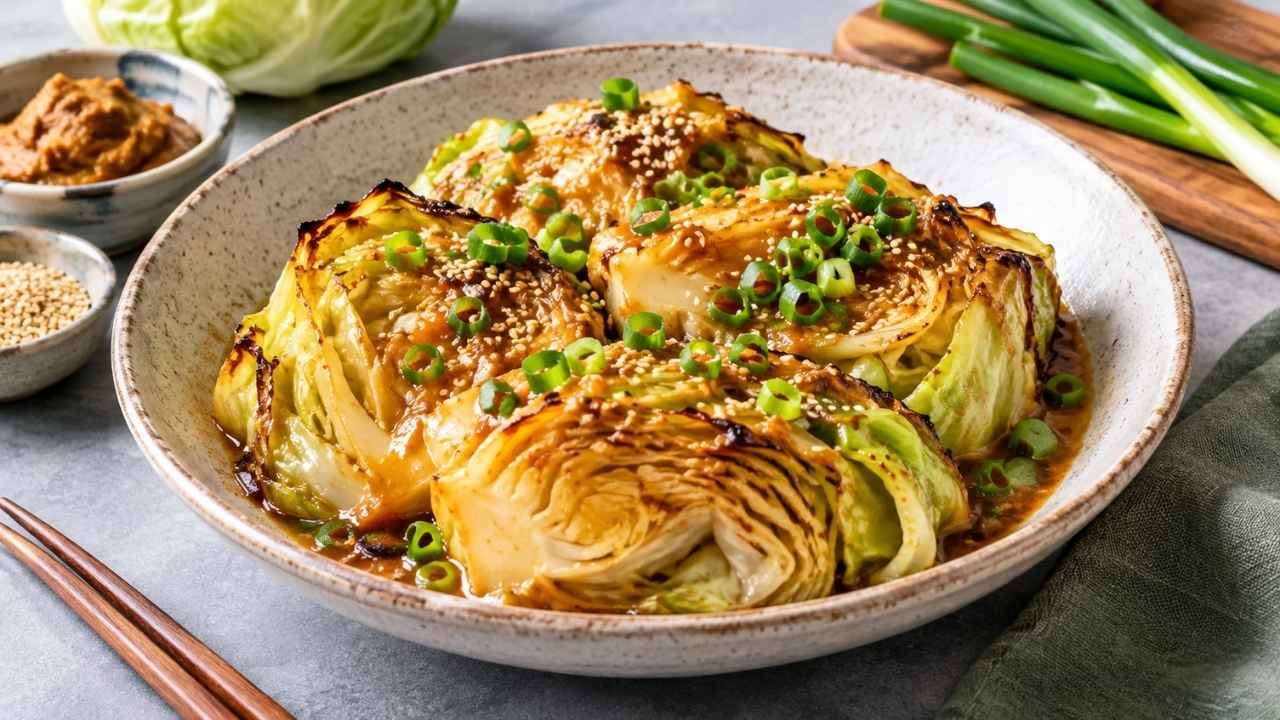
Braised miso cabbage is a simple way to turn everyday cabbage into a deeply flavorful and comforting dish. Thick cabbage wedges are lightly seared until the edges become golden and caramelized, then gently cooked in a savory miso braising sauce until tender. The result is soft, juicy cabbage with rich umami flavor and beautifully browned edges.
This miso braised cabbage recipe uses simple ingredients such as green cabbage, white miso, garlic, shallots, rice vinegar, and a little vegetable broth. A splash of sake adds extra depth, but you can easily use a suitable substitute. Whether you serve it as a cabbage side dish with rice, tofu, beans, or another main course, this easy braised cabbage recipe is a delicious way to enjoy cabbage with Japanese-inspired flavor.
Quick Answer
Braised miso cabbage is a simple, flavorful side dish made by searing cabbage wedges and gently braising them in a savory miso sauce. White miso adds rich umami flavor, while garlic, rice vinegar, and vegetable broth create balance. The cabbage becomes tender inside with caramelized edges. Serve this easy miso cabbage recipe with rice, tofu, beans, noodles, or your favorite main dish for a comforting meal.
What Is Braised Miso Cabbage?
Braised miso cabbage is a simple vegetable dish made by cooking cabbage slowly in a flavorful liquid with miso paste. The cabbage is first seared so the cut sides become browned and caramelized. It is then gently braised until the inside becomes tender while the edges keep their rich, savory flavor.
White miso gives the dish a mild, slightly sweet taste with plenty of umami. Unlike plain boiled cabbage, this method creates layers of flavor and a much better texture. You can serve miso braised cabbage as a side dish with rice, noodles, tofu, or beans. It also works well as part of a larger vegetable meal. The recipe is simple enough for a weeknight but flavorful enough for a special dinner.
Why You’ll Love This Miso Braised Cabbage
There are many reasons to make this miso cabbage recipe. First, it uses simple ingredients and does not require complicated cooking skills. Searing the cabbage creates caramelized edges, while braising makes the center soft and tender. The combination gives every bite a mix of rich and fresh flavors.
White miso adds deep umami without overpowering the natural sweetness of the cabbage. This braised cabbage recipe is also easy to adjust for different diets. Use vegetable broth and skip butter for a simple vegan version, or choose tamari if you need a gluten-free option. You can also change the cabbage, add chili, or finish it with sesame seeds. It is an easy way to make an everyday vegetable feel special.
Ingredients You’ll Need
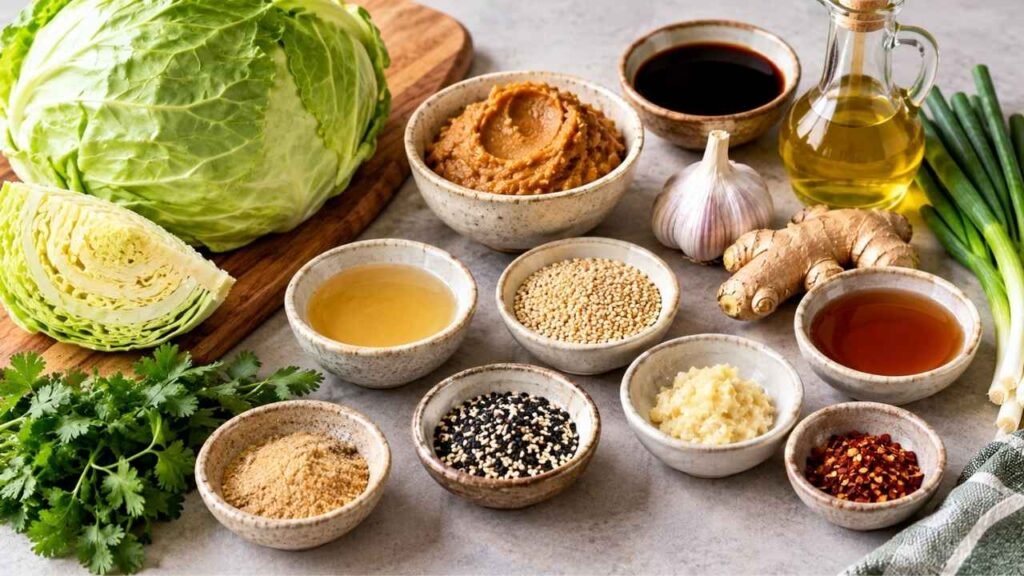
Green cabbage
White miso paste
Vegetable broth
Rice vinegar
Sake
Garlic
Shallots
Neutral oil
Sesame seeds
Sliced scallions
Dry white wine — optional substitute for sake
Tamari — optional substitute for soy sauce
How to Choose the Best Cabbage for Braising
Green cabbage is one of the best choices for this recipe because its leaves are firm and hold together well during braising. Look for a cabbage that feels heavy for its size and has tightly packed leaves. A medium-sized head is usually easy to cut into thick wedges. You can also use Napa cabbage, Savoy cabbage, or red cabbage if you want to change the texture and color.
Napa cabbage becomes softer more quickly, while Savoy cabbage has delicate, crinkled leaves. Red cabbage is firmer and may need a little more cooking time. For the most classic braised cabbage recipe, green cabbage is the easiest option. Whichever variety you choose, keep some of the core attached when cutting the wedges so they stay together while cooking.
What Type of Miso Is Best for Cabbage?
White miso is usually the easiest choice for braised cabbage because it has a mild, slightly sweet flavor. It adds the rich umami taste you want without covering the natural sweetness of cooked cabbage. Yellow miso can also work and gives a slightly stronger flavor. Red miso is more intense, salty, and earthy, so use less if you prefer a softer taste.
If you are new to miso, start with white miso paste and adjust the amount to your liking. Miso is a key part of the miso braising sauce, so the type you choose will affect the final dish. Avoid adding too much extra salt at the beginning. You can always taste the sauce and adjust the seasoning near the end.
How to Cut Cabbage for Braising
The way you cut the cabbage can make a big difference in the finished dish. Remove any damaged outer leaves, then cut the cabbage in half through the core. Cut each half into thick cabbage wedges, keeping a small amount of the core attached to each piece. The core helps hold the leaves together while you sear and braise them.
Avoid cutting very thin pieces because they can become soft too quickly. Thick wedges also give you a better contrast between caramelized edges and tender inner leaves. Before cooking, pat the cabbage dry with a clean towel. Dry cabbage will sear more easily and develop better color in the pan. Evenly sized wedges also help the cabbage cook at about the same rate.
How to Make Braised Miso Cabbage
Start by heating oil in a large oven-safe skillet or heavy pan over medium-high heat. Place the cabbage wedges cut-side down and let them cook without moving until the surface becomes deeply golden. Turn them and brown the other side. Remove the cabbage briefly if needed. In the same pan, cook the shallots and garlic until fragrant.
Mix white miso, vegetable broth, rice vinegar, and sake, then pour the mixture into the pan. Return the cabbage and spoon some of the liquid over the wedges. Cover the pan and let the cabbage braise gently until it becomes fork-tender. Check the thickest part with a fork or skewer. Finish with sesame seeds, scallions, or fresh herbs for a simple and flavorful miso cabbage recipe.
Why You Should Sear Cabbage Before Braising
Searing the cabbage before braising is one of the most important steps in this recipe. When the cut sides touch a hot pan, they develop golden-brown and caramelized edges. This creates a deeper flavor that you will not get from boiling or braising raw cabbage alone. The high heat also helps bring out the cabbage’s natural sweetness.
Place the wedges cut-side down and leave them alone for several minutes so they have time to brown properly. Do not crowd the pan because too many pieces can release moisture and prevent good browning. After searing, the cabbage is ready to absorb the savory miso braising sauce. This simple step gives the finished braised miso cabbage a richer taste and a more interesting texture.
How to Make the Miso Braising Sauce
The braising sauce brings all the flavors together. Start with white miso paste as the main ingredient, then mix it with vegetable broth, rice vinegar, and sake. The miso adds salty umami flavor, while rice vinegar gives the sauce a bright, fresh note. Sake adds depth, but you can replace it with dry white wine or extra broth if needed.
Garlic and shallots add more savory flavor as the sauce cooks with the cabbage. Be careful with additional soy sauce or salt because miso can already be quite salty. Taste the liquid before adding more seasoning. A good miso sauce should taste savory, slightly tangy, and balanced rather than overly salty. As the cabbage braises, it absorbs the sauce and becomes rich, tender, and full of flavor.
How to Get Tender Cabbage Without Making It Mushy
The goal is tender cabbage that still holds its shape. Start with thick wedges and keep part of the core attached. This gives the cabbage enough structure to soften without falling apart. Use only enough braising liquid to cook the cabbage without completely covering it. Keep the heat gentle after the sauce begins to simmer, and avoid turning the wedges too often.
Cooking time depends on the size and type of cabbage, so use texture as your main guide. The thickest part should be easy to pierce with a fork or skewer, but the wedge should still remain intact. If the cabbage becomes very soft and starts breaking apart, it has likely cooked too long. These simple steps help create meltingly tender cabbage with flavorful browned edges.
Easy Substitutions for Miso Braised Cabbage
This miso braised cabbage recipe is easy to adjust when you are missing an ingredient. If you do not have sake, use dry white wine, vegetable broth, or water. Tamari can replace soy sauce if you want a gluten-free option. Green cabbage can be swapped for Napa or Savoy cabbage, although they may cook more quickly.
You can replace shallots with a small yellow onion and use olive oil instead of neutral oil. For a vegan version, use plant-based ingredients and avoid regular butter if your variation includes it. If white miso is unavailable, yellow miso can work well, while stronger red miso should be used in a smaller amount. These simple swaps let you make a flavorful braised cabbage recipe without needing a long shopping list.
What to Serve With Miso Braised Cabbage
Miso braised cabbage works well with many simple foods. Steamed white rice is an easy choice because it absorbs the savory sauce. You can also serve the cabbage with brown rice, quinoa, noodles, or a warm grain bowl. For a plant-based meal, pair it with tofu, white beans, chickpeas, or lentils.
The rich miso flavor also works nicely beside roasted mushrooms or other vegetables. If you want a heartier meal, serve the cabbage with a simple protein and let the cabbage act as the vegetable side. Add sesame seeds, scallions, chili oil, or fresh herbs just before serving for extra flavor and texture. Because this is a savory cabbage dish, keeping the other parts of the meal simple allows the miso flavor and caramelized cabbage to stand out.
Common Mistakes to Avoid When Braising Cabbage
A few simple mistakes can affect the texture of your braised cabbage recipe. Cutting the cabbage too thin can make it become soft before the sauce has developed enough flavor. Removing too much of the core can also cause the wedges to fall apart. Another common mistake is skipping the searing step.
Without it, you lose much of the caramelized flavor that makes this dish special. Adding too much liquid can make the cabbage watery instead of rich and flavorful. Also, avoid adding too much salt before tasting the sauce because miso is naturally salty. Finally, do not overcook the cabbage. It should be fork-tender but still hold its shape. Keeping these points in mind will help you make tender, savory miso cabbage with a better texture every time.
Variations You Can Try
Once you know the basic method, there are many ways to change this miso cabbage recipe. For a bright version, add fresh lemon juice or lemon zest to create lemon miso cabbage. For extra richness, stir in a little butter to make a simple miso butter sauce. You can also add coconut milk and white beans for a creamy coconut miso braised cabbage meal.
If you enjoy heat, add chili flakes, chili oil, or a small amount of gochujang. Toasted sesame seeds give the dish a nutty finish, while scallions add freshness. For a heartier plant-based option, serve the cabbage with beans or tofu. These variations keep the main cooking method the same while allowing you to change the flavor based on what you have available.
Storage and Reheating Tips
Leftover braised miso cabbage can be stored in an airtight container in the refrigerator. Let the cabbage cool before placing it in the container, and keep any extra sauce with the wedges so they stay moist. When reheating, use a skillet over medium-low heat and add a small splash of water or vegetable broth if the sauce has become thick.
Heat gently until the cabbage is warmed through. Avoid very high heat because the cabbage can dry out or become too soft. The leftovers can also be warmed in the microwave in short intervals. If you are preparing the dish ahead, slightly undercook the cabbage so it has room to soften during reheating. Add fresh sesame seeds, scallions, or herbs after reheating to bring back a fresh finish.
FAQs
Can I use Napa cabbage?
Yes. Napa cabbage works well, but it cooks faster and becomes softer than green cabbage.
Can I make it without sake?
Yes. Replace sake with dry white wine, vegetable broth, or water.
Which miso is best?
White miso is the easiest choice because it has a mild, slightly sweet flavor.
Why did my cabbage fall apart?
The wedges may have been too thin, the core may have been removed, or the cabbage may have been overcooked.
How do I know when cabbage is done?
It is ready when the thickest part is fork-tender but the wedge still holds together.
Can I make this recipe vegan?
Yes. Use vegetable broth and plant-based ingredients for a fully vegan version.
Can I prepare it ahead?
Yes. Cook it slightly underdone, refrigerate it, then gently reheat it before serving.
Conclusion
Braised miso cabbage is proof that a simple vegetable can become a flavorful and satisfying dish with the right cooking method. Searing the wedges first creates caramelized edges, while gentle braising makes the center tender and allows it to absorb the savory miso sauce. White miso, garlic, rice vinegar, and vegetable broth create a balanced flavor without requiring complicated ingredients.
You can keep the recipe simple or add lemon, chili, sesame, coconut milk, or beans for a different version. Serve it with rice, tofu, noodles, or another favorite main dish. Once you learn how to keep the wedges thick and avoid overcooking them, this miso cabbage recipe becomes an easy and reliable way to make cabbage taste rich, comforting, and special.