
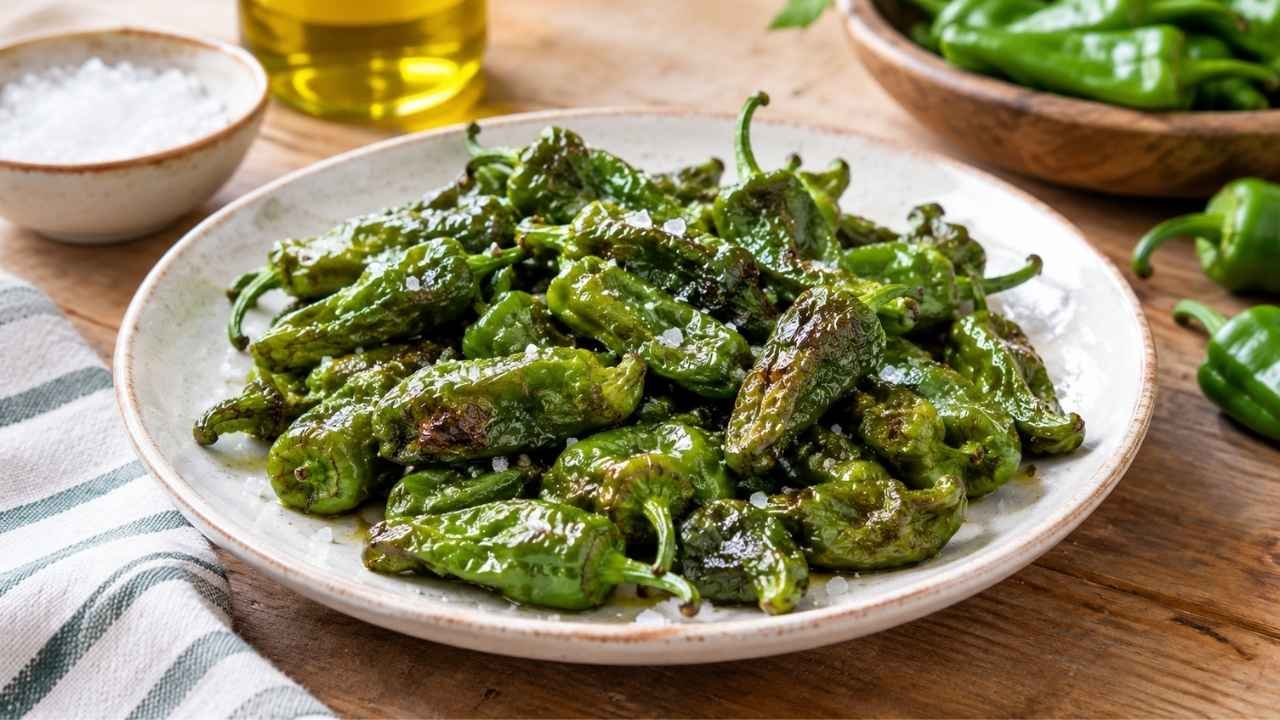
Pimientos de Padrón are small Spanish green peppers loved for their simple flavor, quick cooking, and fun mix of mild and spicy bites. They are a classic part of Spanish tapas and can be ready in just a few minutes. The traditional Padrón peppers recipe needs only a few basic ingredients: fresh peppers, olive oil, and flaky or coarse sea salt.
The best way to cook these peppers is to heat them in a hot pan until their skins become blistered, browned, and slightly charred. This simple method brings out their natural flavor while giving them a soft, tender texture.
In this guide, you’ll learn how to cook Pimientos de Padrón at home, how to get perfectly blistered peppers, why some Padrón peppers are spicy, and what to serve with them. Whether you are making a quick appetizer or an easy Spanish side dish, this recipe is simple and delicious.
Quick Answer
Pimientos de Padrón are small Spanish green peppers traditionally cooked in olive oil until their skins become blistered and lightly charred, then finished with coarse or flaky sea salt. Most are mild, but some can be surprisingly spicy. This easy Padrón peppers recipe takes only a few minutes and makes a delicious Spanish tapas dish. Serve them hot as an appetizer, side dish, or snack.
What Are Pimientos de Padrón?
Pimientos de Padrón are small green peppers from Galicia, Spain, especially linked with the areas around Padrón and Herbón. They are also known as Padrón peppers and are a popular part of Spanish cooking. These peppers have a thin skin, a fresh green color, and a mild, slightly sweet taste when cooked. They are often served as Spanish tapas, where simple ingredients let their natural flavor stand out.
A traditional Pimientos de Padrón recipe is very simple. The peppers are usually cooked in olive oil until the skin becomes blistered and lightly browned. They are then finished with coarse sea salt or flaky salt. One interesting thing about these peppers is their heat. Most are mild, but some can be surprisingly spicy. This small surprise is part of what makes eating Padrón peppers so enjoyable.
What Do Padrón Peppers Taste Like?
Padrón peppers have a fresh, grassy flavor with a gentle sweetness. When they are raw, their taste is mild and green, but cooking changes them in a delicious way. Once they are cooked in hot olive oil, the skin becomes blistered and slightly charred. This gives the peppers a deeper, smoky flavor while keeping the inside soft and tender.
A good Padrón peppers recipe should create a mix of textures. The outside should have browned or dark spots, while the inside should remain juicy and tender. The final touch of flaky sea salt adds a simple salty taste that works well with the natural sweetness of the peppers.
Most Padrón peppers are mild, but their heat can vary. This means one pepper may taste sweet while another may have a stronger kick. That small surprise is part of the traditional Spanish tapas experience.
Are Padrón Peppers Spicy?
One of the most interesting things about Padrón peppers is their changing heat level. Most peppers are mild, but some can be surprisingly hot. This is why people often describe eating Pimientos de Padrón as a small surprise with every bite. You cannot always know how spicy an individual pepper will be just by looking at it.
The heat can change because of growing conditions, plant variety, maturity, and other factors. Because of this, it is better not to assume that every pepper will have the same level of spice.
If you are new to Spanish Padrón peppers, try a small bite first. Most of the time, you will get a mild, fresh flavor with a little sweetness. Then, every now and then, you may find one with more heat. This unusual quality makes Padrón peppers a fun Spanish tapas dish.
Ingredients for Pimientos de Padrón
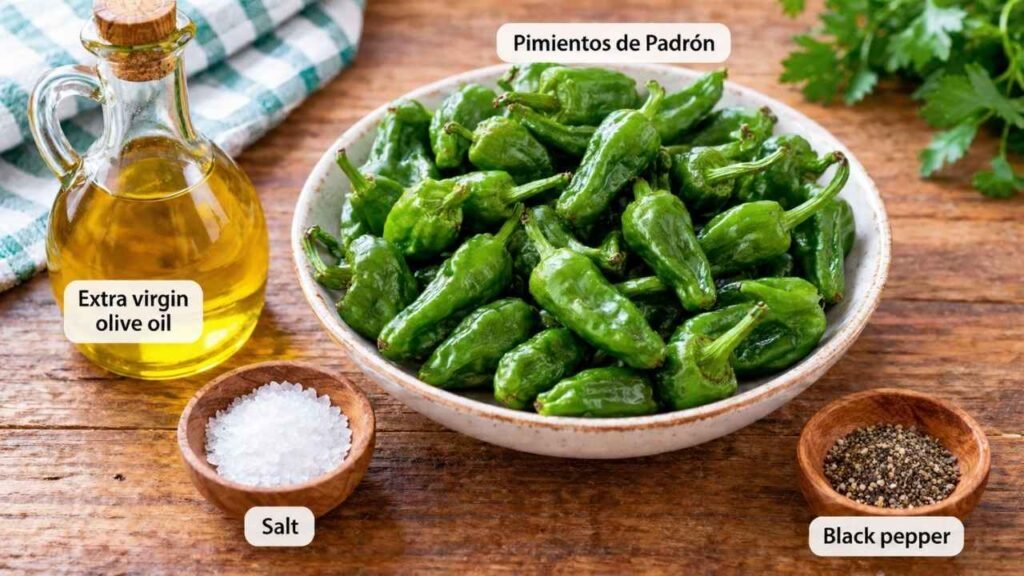
You only need a few simple ingredients to make an easy Pimientos de Padrón recipe at home. The main ingredient is, of course, fresh Padrón peppers. Look for peppers that are firm, fresh, and bright green. Avoid peppers that look very soft, damaged, or dried out.
For cooking, use good-quality olive oil. Extra-virgin olive oil adds a rich taste, while a neutral oil can also work if you prefer a lighter flavor. You will also need coarse sea salt or flaky sea salt for finishing.
Some recipes add garlic for extra flavor, but it is not needed for the traditional simple version. You can also use shishito peppers if Padrón peppers are not available. The cooking method is very similar, although the flavor and heat may be slightly different. Keeping the ingredient list short lets the peppers remain the star.
How to Cook Pimientos de Padrón
Cooking Pimientos de Padrón is quick and easy. Start by washing the peppers and drying them very well with a clean towel. This step is important because water can cause hot oil to splatter. You do not need to remove the seeds, and the stems can usually stay attached.
Next, heat a skillet over medium-high to high heat and add enough olive oil to lightly coat the pan. Once the oil is hot, add the peppers in a single layer. Avoid overcrowding the pan because too many peppers can steam instead of blister.
Let the peppers cook until their skins develop dark blistered spots. Turn them with tongs so different sides can brown. They should become soft but not mushy. Once they are ready, transfer them to a plate and sprinkle with flaky sea salt. Serve your Spanish peppers while they are still hot.
How Do You Know When Padrón Peppers Are Done?
Knowing when Padrón peppers are ready is easier when you focus on their appearance and texture. Properly cooked peppers should have blistered skin with brown or dark spots across several areas. Some parts may look slightly charred, which adds a pleasant smoky taste.
The peppers should also feel softer than when they were raw. However, they should not become completely limp or mushy. A good result has a tender inside with lightly crisp, browned skin.
If the peppers are still bright green and firm, they probably need more time in the pan. If the skin is deeply burned and the inside is very soft, they may have been cooked for too long.
For the best blistered Padrón peppers, keep the heat high enough to create color without burning the oil. Once they look browned, blistered, and tender, remove them from the pan and add coarse sea salt before serving.
The Best Pan and Oil for Padrón Peppers
The right pan can make it easier to cook Padrón peppers properly. A heavy skillet, especially a cast iron skillet, works well because it holds heat and helps the peppers blister quickly. A regular heavy frying pan can also give good results.
For the oil, olive oil is a classic choice for a traditional Spanish recipe. Extra-virgin olive oil adds a rich flavor and works especially well when finishing the dish. Some cooks prefer a neutral oil for the main cooking step, then add extra-virgin olive oil near the end.
The most important point is to use enough oil to lightly coat the pan without making the peppers greasy. Heat the pan well before adding the peppers. A hot cooking surface helps create those attractive blistered and charred spots that make Spanish-style Padrón peppers so tasty.
Common Mistakes When Cooking Padrón Peppers
Even though a Padrón peppers recipe is simple, a few mistakes can affect the final result. The first mistake is using wet peppers. Always dry them well before placing them in hot oil. Extra water can cause splattering and may stop the skin from browning properly.
Another common mistake is overcrowding the pan. If the peppers are packed together, they may steam instead of blister. Cook them in batches when needed. Starting with a cold pan can also lead to soft peppers without the deep brown spots you want.
Try not to move the peppers constantly. Let them sit against the hot pan long enough to develop color before turning them. Finally, avoid overcooking them. The goal is blistered skin and tender flesh, not completely soft peppers.
Finish the cooked peppers with coarse or flaky sea salt and serve them hot for the best texture and flavor.
Padrón Peppers vs. Shishito Peppers
Padrón peppers and shishito peppers look quite similar, and both are often cooked by blistering them in a hot pan. However, they come from different food traditions. Padrón peppers are linked with Galicia, Spain, while shishito peppers are commonly associated with Japanese cooking.
Both peppers usually have a fresh, green flavor and thin skin. They can become sweet and smoky when cooked over high heat. Their heat can also vary, although shishito peppers are generally known for being mild.
If you cannot find fresh Padrón peppers, shishito peppers can be a useful substitute. You can cook them with olive oil and sea salt using almost the same method. However, the final flavor will not be exactly the same.
For an authentic Pimientos de Padrón recipe, use Padrón peppers when possible. For a quick alternative, shishito peppers are an easy choice.
Other Ways to Cook Padrón Peppers
Pan-frying is the traditional and easiest way to make blistered Padrón peppers, but it is not the only method. You can also cook these Spanish peppers on a grill, in an oven, or in an air fryer.
For grilled Padrón peppers, place them over medium-high heat and turn them until the skin develops dark marks. This method gives them a strong smoky taste. Oven roasting is another simple option. Spread the peppers in one layer on a baking tray, add a little oil, and roast until they soften and blister.
An air fryer can also work well when you want a quick cooking method with less oil. The exact cooking time can vary depending on the appliance and pepper size.
Whichever method you choose, look for the same signs: browned, blistered skin and tender flesh. Finish the peppers with flaky salt before serving.
How to Serve Pimientos de Padrón
Freshly cooked Pimientos de Padrón are best served hot, soon after they leave the pan. Their simple flavor makes them a great Spanish tapas dish, appetizer, or side. The classic serving method is very easy: place the blistered peppers on a plate and sprinkle them with coarse sea salt or flaky salt.
You can serve them with crusty bread, which is useful for enjoying any flavorful oil left on the plate. They also pair well with other Spanish foods, such as cured meats, cheese, olives, and other small tapas dishes.
For a simple meal, serve Padrón peppers beside grilled meat, seafood, potatoes, or a fresh salad. A little extra-virgin olive oil can also be drizzled over the peppers before serving.
The key is to keep the toppings simple. The natural pepper flavor, smoky skin, olive oil, and salt are enough to make this easy Spanish dish satisfying.
Can You Eat Padrón Peppers Whole?
Yes, Padrón peppers are usually eaten whole, including the skin and seeds. Their small size and thin skin make them easy to eat after cooking. You do not normally need to remove the seeds before making a Pimientos de Padrón recipe.
The stem is a little different. Many people leave the stem attached because it works as a natural handle, making the pepper easy to pick up and eat. Others remove the stem before serving. The choice depends on personal preference and local tradition.
If the peppers are fresh and properly cooked, the skin should become soft and slightly blistered. The seeds are also edible, although a pepper with more heat may taste stronger when eaten whole.
For a simple Spanish tapas experience, cook the peppers whole, leave the stems on, and let everyone pick them up individually. Just remember that one pepper may be hotter than another.
How to Store and Reheat Padrón Peppers
Pimientos de Padrón taste best when served immediately, but leftovers can be stored for later. Allow the cooked peppers to cool before placing them in an airtight container. Keep them in the refrigerator and use them within a few days for the best quality.
When reheating, a skillet is usually better than a microwave because it can help bring back some of the roasted texture. Warm the peppers over medium heat until they are heated through. You can add a very small amount of olive oil if the pan feels dry.
Keep in mind that reheated Padrón peppers may not be as crisp or blistered as freshly cooked ones. Their skin can become softer after refrigeration.
For the best result, make only as many peppers as you expect to eat. This simple dish is quick to prepare, so freshly blistered peppers will always give you the best flavor and texture.
FAQs
Are Padrón peppers always mild?
No. Most Padrón peppers are mild, but some can have noticeable heat. This natural variation is part of their appeal.
Why are some Padrón peppers spicy?
Heat can vary because of growing conditions, maturity, and other factors. You cannot always tell which pepper will be hot by looking at it.
Can I use shishito peppers instead?
Yes. Shishito peppers can work as a substitute when fresh Padrón peppers are unavailable. The taste and heat may be slightly different.
Do I need to remove the stems?
No. You can leave the stems attached and use them as a handle. You can also remove them if you prefer.
Do I need to remove the seeds?
No. The seeds are edible, so you can cook and eat the peppers whole.
What oil is best for Padrón peppers?
Olive oil is a classic choice and adds great flavor. A neutral cooking oil can also be used.
Can I make Padrón peppers in an air fryer?
Yes. An air fryer can cook them quickly with less oil, although the texture may differ from traditional pan-blistered peppers.
How long do Padrón peppers take to cook?
They usually cook quickly over high heat. Look for blistered skin, brown spots, and tender flesh rather than relying only on a fixed time.
What should I serve with Padrón peppers?
Serve them with crusty bread, cheese, olives, cured meats, potatoes, seafood, or other Spanish tapas.
Conclusion
Pimientos de Padrón are proof that a simple recipe can be full of flavor. With just fresh Padrón peppers, olive oil, and sea salt, you can make a tasty Spanish tapas dish in minutes. The key is to use a hot pan, keep the peppers dry, and cook them until the skins become blistered, browned, and slightly charred.
Most peppers are mild, but an occasional spicy one makes every bite a little more exciting. Serve your blistered Padrón peppers hot with crusty bread or your favorite tapas. Whether you pan-fry, grill, or air-fry them, this easy recipe is a great way to enjoy the fresh, smoky flavor of Spanish Padrón peppers at home.