
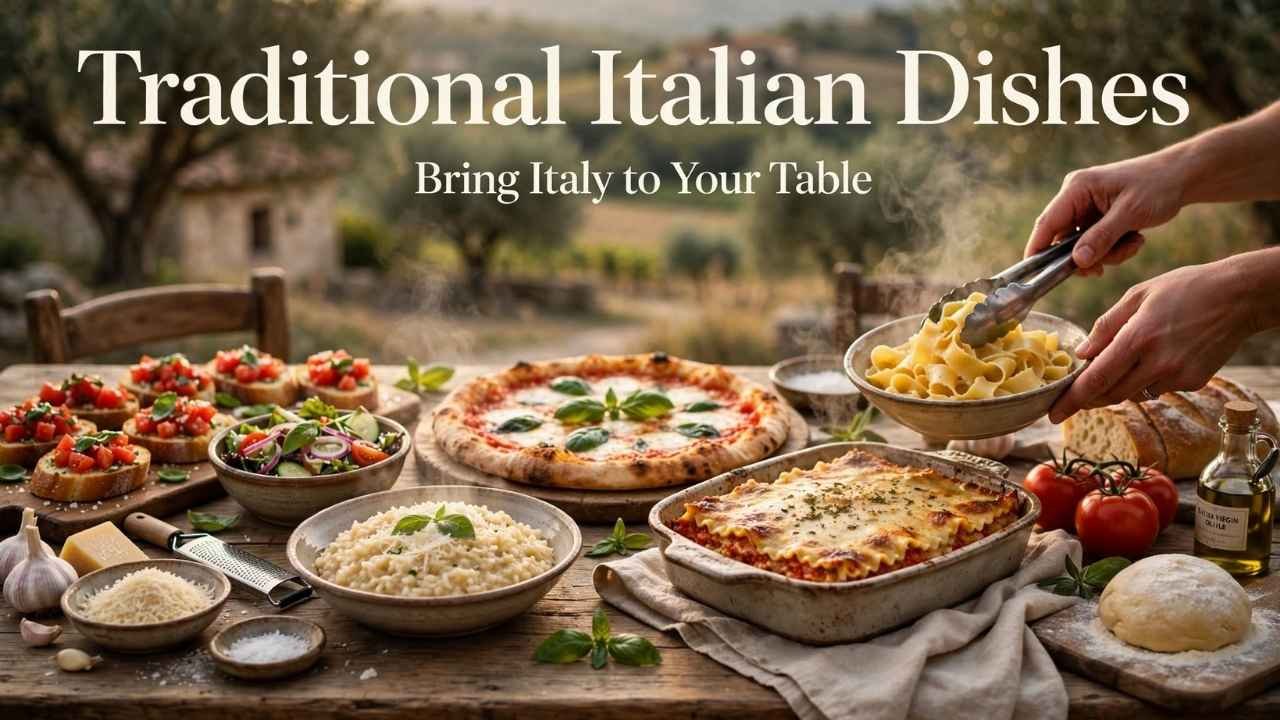
Italian food is loved around the world for its simple ingredients, rich flavors, and strong regional traditions. But traditional Italian dishes are much more than pizza and pasta. Every part of Italy has its own regional Italian cuisine, shaped by local ingredients, history, seasons, and family cooking traditions.
From creamy risotto in the north to fresh seafood in coastal areas and classic pasta dishes in Rome, Italian food offers remarkable variety.
In this guide, you’ll discover authentic Italian food and some of the most famous Italian dishes, including traditional pasta, pizza, meat, seafood, soups, side dishes, and desserts.
We’ll also explore Italian food culture, traditional ingredients, regional specialties, and the customs that make Italian cooking special. Whether you want traditional Italian recipes to make at home or foods to try during a trip to Italy, this guide will help you explore Italy’s culinary traditions.
Quick Answer
Traditional Italian dishes are regional foods made with simple, fresh ingredients and time-honored cooking methods. Popular examples include Pizza Margherita, Carbonara, Cacio e Pepe, Lasagna, Risotto alla Milanese, Bistecca alla Fiorentina, Pesto Genovese, Arancini, Parmigiana di Melanzane, and Tiramisu. Italian cuisine varies widely by region, with each area offering unique recipes, ingredients, and food traditions. From northern risotto to southern pasta and Sicilian desserts, these dishes reflect Italy’s rich culinary heritage.
What Are Traditional Italian Dishes?
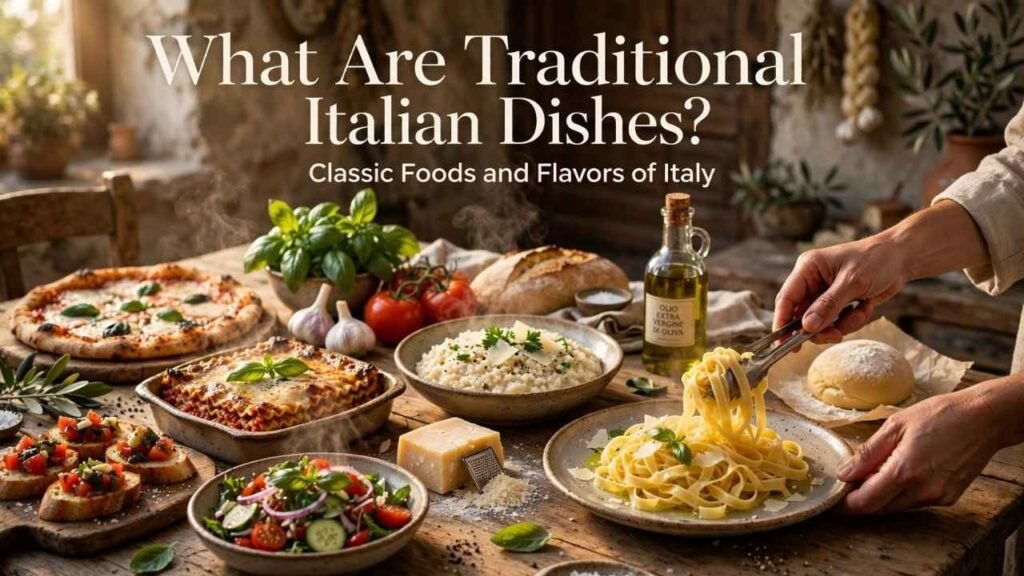
Traditional Italian dishes are foods connected to Italy’s long history, local ingredients, and family cooking traditions. Rather than having one single style, Italian cuisine changes from region to region. A dish that is common in Rome may be very different from one found in Sicily, Tuscany, or Northern Italy.
Traditional Italian food often uses simple, fresh ingredients such as tomatoes, olive oil, vegetables, cheese, herbs, pasta, rice, and seafood. Many recipes have been prepared by families for generations and remain an important part of Italian food culture.
Regional Italian Cuisine
Italy has many regional food traditions, which is why regional Italian dishes are so varied. Northern areas are known for foods such as risotto and polenta, while central Italy is famous for Roman and Tuscan recipes. Southern regions often feature tomatoes, vegetables, seafood, and pasta. Sicily and Sardinia also have their own distinctive dishes and ingredients. This regional variety is one of the main features of traditional Italian cuisine.
What Makes Italian Food Traditional and Authentic?
Authentic Italian food is closely linked to local ingredients, simple preparation, and recipes passed down through generations. Traditional Italian cooking usually focuses on making a few good ingredients work together instead of using too many flavors at once.
Traditional Italian Ingredients
Common ingredients include extra virgin olive oil, tomatoes, fresh basil, garlic, cheese, pasta, vegetables, and seasonal produce. Regional foods may also use guanciale, Pecorino Romano, Parmigiano-Reggiano, seafood, or local meats. The use of fresh and regional ingredients helps give traditional Italian dishes their distinct taste and identity.
Traditional Italian Dishes by Region
Traditional Italian dishes by region show how different Italy’s food traditions can be. Northern Italy is known for rice, butter, cheese, and polenta, while central areas are famous for pasta, meat, and simple vegetable dishes. Southern Italy often uses tomatoes, olive oil, vegetables, and seafood. Sicily and Sardinia have their own strong food traditions shaped by island life and local history.
Northern Italy
Northern Italian food includes dishes such as Risotto alla Milanese, Ossobuco, Polenta, and Pesto Genovese. Lombardy, Liguria, Piedmont, Veneto, and Emilia-Romagna each have distinctive cooking styles. Rich cheeses, rice, butter, cornmeal, fresh pasta, and local meats are common in many northern recipes.
Central Italy
Central Italian cuisine includes famous foods from Lazio, Tuscany, Umbria, Marche, and Abruzzo. Rome is known for Carbonara, Cacio e Pepe, and Amatriciana, while Tuscany is known for Ribollita and Bistecca alla Fiorentina. These dishes often use simple ingredients and strong local traditions.
Southern Italy and the Islands
Southern Italian dishes often feature tomatoes, olive oil, vegetables, pasta, and seafood. Campania is famous for Neapolitan pizza, while Puglia is known for Orecchiette. Sicilian food includes Arancini, Cannoli, and Pasta alla Norma, while Sardinian cuisine features its own pasta, seafood, bread, and meat specialties.
Classic Italian Antipasti and Starters
Italian antipasti are small dishes served before the main meal. They can include vegetables, cured meats, cheese, bread, seafood, and simple salads. Popular examples include Bruschetta, Caprese Salad, Prosciutto, and regional cheeses. These starters are often simple but full of fresh flavor.
Popular Italian Starters
Bruschetta combines toasted bread with ingredients such as tomatoes, basil, garlic, and olive oil. Caprese Salad pairs tomatoes, mozzarella, basil, and olive oil. Other traditional Italian starters may include cured meats, marinated vegetables, olives, and local cheeses. Together, these foods show how Italian cooking can create satisfying dishes from a small number of fresh ingredients.
Traditional Italian Pasta Dishes
Traditional Italian pasta dishes are among the best-known foods from Italy. Different regions use different pasta shapes, sauces, and ingredients. Rome is famous for Carbonara and Cacio e Pepe, Bologna for Tagliatelle al Ragù, and Puglia for Orecchiette.
Famous Italian Pasta
Spaghetti Carbonara traditionally combines pasta with eggs, Pecorino Romano, guanciale, and black pepper. Cacio e Pepe uses pasta, Pecorino Romano, and black pepper, while Amatriciana adds tomato and guanciale. Other classic Italian recipes include Lasagna, Tortellini, Ravioli, Gnocchi, and Orecchiette. These dishes demonstrate the close connection between pasta shapes, sauces, ingredients, and regional Italian cuisine.
Traditional Italian Pizza and Breads
Traditional Italian pizza is strongly connected with regional cooking, especially Naples. Pizza Margherita is made with tomatoes, mozzarella, basil, and olive oil. Traditional Italian bread also has many regional forms, including focaccia and other local loaves.
Neapolitan Pizza and Focaccia
Neapolitan pizza is known for its soft, airy crust and simple toppings. Focaccia is another popular Italian bread, especially associated with Liguria. Traditional versions may include olive oil, herbs, tomatoes, or vegetables. These foods show the Italian approach of using quality ingredients without adding unnecessary complexity to the recipe.
Classic Italian Soups, Rice, and Side Dishes
Italian cuisine includes many comforting soups, rice dishes, and side dishes. These foods often depend on vegetables, grains, beans, cheese, and seasonal ingredients. Risotto alla Milanese is a famous northern rice dish, while Ribollita is a traditional Tuscan soup made with vegetables, beans, and bread.
Traditional Italian Comfort Foods
Minestrone is a vegetable-based soup that can change according to the season and region. Polenta is especially important in Northern Italy and can be served with meat, vegetables, or cheese. Parmigiana di Melanzane is another traditional favorite made with eggplant, tomato sauce, cheese, and herbs. These dishes highlight the simple, filling side of Italian home cooking.
Traditional Italian Meat and Seafood Dishes
Italian cooking includes a wide range of traditional meat and seafood dishes, with recipes changing according to local resources. Inland regions often feature beef, pork, and veal, while coastal areas use fresh fish and shellfish. Famous dishes include Bistecca alla Fiorentina, Ossobuco, Saltimbocca alla Romana, and Cotoletta alla Milanese.
Italian Meat and Seafood Specialties
Bistecca alla Fiorentina is a famous Tuscan steak, while Ossobuco is a Milanese veal dish. Coastal Italian cuisine includes foods such as Baccalà, Bottarga, and seafood risotto. These dishes show how geography influences Italian food. Mountain, countryside, and coastal communities have developed different recipes based on the ingredients traditionally available to them.
Traditional Italian Sauces and Essential Ingredients
Many Italian dishes depend on a few important sauces and ingredients. Pesto Genovese, Bolognese, Amatriciana, and Arrabbiata are widely known examples. Traditional sauces often rely on tomatoes, olive oil, cheese, herbs, meat, or nuts rather than complicated mixtures.
Essential Italian Ingredients
Extra virgin olive oil, tomatoes, garlic, basil, Pecorino Romano, Parmigiano-Reggiano, guanciale, and fresh pasta are important ingredients in many Italian recipes. Regional products also matter, including local cheeses, cured meats, seafood, and vegetables. Using suitable ingredients helps preserve the traditional flavors and character of authentic Italian cooking.
Traditional Italian Desserts and Sweets
Italian desserts are an important part of traditional Italian food and include both simple family recipes and famous regional specialties. Many use ingredients such as mascarpone, ricotta, nuts, chocolate, fruit, coffee, and pastry. Different regions have developed their own sweets for everyday meals, celebrations, and holidays.
Famous Italian Desserts
Tiramisu is one of the most recognizable Italian desserts, made with coffee, mascarpone, ladyfingers, and cocoa. Cannoli is a famous Sicilian sweet filled with sweetened ricotta. Other traditional Italian desserts include Biscotti, Gelato, Panettone, and regional pastries. These sweets add variety to Italian cuisine and reflect the country’s strong regional food traditions.
How Italian Meals Are Traditionally Structured
A traditional Italian meal can include several courses, although people do not always eat every course at every meal. The structure commonly begins with antipasti, followed by a primo such as pasta or risotto. A secondo may include meat or seafood, while vegetables or other sides are served as contorni.
Antipasti, Primi, Secondi, and Dolci
Antipasti are starters, while primi include pasta, rice, or soup. Secondi usually feature meat or seafood, and contorni are side dishes. Finally, dolci are desserts. This meal structure helps explain how traditional Italian dishes fit together and why Italian dining is about more than one main plate.
Traditional Italian Ingredients and Seasonal Cooking
Seasonal cooking is an important part of Italian food traditions. Traditional recipes often use ingredients when they are naturally available and fresh. This can mean ripe tomatoes and vegetables during warmer months, mushrooms in autumn, or hearty soups and grains during colder weather.
Fresh and Regional Ingredients
Italian cooks often build meals around fresh vegetables, olive oil, tomatoes, cheese, grains, herbs, meat, and seafood. Regional ingredients give dishes their local character. Simple recipes can therefore taste different from one area to another. This focus on freshness, seasonality, and local products is a key part of authentic Italian cuisine.
Traditional Italian Food Culture and Dining Traditions
Italian food culture is strongly connected to family, community, local traditions, and shared meals. Food is often treated as more than something needed for energy. Preparing and sharing a meal can be an important social activity, especially during weekends, holidays, and family gatherings.
Family Recipes and Italian Traditions
Many traditional Italian recipes have been passed from one generation to another. Families may have their own versions of pasta sauces, soups, desserts, and regional specialties. Local festivals and holidays also influence what people cook. This connection between food, family, place, and tradition helps preserve Italian culinary traditions.
Traditional Italian Dishes to Try at Home or in Italy
Whether you are learning to cook or planning a trip, there are many traditional Italian dishes to try. Beginners can start with simple recipes such as Bruschetta, Pasta Pomodoro, Cacio e Pepe, or Caprese Salad. Travelers can explore regional specialties by choosing foods connected to the city or region they visit.
Easy Dishes and Regional Specialties
For home cooking, simple Italian recipes with fresh ingredients are often a good starting point. When traveling, try local dishes rather than only familiar international favorites. Carbonara in Rome, pizza in Naples, Bistecca in Florence, and Cannoli in Sicily can provide a closer connection to regional Italian food and local culinary traditions.
FAQs
What are traditional Italian dishes?
Traditional Italian dishes are recipes connected to Italy’s regions, ingredients, history, and family cooking traditions. They include pasta, pizza, soups, meat, seafood, vegetables, and desserts.
What food is Italy famous for?
Italy is famous for pizza, pasta, risotto, lasagna, gelato, and tiramisu, along with many regional specialties.
What makes Italian food authentic?
Fresh ingredients, regional traditions, traditional methods, and simple preparation are important parts of authentic Italian food.
What are traditional Italian dishes by region?
Each region has its own specialties. Examples include Carbonara in Lazio, Risotto in Lombardy, Bistecca in Tuscany, and Arancini in Sicily.
What is a typical Italian meal?
A traditional meal may include antipasti, primi, secondi, contorni, and dolci, although people do not necessarily eat every course at once.
What are traditional Italian dishes to make at home?
Simple choices include Bruschetta, Pasta Pomodoro, Cacio e Pepe, Carbonara, Risotto, and Tiramisu.
Conclusion
Traditional Italian dishes are a reflection of Italy’s rich regional food culture, simple cooking methods, and love for fresh ingredients. From Carbonara and Pizza Margherita to Risotto, Bistecca alla Fiorentina, Arancini, and Tiramisu, each dish has its own history and regional character.
Exploring authentic Italian food is also a way to understand Italy’s traditions, family recipes, seasonal cooking, and local ingredients.
Whether you are visiting Italy or preparing traditional Italian recipes at home, there are countless dishes to discover. Start with a few classic favorites, then explore regional specialties to experience the true variety of Italian cuisine.