
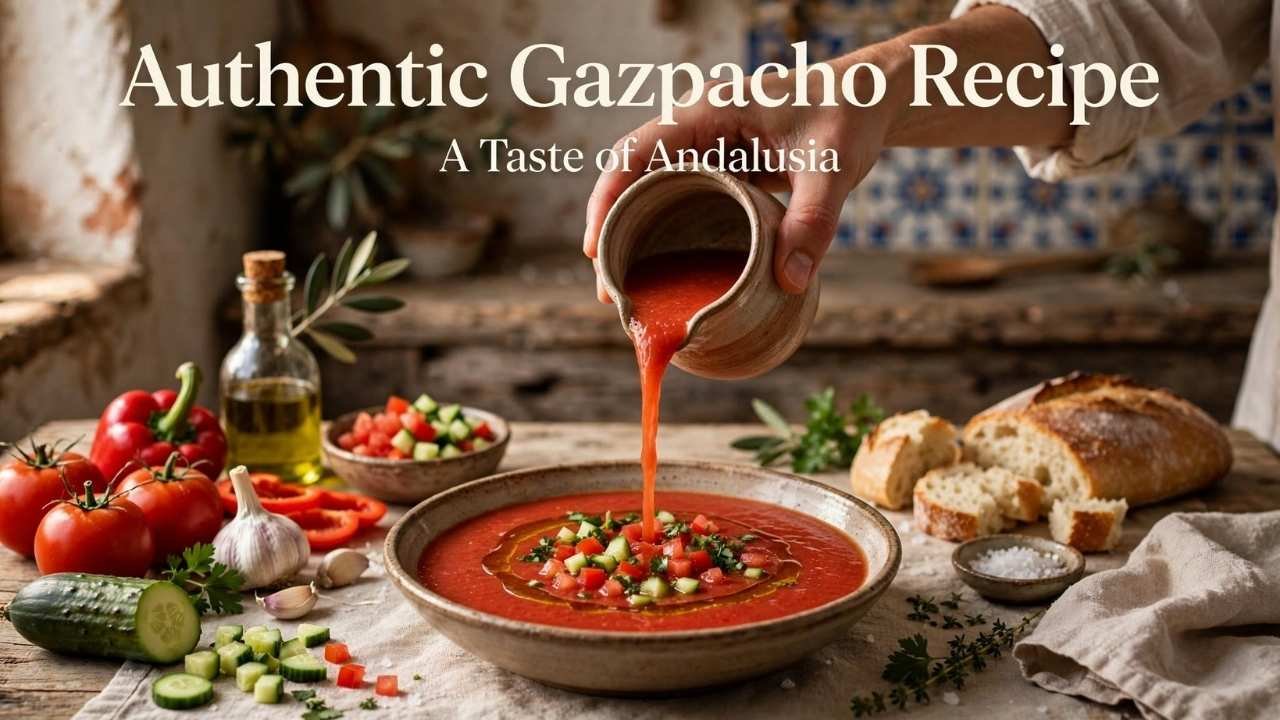
If you have ever tasted authentic gazpacho in Spain, you know it is much more than a cold tomato soup. This refreshing dish comes from Andalusia, where ripe summer vegetables, extra virgin olive oil, and vinegar come together to create a light but flavorful Spanish gazpacho. Traditional Gazpacho Andaluz is made with fresh ingredients and needs no cooking, making it perfect for warm days.
While recipes can differ from one Spanish family to another, the heart of an authentic gazpacho recipe remains the same: ripe tomatoes, fresh vegetables, good olive oil, and balanced seasoning. In this guide, you’ll learn how to make authentic Spanish gazpacho, what makes it traditional, how to get the best texture, and the simple tips that give this classic Andalusian gazpacho its fresh, vibrant flavor.
Quick Answer
Authentic gazpacho is a traditional Spanish cold soup from Andalusia, made mainly with ripe tomatoes, cucumber, green pepper, garlic, extra virgin olive oil, vinegar, and salt. Some traditional recipes also include stale bread for body and texture. To make Gazpacho Andaluz, blend the raw ingredients until smooth, adjust the seasoning, chill well, and serve cold with fresh vegetables or simple garnishes.
What Is Authentic Gazpacho?

Authentic gazpacho is a traditional Spanish cold soup that comes from Andalusia, in southern Spain. It is made mainly with raw, ripe vegetables, especially tomatoes, and is served cold. A traditional Gazpacho Andaluz usually includes tomatoes, green pepper, cucumber, garlic, olive oil, vinegar, and salt. Some recipes also use stale bread to give the soup more body.
Unlike cooked tomato soup, Spanish gazpacho does not need cooking. The fresh vegetables are blended together until the desired texture is reached, then the soup is chilled before serving. Its fresh taste, simple ingredients, and cold serving style make it a popular part of Spanish summer food. Although recipes vary, the main idea remains fresh vegetables, good olive oil, balanced acidity, and a refreshing texture.
What Makes Gazpacho Authentic?
What makes gazpacho authentic is not one fixed ingredient list. Traditional recipes can differ between families and areas of Andalusia. However, an authentic Spanish gazpacho is generally based on ripe tomatoes, fresh vegetables, extra virgin olive oil, vinegar, and salt. Garlic and green pepper are also common, while cucumber, onion, and bread may vary by recipe.
The preparation is just as important. Authentic Gazpacho Andaluz is made from raw ingredients rather than cooked vegetables. The ingredients are blended into a cold soup and allowed to chill before serving.
The final flavor should taste fresh, slightly tangy, and well balanced. In simple terms, traditional ingredients, ripe produce, good olive oil, and a fresh uncooked preparation are the key features of traditional Andalusian gazpacho.
Authentic Gazpacho Ingredients
The ingredients for authentic gazpacho are simple, but using fresh produce makes a big difference. Start with ripe tomatoes, which provide most of the soup’s color, liquid, and natural sweetness. Add cucumber, green pepper, garlic, vinegar, extra virgin olive oil, and salt for the classic fresh flavor.
Some traditional Spanish recipes also include stale bread. Bread can make the gazpacho thicker and give it a smoother texture. Onion is another ingredient that appears in some versions, although it is not required in every traditional recipe.
A little cold water can be added if the soup is too thick. For the best result, choose flavorful vegetables and good-quality olive oil. These simple Gazpacho Andaluz ingredients create a light, refreshing, and balanced Spanish cold soup.
How to Choose the Best Tomatoes for Gazpacho
The quality of the tomatoes can make or break authentic gazpacho. Because the tomatoes are used raw, they should be ripe, juicy, and full of natural flavor. Look for tomatoes that feel heavy for their size and have a strong fresh smell. Vine-ripened tomatoes, Roma tomatoes, or other flavorful summer varieties can all work well.
The best tomatoes for gazpacho should have plenty of juice and a good balance of sweetness and acidity. Avoid tomatoes that are pale, hard, or lacking in flavor. If your tomatoes are not naturally sweet, the finished Spanish gazpacho may taste flat.
For the most traditional result, use fresh tomatoes when they are fully ripe and in season. Their natural flavor gives Gazpacho Andaluz its bright taste and beautiful color.
How to Make Authentic Gazpacho
To make authentic Spanish gazpacho, start by washing and roughly chopping the tomatoes, cucumber, green pepper, and garlic. Add the vegetables to a blender with extra virgin olive oil, sherry vinegar, and salt. If using bread, soak it briefly first so it blends easily and helps create a smooth texture.
Blend everything until the mixture is well combined and creamy. Taste the soup and adjust the vinegar, salt, or water as needed. For an extra-smooth Gazpacho Andaluz, pass it through a fine-mesh strainer to remove seeds and skins.
Transfer the soup to a covered container and chill it well before serving. This simple homemade gazpacho needs no cooking, making it an easy and refreshing Spanish summer soup for warm days.
Should Authentic Gazpacho Have Bread?
Whether authentic gazpacho should contain bread depends on the traditional recipe being followed. Bread has long been used in many versions of Gazpacho Andaluz, especially when cooks wanted a thicker and smoother soup. Stale or day-old white bread can be soaked and blended with the vegetables, helping create a creamy texture.
However, bread is not required in every Spanish gazpacho recipe. Some traditional versions focus mainly on ripe tomatoes, peppers, cucumber, olive oil, vinegar, and salt.
This means you can make a traditional-tasting gazpacho without bread while still keeping its fresh character. If you prefer a thicker soup, bread is a useful option. If you want a lighter cold tomato soup, simply leave it out and adjust the amount of liquid.
Should You Add Cucumber and Onion to Authentic Gazpacho?
Cucumber and onion can both appear in traditional Spanish gazpacho, but neither ingredient has to be used in exactly the same amount in every recipe. Fresh cucumber adds a cool, clean flavor and extra water, making the soup especially refreshing. Onion gives Spanish gazpacho a stronger savory taste.
Some recipes use white onion, while others use red onion or leave onion out completely. The same is true for cucumber. If you enjoy a fresh vegetable flavor, both ingredients can be included.
If you want a simpler Gazpacho Andaluz, you can reduce or skip one of them. The important thing is to keep the soup balanced. Too much cucumber or onion can cover the natural sweetness of ripe tomatoes and the flavor of good olive oil.
How to Get the Perfect Gazpacho Texture
The ideal texture of authentic gazpacho depends on personal preference and the recipe. Many traditional versions are blended until smooth and fairly light, while some can have a little more texture. For a silky Spanish cold soup, blend the vegetables thoroughly and slowly add the extra virgin olive oil.
Straining the mixture through a fine-mesh strainer can remove tomato seeds, pepper skins, and other small pieces. This creates a very smooth and refined texture.
If the gazpacho is too thick, add a little cold water and blend again. If it is too thin, more tomato or a small amount of soaked bread can help. The goal is a texture that feels smooth, fresh, and easy to drink or eat with a spoon.
How to Balance the Flavor of Gazpacho
A good authentic gazpacho recipe depends on balance. Ripe tomatoes bring sweetness and acidity, while olive oil adds richness. Vinegar gives the soup its bright, sharp taste, but too much can easily overpower the vegetables. Sherry vinegar is a traditional choice and works especially well with the fresh tomato flavor.
Salt is also important because it brings out the taste of the raw vegetables. Start with a small amount and adjust after blending.
If the gazpacho tastes too acidic, adding more tomato or a little olive oil can soften the sharpness. If it tastes flat, a small amount of salt or vinegar may help. Taste the soup after chilling because cold temperatures can slightly reduce the strength of its flavors.
How Long Should Gazpacho Chill Before Serving?
Authentic gazpacho is meant to be served cold, so chilling it properly is an important part of preparation. After blending, place the soup in a covered container and refrigerate it for at least 2 hours. This gives the gazpacho enough time to become properly chilled and allows the flavors to blend together.
For an even better result, you can prepare homemade gazpacho several hours ahead or let it rest overnight in the refrigerator. Avoid adding lots of ice directly to the soup because melting ice can weaken its flavor.
Before serving, stir the gazpacho and taste it again. You may want to adjust the salt, vinegar, or water. A well-chilled Spanish gazpacho should feel refreshing without becoming watery or bland.
How to Serve Authentic Gazpacho
Authentic Spanish gazpacho can be served in a bowl, glass, or small cup, depending on the occasion. In Spain, it may be enjoyed as a light starter, part of a summer meal, or even served in a glass as a refreshing drink. Keep the soup well chilled before serving.
Simple gazpacho garnishes can add color and texture without covering its fresh flavor. Try finely diced cucumber, tomato, green pepper, or onion. Small croutons can also provide a pleasant crunch. A light drizzle of extra virgin olive oil works well too.
For a casual meal, serve Gazpacho Andaluz with fresh bread or other Spanish dishes. The best serving style is simple because the cold soup itself should remain the main focus.
Authentic Gazpacho vs Salmorejo
Gazpacho and salmorejo are both famous cold soups from Andalusia, but they are not the same. Traditional gazpacho usually contains several raw vegetables, including tomatoes, green pepper, and often cucumber. It also has a lighter, more drinkable texture.
Salmorejo is usually thicker and more strongly centered on tomatoes, bread, olive oil, garlic, and vinegar. It is often served with toppings such as chopped egg and Spanish ham. Gazpacho can also be served with toppings, but it is usually lighter and more refreshing.
The difference between gazpacho and salmorejo is mainly in the ingredients, texture, and final consistency. Both belong to the tradition of Spanish cold soups, but each has its own character and place in Andalusian food.
How to Store and Freeze Gazpacho
Fresh homemade gazpacho should be stored in an airtight container in the refrigerator. It is best enjoyed within a few days while the fresh vegetable flavor is still strong. Before serving leftover gazpacho, stir it well because the ingredients and olive oil may separate slightly during storage.
You can also prepare gazpacho ahead of time, which makes it useful for summer meals and gatherings. Freezing is possible, but it may slightly change the texture because cucumber and other fresh vegetables contain a lot of water.
If you freeze it, leave some space in the container for expansion and thaw it slowly in the refrigerator. Blend or stir the soup again before serving. Always taste it after thawing and adjust the seasoning if needed.
FAQs
What is authentic gazpacho made of?
Traditional gazpacho is usually made with ripe tomatoes, olive oil, vinegar, peppers, and salt, with cucumber, garlic, onion, and bread varying by recipe.
Does authentic gazpacho contain bread?
Some traditional recipes use stale bread for a thicker texture, while others leave it out.
What tomatoes are best for gazpacho?
Use ripe, juicy, flavorful tomatoes because they provide most of the soup’s fresh taste.
Is cucumber traditional in gazpacho?
Yes, cucumber is common in many Andalusian gazpacho recipes, although recipes can vary.
How cold should gazpacho be?
Gazpacho should be well chilled before serving, usually after at least two hours in the refrigerator.
Can you freeze gazpacho?
Yes, but freezing may slightly change its fresh texture, especially when cucumber is used.
Conclusion
Making authentic gazpacho at home is simple when you focus on fresh ingredients and good balance. Use ripe tomatoes, quality extra virgin olive oil, vinegar, and fresh vegetables to create the base of a traditional Gazpacho Andaluz.
Remember that recipes can vary, especially when it comes to bread, cucumber, and onion. What matters most is keeping the soup fresh, flavorful, smooth, and well chilled. Blend the ingredients, adjust the seasoning to your taste, and let the gazpacho rest in the refrigerator before serving.
Whether you enjoy it in a bowl, glass, or with simple vegetable garnishes, this classic Spanish cold soup is a refreshing way to enjoy the flavors of Andalusian cuisine at home.