
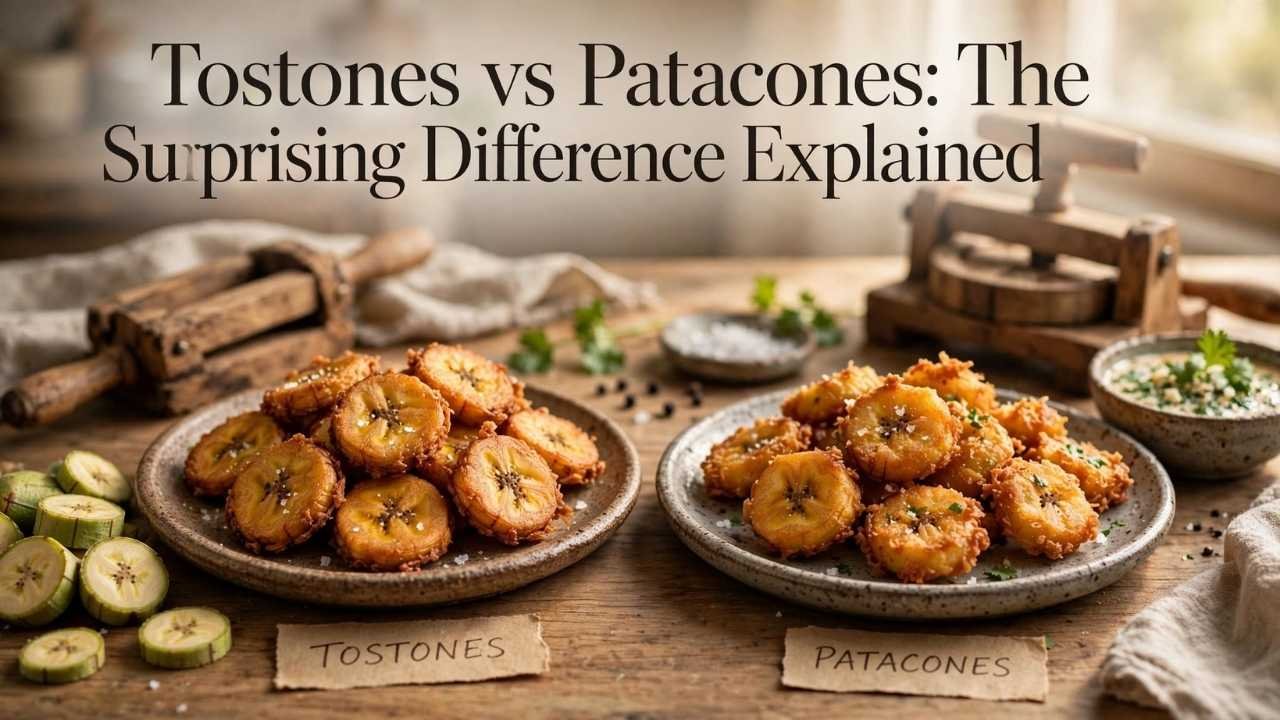
Many people wonder whether tostones and patacones are two different foods or simply different names for the same dish. If you have searched for tostones vs patacones, you are not alone. These crispy fried green plantains are popular across Latin America and the Caribbean, and the terminology changes from country to country.
In some places they are called tostones, while in others they are known as patacones. This often leads to questions such as “What is the difference between tostones and patacones?” and “Are patacones the same as tostones?” The good news is that the answer is simpler than many people think.
In this guide, we will explain the difference between tostones and patacones, how they are prepared, where each name is used, and which term you should use when cooking or traveling.
Quick Answer
Tostones vs patacones are essentially the same dish: twice-fried green plantains that become crispy on the outside and soft inside. The main difference between tostones and patacones is the regional name and serving style. Caribbean countries such as Puerto Rico, Cuba, and the Dominican Republic usually call them tostones, while countries like Colombia, Panama, Costa Rica, and Ecuador commonly use the name patacones. Some regions also serve larger versions with toppings or use them as sandwich bases.
What Are Tostones?
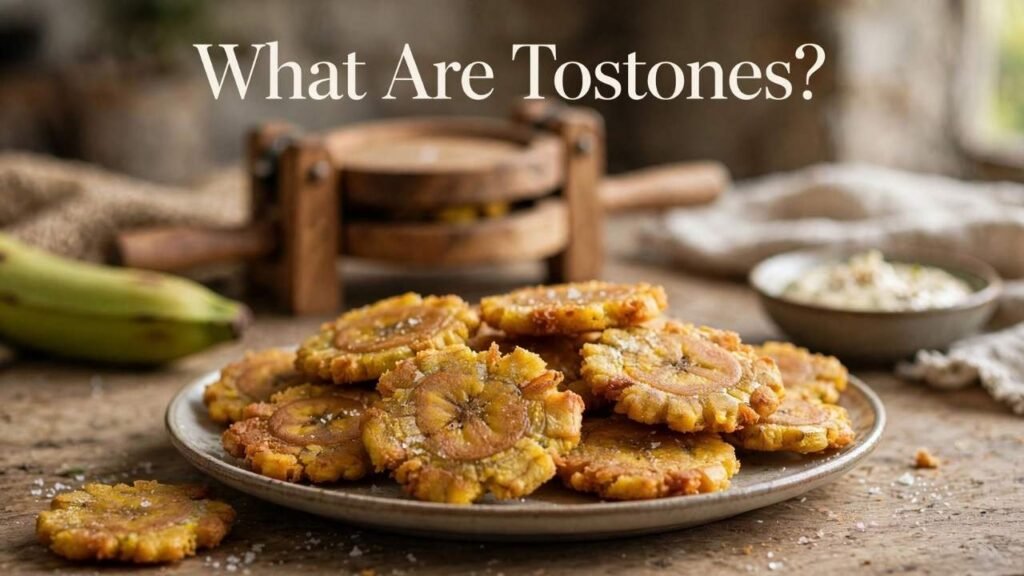
Tostones are slices of green plantains that are fried twice until they become crispy and golden. They are a popular side dish in Puerto Rico, Cuba, and the Dominican Republic. The plantains are first fried, then flattened, and fried again.
This method creates a crunchy outside with a soft center. Many people enjoy tostones with garlic sauce, seafood, or grilled meats. If you like trying new foods, they are a great introduction to Latin American cuisine.
Tostones are also a good example of how simple ingredients can create a flavorful dish. While exploring other unique foods, you may also enjoy learning about Fruits That Start With C, since plantains are part of the banana family and are used in many tropical recipes around the world.
What Are Patacones?
Patacones are also made from twice-fried green plantains, but the name is more common in Colombia, Panama, Costa Rica, Ecuador, and parts of Venezuela. The preparation is almost identical to tostones. In many regions, patacones are made larger and are often topped with cheese, shredded beef, avocado, or seafood. Some Venezuelan versions are even used as sandwich bases.
Because of these toppings, patacones can be served as a snack, side dish, or full meal. Their crispy texture makes them popular across South America. If you enjoy creative cooking, you might also like How to make black garlic pasta, another dish that turns simple ingredients into something rich and flavorful through a special preparation method.
Are Tostones and Patacones the Same?
The short answer is yes. When people search for “Are patacones the same as tostones?” or “What is the difference between tostones and patacones?”, the main answer is that they are essentially the same dish.
Both are made from fried green plantains that are flattened and fried a second time. The biggest difference is the regional name. Caribbean countries usually say tostones, while many South American countries say patacones. Some local variations change the size or toppings, but the core preparation remains the same.
This is similar to how different countries may have different names for the same food. Understanding this helps travelers and home cooks feel more confident when ordering or preparing plantain dishes.
The Main Differences Between Tostones and Patacones
Although the cooking method is nearly identical, there are a few differences worth noting. The first is the name. Caribbean regions prefer tostones, while many South American regions prefer patacones. The second is size and presentation.
Tostones are often smaller and served as a side dish, while patacones can be larger and topped with ingredients such as meat, cheese, or avocado. The third difference is serving style. In Venezuela, a patacón may be used as a sandwich, while in Puerto Rico, tostones are commonly served with garlic mojo.
Despite these variations, both dishes share the same crispy texture and are made from twice-fried plantains, which is why many food experts consider them regional versions of the same classic dish.
Which Countries Use the Name “Tostones”?
The name tostones is most common in Puerto Rico, Cuba, the Dominican Republic, Nicaragua, and some parts of Venezuela. In these countries, tostones are often served alongside grilled meats, seafood, rice dishes, and beans.
They are considered a traditional comfort food and are frequently found in family meals and restaurants. Puerto Rican tostones are especially known for being served with garlic mojo, which adds a rich and savory flavor.
If you visit these regions, ordering tostones will usually bring you a plate of crispy fried green plantains. The popularity of the dish shows how important plantains are in Caribbean cooking, where they are used in both savory and sweet recipes throughout the year.
Which Countries Use the Name “Patacones”?
The term patacones is widely used in Colombia, Panama, Costa Rica, Ecuador, Peru, and parts of Venezuela. In these countries, patacones may be served plain with salt or topped with ingredients such as cheese, shredded chicken, beef, avocado, and seafood.
Colombian patacones are often larger and thicker than Caribbean tostones, making them suitable as a base for toppings. In some Venezuelan regions, a patacón sandwich is made by using two large fried plantain rounds instead of bread.
This variation is one reason many travelers notice differences between tostones and patacones. However, the essential ingredient remains the same: green plantains that are fried, flattened, and fried again until crispy.
Tostones vs Patacones: Taste and Texture Comparison
When comparing tostones vs patacones taste, most people find them very similar. Both have a crispy exterior and a soft, slightly starchy interior. The flavor is savory rather than sweet because they are made from unripe green plantains.
Tostones are often thinner and crunchier, while some patacones are larger and may have a slightly softer center. The toppings used with patacones can also change the overall flavor. For example, cheese, avocado, or shredded beef can make patacones taste richer and more filling.
If served plain with salt, the two dishes are nearly identical. The main difference in texture usually comes from how thick the plantains are sliced and how firmly they are flattened before the second fry.
How They Are Traditionally Prepared
Both dishes follow the same basic process. First, green plantains are peeled and cut into thick slices. The slices are fried once until they soften slightly. Next, they are removed from the oil and flattened with a plantain press, a plate, or the bottom of a glass. After that, they are fried a second time until golden and crispy.
Finally, they are seasoned with salt. This double-frying method is what gives twice-fried plantains their signature crunch. Some cooks add garlic, while others serve them with dipping sauces. The process is simple, but the second fry is the key step that transforms soft plantains into crispy tostones or patacones.
Common Toppings and Accompaniments
One of the most enjoyable parts of eating tostones and patacones is the variety of toppings. Puerto Rican tostones are often served with garlic mojo, while Colombian patacones may be topped with cheese, shredded beef, chicken, avocado, or seafood. In some areas, patacones are served with fresh salsa or a creamy sauce.
These toppings can turn a simple side dish into a complete meal. Tostones are also popular alongside grilled fish, pork, and rice dishes. The crispy texture works well with both savory sauces and fresh ingredients. Because the plantains themselves have a mild flavor, they pair easily with many different foods, making them one of the most versatile dishes in Latin American cooking.
Nutritional Comparison: Tostones vs Patacones
From a nutritional standpoint, tostones and patacones are very similar because they use the same main ingredient: green plantains. Both provide carbohydrates, fiber, potassium, and several vitamins. The calorie content depends mostly on the amount of oil absorbed during frying and any toppings added afterward.
Plain tostones and plain patacones usually have comparable nutrition values. However, a heavily topped patacón with cheese, meat, and sauces will contain more calories than a simple plate of salted tostones.
If you want a lighter option, you can use less oil or try an air-fried version. While they are not low-calorie foods, they can still be enjoyed as part of a balanced diet when eaten in reasonable portions.
When Should You Use Each Term?
A useful rule is to use the term that matches the country or cultural context. If you are talking about Puerto Rican, Cuban, or Dominican cuisine, use tostones. If you are discussing Colombian, Panamanian, Costa Rican, or Ecuadorian cuisine, use patacones.
This is especially helpful when traveling or writing about regional foods. Home cooks can also choose the name that best fits the style they are preparing. Smaller plantains served with garlic sauce may be called tostones, while larger plantains topped with meat or avocado may be called patacones.
Since both names describe fried green plantains, most people will understand either term. The important thing is recognizing that the dish is fundamentally the same across different regions.
FAQs
Are patacones and tostones the same thing?
Yes. They are both twice-fried green plantains. The main difference is the regional name and how they are served.
Why do some countries call them patacones?
Different Latin American countries developed their own names for the dish. Caribbean regions generally use tostones, while many South American regions use patacones.
Are tostones healthier than patacones?
Plain versions are very similar nutritionally. The health difference usually comes from the amount of oil and toppings used.
Can you make them in an air fryer?
Yes. Air-fried tostones or patacones can become crispy while using less oil than traditional deep frying.
What’s the difference between chifles and patacones?
Chifles are usually thin plantain chips that are fried once, while patacones are thicker plantain slices that are fried, flattened, and fried again.
Conclusion
When it comes to tostones vs patacones, the biggest takeaway is that they are essentially the same delicious dish. Both are made from green plantains that are fried twice to create a crispy outside and a soft center. The difference between tostones and patacones is mainly the regional name and serving style.
Caribbean countries usually say tostones, while many South American countries prefer patacones. Some regions serve them plain with salt, while others add cheese, avocado, meat, or seafood. Whether you call them tostones or patacones, you are enjoying one of the most popular fried green plantain dishes in Latin American and Caribbean cuisine.