
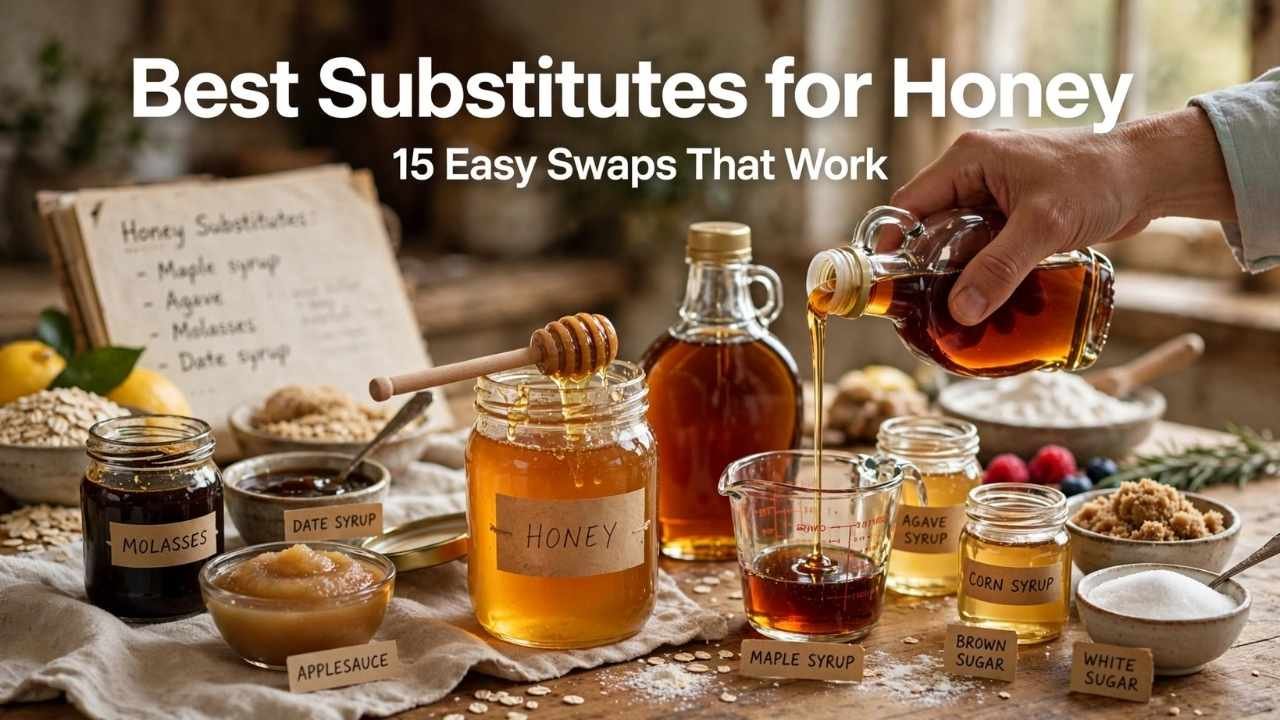
If you need the best substitutes for honey, there are several easy options for baking, cooking, drinks, sauces, and desserts. The right choice depends on what honey does in your recipe. Honey adds sweetness, moisture, texture, browning, and a smooth consistency, so replacing it is not always a simple one-for-one swap.
Maple syrup, agave nectar, golden syrup, brown sugar, date syrup, and corn syrup are popular honey alternatives. Vegan recipes can use plant-based syrups, while low-carb recipes may need options such as monk fruit or stevia.
This guide explains the best honey substitutes, how to use them, suitable substitution ratios, and which options work best for different recipes.
What Is the Best Substitute for Honey?
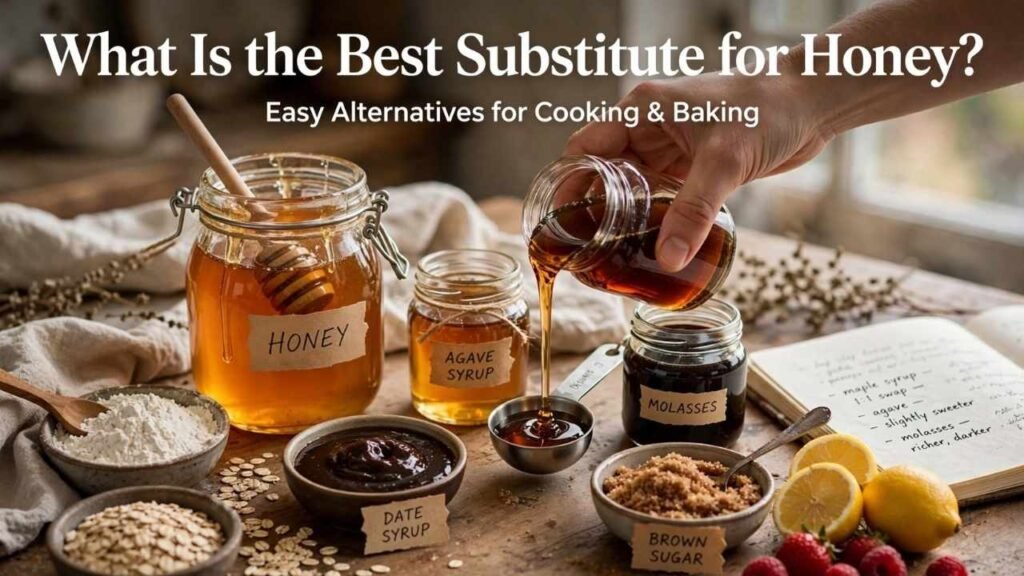
The best substitute for honey depends on the recipe and the result you want. Maple syrup is one of the easiest all-purpose choices because it is liquid, sweet, and easy to mix. It works well in baking, sauces, drinks, oatmeal, desserts, and marinades.
Agave nectar is another useful choice when you want a mild flavor. Golden syrup provides a thick, sticky texture, while brown sugar works well when a dry sweetener fits the recipe.
For most recipes, choose a substitute that matches honey’s main purpose. Use a liquid syrup when moisture and consistency matter, or use sugar when the recipe already contains enough liquid.
Maple Syrup as a Honey Substitute
Maple syrup can often replace honey at a 1:1 ratio. It keeps recipes moist but has a noticeable maple flavor. It works particularly well in pancakes, oatmeal, baked goods, sauces, drinks, and desserts where that flavor fits the recipe.
How Honey Works in Recipes
Honey does more than add sweetness. It also provides moisture, thickness, browning, and texture. These qualities can affect the final result, especially in baking.
In cakes and muffins, honey helps keep the crumb soft and moist. In cookies, it can affect browning and chewiness. In sauces and glazes, its thick texture helps create a smooth coating.
This is why different honey alternatives work better in different recipes. A liquid sweetener is usually easier to substitute when moisture is important, while dry sugar may need extra liquid to create a similar balance.
Sweetness and Moisture Matter
When replacing honey, consider both sweetness and moisture. A dry sweetener can make a recipe less moist, while a thin syrup may make the mixture too loose. Small adjustments can help maintain the original texture.
Honey Substitute Conversion Chart
A honey substitute ratio depends on the ingredient and recipe. Liquid sweeteners are generally the easiest to replace because they provide both sweetness and moisture. Maple syrup, agave, golden syrup, and corn syrup can often be used in a 1:1 ratio.
Dry sugar requires more attention because it does not contain the same amount of water as honey. You may need to adjust another liquid ingredient to keep the recipe balanced.
| Honey | Substitute | Starting Ratio |
| 1 cup | Maple syrup | 1 cup |
| 1 cup | Agave nectar | 1 cup |
| 1 cup | Golden syrup | 1 cup |
| 1 cup | Corn syrup | 1 cup |
| 1 cup | Date syrup | 1 cup |
| 1 cup | Brown sugar | Adjust liquid |
These ratios are starting points, not universal rules.
Start With the Recipe
Before choosing a substitution ratio, consider whether honey is mainly providing sweetness, moisture, thickness, or flavor. Matching its main function usually gives better results than following a ratio alone.
Best Liquid Substitutes for Honey
Liquid sweeteners are often the easiest substitutes for honey because they provide sweetness without removing moisture from the recipe. Popular choices include maple syrup, agave nectar, golden syrup, corn syrup, date syrup, and rice syrup.
Maple syrup has a strong, pleasant flavor, while agave is milder. Golden syrup offers a rich caramel-like taste and works well in desserts. Corn syrup is useful when you need a smooth and sticky consistency.
Date syrup has a deeper fruity flavor, while rice syrup is relatively mild. Choose according to the recipe instead of simply choosing the sweetest option.
Agave Nectar
Agave nectar has a mild flavor and smooth texture, making it a flexible honey alternative. It works well in baking, drinks, sauces, dressings, and desserts. Since it is liquid, it can often replace honey without major changes to the recipe’s texture.
Best Dry Substitutes for Honey
Dry sweeteners are useful when a recipe does not rely heavily on honey’s liquid content. Brown sugar is one of the most practical choices because it provides sweetness, some moisture, and a light caramel flavor.
White sugar can also replace honey, but it is drier and has a more neutral taste. Coconut sugar gives recipes a deeper caramel note, while raw sugar provides a slightly coarse texture.
Dry sweeteners work especially well in cookies, cakes, muffins, and quick breads when the recipe already has enough liquid. Check the batter or dough after mixing and make a small adjustment if it seems unusually dry.
Brown Sugar
Brown sugar works well in cookies, cakes, muffins, and some sauces. It adds sweetness and a mild caramel taste. Because it does not provide the same liquid content as honey, another liquid ingredient may need a small adjustment depending on the recipe.
Best Honey Substitute for Baking
Choosing a honey substitute for baking requires more care because honey affects sweetness, moisture, browning, and texture. Maple syrup and agave are convenient liquid alternatives that can help maintain moisture.
Brown sugar is useful for cookies, cakes, and quick breads, especially when a richer flavor is welcome. White sugar can also work, but the recipe may need additional liquid because granulated sugar does not provide honey’s moisture.
Liquid syrups can make batter thinner, while dry sugar can make it thicker or drier. Always consider the other wet and dry ingredients before making adjustments.
Baking Adjustments
When replacing honey with a dry sweetener, check the batter before baking. If it looks too dry, a small amount of extra liquid may help. If using a liquid syrup makes the batter too thin, avoid adding more liquid elsewhere.
Best Honey Substitute for Cookies, Cakes, and Muffins
The best honey substitute for cookies, cakes, and muffins depends on the texture you want. Maple syrup keeps baked goods moist and adds a clear maple flavor. Agave works well when you want a milder taste.
Brown sugar is particularly useful in cookies because it can support a soft, chewy texture. For cakes and muffins, liquid sweeteners can help maintain moisture, while granulated sugar can produce a different crumb.
Remember that changing the sweetener can affect browning, spreading, moisture, and sweetness. Make small adjustments rather than changing several ingredients at once.
For Cookies
Brown sugar is a useful honey replacement for cookies when you want a soft texture and deeper flavor. Maple syrup can also work, but its extra moisture may make cookie dough softer and affect spreading. Adjust the dough only when needed.
Best Honey Substitute for Sauces, Marinades, and Glazes
Sauces, marinades, and glazes often need a sweetener that blends easily and creates a smooth finish. Maple syrup, agave, golden syrup, and corn syrup are useful options for these recipes.
Maple syrup works well in marinades and savory sauces when its flavor fits. Agave offers a milder taste, while golden syrup is useful for rich glazes. Corn syrup can provide a smooth, sticky texture when that quality is important.
Date syrup and molasses can also replace honey, but both have stronger flavors. For delicate sauces, choose a mild substitute so the sweetener does not overpower the other ingredients.
For Glazes
For a honey substitute in glaze, choose an ingredient that provides sweetness and a smooth texture. Maple syrup, golden syrup, and corn syrup can work well. Agave is useful when you want a lighter flavor. If the glaze is too thin, reduce it gently.
Best Honey Substitutes for Drinks and Cocktails
Honey is commonly used in tea, coffee, lemonade, cocktails, and other drinks, but it may not dissolve quickly in cold liquids. Simple syrup, maple syrup, and agave nectar are convenient alternatives because they mix easily.
Simple syrup is especially useful for cocktails because it distributes sweetness evenly. Maple syrup works nicely in coffee, tea, and drinks where its flavor complements the other ingredients. Agave is a good option when you prefer a mild taste.
For cold beverages, add the sweetener gradually and taste as you go. This gives you better control over sweetness and prevents the drink from becoming overly sweet.
Simple Syrup
Simple syrup is an easy honey substitute for drinks because it dissolves quickly and has a neutral flavor. It works well in cocktails, iced tea, lemonade, coffee drinks, and other beverages where you want sweetness without a strong added taste.
Best Vegan Substitutes for Honey
Honey is not vegan, so plant-based recipes need a different sweetener. Popular vegan honey substitutes include maple syrup, agave nectar, date syrup, brown rice syrup, and some golden syrups.
Maple syrup is versatile enough for both sweet and savory recipes. Agave has a mild flavor and works especially well in drinks and baking. Date syrup provides deeper sweetness, while brown rice syrup can add a thicker texture.
The best choice depends on what the recipe needs. If honey provides moisture, choose a liquid syrup. If it mainly provides sweetness and the recipe has enough moisture already, a dry plant-based sweetener may work.
Plant-Based Options
Maple syrup and agave are two simple plant-based options for replacing honey. Both are liquid and easy to mix into recipes. Always check the full ingredient list if you need the finished recipe to be completely vegan.
Best Low-Carb and Keto Honey Substitutes
Traditional honey is high in sugar, so it may not fit a low-carb or keto recipe. Options such as monk fruit, stevia, and allulose can provide sweetness with less sugar, depending on the specific product.
However, these sweeteners do not behave exactly like honey. Honey adds moisture, bulk, thickness, and texture, while concentrated sweeteners mainly add sweetness.
For this reason, a direct 1:1 replacement may not work. Choose a product designed for baking or cooking and follow its recommended conversion. You may also need another ingredient to replace the moisture or bulk that honey normally provides.
Monk Fruit and Stevia
Monk fruit and stevia are concentrated sweeteners, so you usually need much less than honey. They can work well when reducing sugar is the main goal, but they do not provide honey’s sticky texture or moisture.
How to Replace Honey With Sugar
You can replace honey with sugar, but the change requires more attention than using another liquid sweetener. Honey contains water, while granulated sugar is dry. Using the same volume of sugar may therefore make a recipe drier.
Brown sugar can be a convenient choice because it contains some moisture and has a richer flavor. White sugar is more neutral but may require additional liquid depending on the recipe.
Sugar works best when the recipe already contains enough moisture or when a small texture change is acceptable. For drinks, sauces, and glazes, a liquid sweetener is often easier to use.
Sugar in Baking
When using sugar instead of honey in baking, check the batter or dough carefully. You may need to adjust another liquid ingredient. Honey can also affect browning, so the finished baked good may look slightly different.
How to Choose a Honey Substitute by Flavor and Texture
The right honey replacement should match both the flavor and texture your recipe needs. Agave and rice syrup are relatively mild, while maple syrup adds a noticeable maple flavor. Date syrup and molasses provide deeper, richer tastes.
Texture is equally important. Thick syrups work well for glazes, sauces, and sticky desserts. Thin syrups are convenient for drinks and lighter mixtures. Dry sugars are useful when the recipe already contains enough liquid.
Think about the finished dish before choosing. A substitute that works well in tea may not work equally well in candy, and a sugar that works in cookies may not be suitable for a smooth sauce.
Match the Texture
Use a thick syrup when honey’s sticky consistency is important. For drinks, choose a sweetener that dissolves easily. For baking, check the amount of liquid already in the recipe before selecting a dry or liquid substitute.
Common Mistakes When Substituting Honey
One of the most common mistakes is assuming every sweetener can replace honey at the exact same amount. Substitutes differ in sweetness, moisture, thickness, and flavor, so a direct swap can change the final result.
Another mistake is ignoring the purpose of honey in the recipe. A dry sugar may work in cookies but may be inconvenient in a cold drink. A strongly flavored syrup can also overpower a delicate dessert or sauce.
Start with a reasonable amount and check the taste and texture. Make small changes instead of adding large amounts of sweetener or liquid at once.
Avoid Over-Sweetening
Concentrated sweeteners such as stevia and monk fruit can be much sweeter than honey. Use the conversion listed on the product and add gradually. Taste when possible before adding more sweetener.
FAQs
What is the closest substitute for honey?
Maple syrup or agave is a convenient starting choice for many recipes.
Can I use maple syrup instead of honey?
Yes, maple syrup can often replace honey at a 1:1 ratio.
What is the best vegan substitute for honey?
Maple syrup and agave are simple vegan alternatives for many recipes.
Can I replace honey with brown sugar?
Yes, but you may need extra liquid because brown sugar is drier than honey.
What can I use instead of honey in tea?
Maple syrup, agave, or simple syrup can work well in tea.
What is a low-carb substitute for honey?
Monk fruit, stevia, or allulose may work depending on the recipe.
Conclusion
The best substitutes for honey depend on the recipe and the qualities you need to replace. Maple syrup and agave are flexible liquid options, brown sugar works well in many baked goods, and golden syrup is useful when you need a thick, sticky texture.
Simple syrup is convenient for drinks, while monk fruit and stevia can suit recipes focused on reducing sugar.
Before choosing a honey substitute, consider sweetness, moisture, texture, and flavor. Matching these qualities will help you maintain the recipe’s intended result with fewer adjustments.