
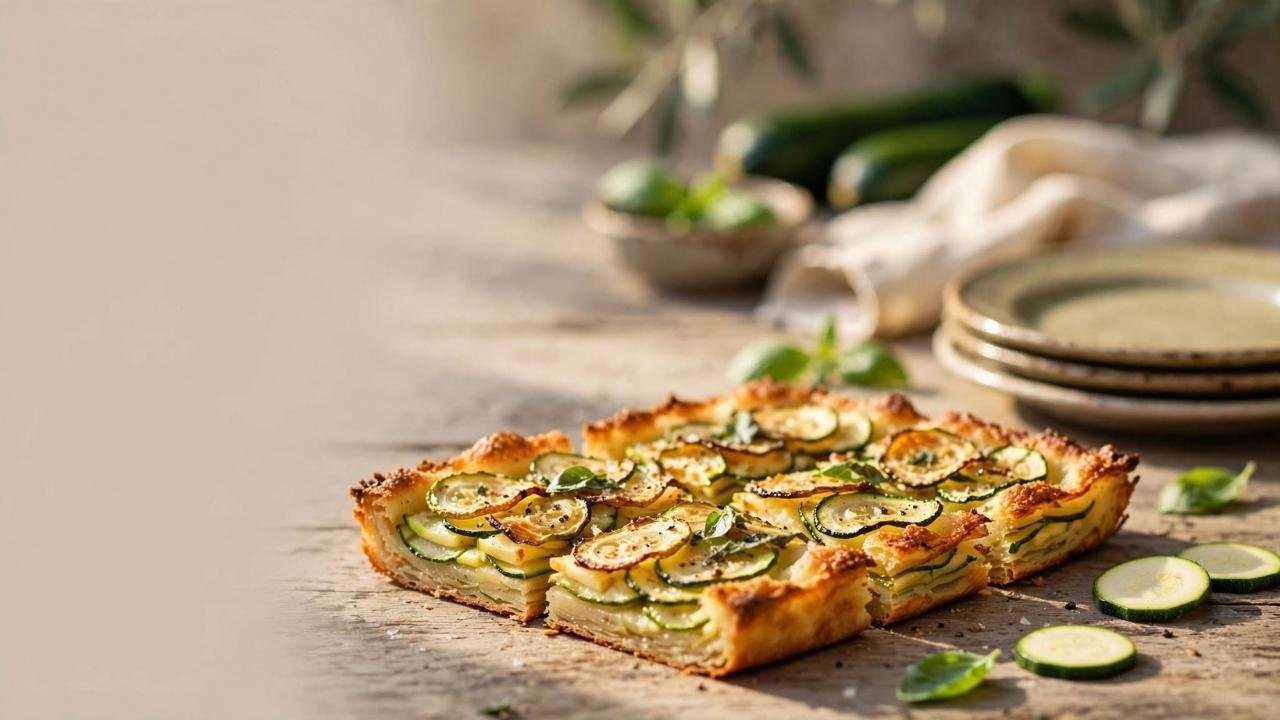
Scarpaccia is a traditional Tuscan zucchini dish from Italy, known for its thin shape, simple ingredients, and beautifully crispy edges. Often called an Italian zucchini tart or Tuscan zucchini flatbread, it is made with fresh zucchini, a light batter, olive oil, and herbs. The savory version is closely linked with Scarpaccia di Camaiore, a local specialty from Tuscany’s Versilia area.
What makes a good Scarpaccia recipe special is its texture. It should be thin, golden, and crisp on the outside, while the zucchini keeps the center tender and flavorful. In this guide, you’ll learn how to make Scarpaccia, how to keep it from becoming soggy, and what gives this rustic Italian dish its traditional character.
We’ll also look at its origins, regional variations, serving ideas, and simple tips for making an authentic-style Italian Scarpaccia at home.
Quick Answer
Scarpaccia is a traditional Tuscan zucchini dish known for its thin shape and crisp, golden edges. Often described as an Italian zucchini tart or Tuscan zucchini flatbread, the savory version is closely linked to Scarpaccia di Camaiore in Tuscany’s Versilia area. Made with fresh zucchini, flour, olive oil, and herbs, this rustic dish is simple, flavorful, and easy to enjoy as an appetizer, side, or light lunch.
What Is Scarpaccia?
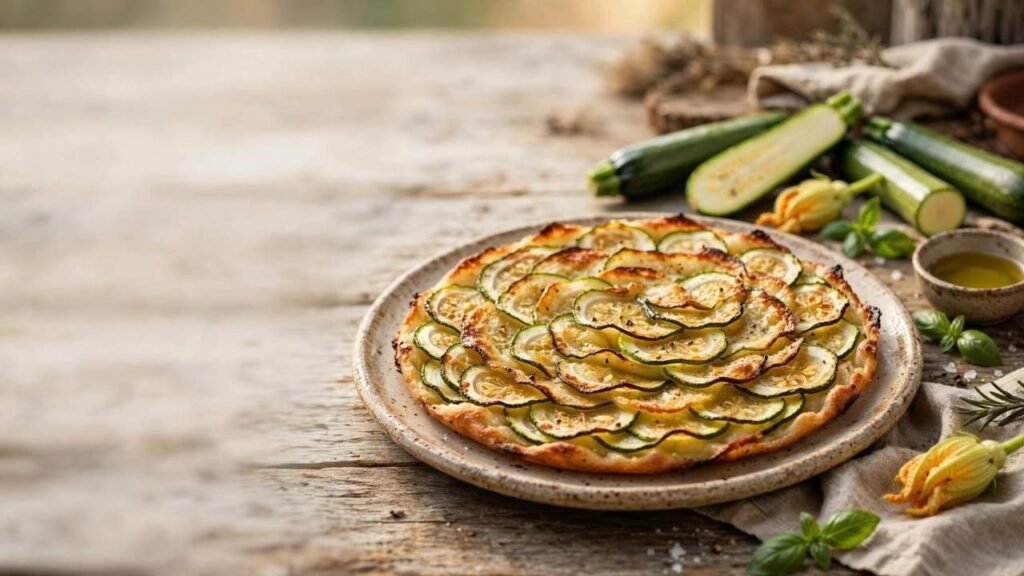
Scarpaccia is a simple Italian zucchini dish from Tuscany. The savory type is closely linked with Camaiore, a town in the Versilia area. Unlike a normal pie, it does not have a thick pastry crust. Instead, thinly sliced zucchini is mixed with a light batter and baked in a wide pan. This gives it a thin, golden, and crispy texture.
Some people call it an Italian zucchini tart, while others describe it as a Tuscan zucchini flatbread. Both names help explain its rustic style, but Scarpaccia has its own place in Tuscan cooking. The dish is also known for using simple, seasonal ingredients.
A good Scarpaccia recipe should let the zucchini remain the main ingredient instead of hiding it under a thick layer of batter. The result is light, savory, crisp, and full of fresh vegetable flavor.
Where Does Scarpaccia Come From?
Scarpaccia comes from Tuscany, Italy, and the savory version is strongly connected with Camaiore and the Versilia area. It is often called Scarpaccia di Camaiore because of this local connection. Like many traditional Italian dishes, it grew from simple home cooking and seasonal ingredients.
Zucchini was easy to find during the warmer months, so it became the main ingredient in this thin baked dish. The recipe could also change from one home or family to another. Some versions include zucchini flowers, onion, rosemary, flour, or cheese. This explains why you may see slightly different recipes for traditional Scarpaccia.
The dish is not meant to be fancy. Its charm comes from simple ingredients, careful preparation, and a thin, crisp finish. Today, Tuscan Scarpaccia is enjoyed as an appetizer, side dish, light lunch, or Italian aperitivo.
The Camaiore Connection
Scarpaccia di Camaiore is one of the best-known savory forms of this dish. Camaiore is in Versilia, Tuscany, an area with a strong local food tradition. The Camaiore style is known for its use of fresh zucchini and its very thin shape. Depending on the family recipe, zucchini flowers, onion, flour, herbs, and olive oil may also be used.
What makes this version special is not a long list of ingredients, but the way they are prepared. The zucchini is sliced thinly, mixed with a light batter, and spread into a wide layer before baking. This helps create the crispy edges and tender center that people expect from a good Scarpaccia.
If you are looking for an authentic Scarpaccia recipe, it is useful to understand this regional background instead of treating every modern zucchini tart as the same dish.
Is Scarpaccia Sweet or Savory?
Scarpaccia can be either savory or sweet, depending on the Tuscan area and recipe. The savory Scarpaccia di Camaiore is the version most often made with zucchini, flour, olive oil, herbs, and other simple ingredients. It is thin, crisp, and usually served as a snack, side dish, or appetizer. There is also a sweet Scarpaccia linked with the Viareggio area.
That version is quite different and may include ingredients such as sugar and fruit. Because both styles share the name Scarpaccia, it can be confusing when you first search for the dish. This recipe focuses on the savory Tuscan zucchini version, not the sweet preparation.
Knowing this difference also helps when searching for a traditional Scarpaccia recipe, Scarpaccia di Camaiore, or an Italian zucchini Scarpaccia. The two versions are related by name and region, but they offer very different flavors.
What Does Scarpaccia Taste Like?
A well-made Scarpaccia has a simple but satisfying flavor. The main taste comes from fresh zucchini, with olive oil and herbs adding a warm, savory note. If Parmesan or another cheese is included, it can give the dish a deeper flavor. The most important part, however, is the texture.
A good Italian zucchini tart should be thin and crisp around the edges, while the inside stays tender from the zucchini. It should not taste like a thick cake or a soft vegetable pie. The flavor is mild enough to pair with many foods, but the browned edges give it a rich roasted taste. Fresh rosemary, black pepper, onion, or zucchini flowers can add more character.
This balance makes Tuscan zucchini flatbread a useful dish for lunch, an appetizer, or an easy summer meal when fresh zucchini is plentiful.
What Makes a Good Scarpaccia?
The best Scarpaccia recipe depends on a few simple details. First, the zucchini should be sliced very thinly and evenly. Second, excess water needs to be removed before baking. Zucchini contains a lot of water, and too much moisture can make the finished dish soft. Third, the batter should stay light.
You want enough batter to hold the vegetables together, but not so much that the result becomes thick. The mixture should then be spread into a thin layer across a wide baking pan. This gives more surface area for browning. Finally, Scarpaccia needs enough heat and baking time to develop a deep golden color and crispy edges.
These steps are what separate a good Italian Scarpaccia from a soggy zucchini bake. The goal is simple: lots of vegetables, little batter, and a crisp finish.
Ingredients for Scarpaccia
A traditional-style Italian zucchini Scarpaccia uses simple ingredients that are easy to find. Fresh zucchini is the main ingredient, so choose firm zucchini with smooth skin. You will also need flour to help bind the mixture and olive oil for flavor and browning. Some recipes use cornmeal, which can add a slightly crisp texture.
Onion works well with zucchini and gives the dish extra flavor. Fresh rosemary or thyme can add a light herbal note, while salt and black pepper bring out the vegetables’ natural taste. Some modern versions include Parmesan or Parmigiano Reggiano for a richer flavor. Zucchini flowers can also be added for a more traditional regional touch.
The exact ingredients can vary because there are many traditional Scarpaccia recipes. The key is to keep the mixture vegetable-heavy and avoid using too much batter.
Why Each Ingredient Matters
Every ingredient in a Scarpaccia recipe has a simple job. Zucchini provides most of the flavor, moisture, and texture, so it should remain the main ingredient. Flour helps hold the vegetables together and creates a light coating as the dish bakes. Cornmeal, when used, can add a pleasant rough texture and help with browning.
Olive oil is important for both flavor and crispness, especially around the edges. Onion adds natural sweetness and extra depth. Fresh rosemary or thyme gives the dish a fresh Italian flavor without overpowering the zucchini.
Salt helps draw out moisture from the vegetables while also seasoning them. Black pepper adds a little heat. Cheese is optional, but Parmesan can give modern versions a richer taste. Understanding these roles makes it easier to adjust the recipe without losing the basic character of Tuscan Scarpaccia.
Can You Use Zucchini Flowers?
Yes, zucchini flowers, also called zucchini blossoms, can be used in Scarpaccia. They are closely connected with traditional Tuscan versions and can add a mild, fresh vegetable flavor. Their delicate texture also makes the finished dish feel more special without requiring many extra ingredients.
To use them, gently clean the flowers and remove any tough parts. You can tear or slice them into smaller pieces before mixing them with the zucchini. They work especially well with Scarpaccia di Camaiore, rosemary, onion, and olive oil. If the flowers are very delicate, you do not need to cook them first. Simply mix them into the prepared vegetables and batter.
They are not required for a good Italian zucchini tart, so do not worry if you cannot find them. Fresh zucchini alone is enough to make a flavorful Tuscan zucchini flatbread with a crisp, rustic finish.
How to Make Scarpaccia
To make Scarpaccia, start by slicing the zucchini into very thin pieces. Sprinkle them with salt and let them sit so some of their extra water can escape. Press or drain the zucchini well before continuing. Next, prepare a light batter with flour, seasonings, and the needed liquid. Add the zucchini and other vegetables, making sure they are well coated but not buried in batter.
Spread the mixture over a wide, lightly oiled baking pan. Keep the layer thin and even, as this is important for proper browning. Bake the Scarpaccia until the surface and edges become deep golden and crisp. Depending on the recipe, the pan may be moved lower in the oven or the dish may be turned to help crisp the bottom.
Let it rest briefly before slicing. Serve it warm or at room temperature as an appetizer, side, or light meal.
How to Make Scarpaccia Crispy Instead of Soggy
The biggest secret to crispy Scarpaccia is controlling moisture. Zucchini contains plenty of water, so slice it thinly, salt it, and let it drain before adding it to the batter. Pressing the zucchini gently can remove even more liquid. Do not make the batter too thick.
The vegetables should make up most of the mixture. A wide baking pan is also helpful because it allows the Scarpaccia to spread into a thin layer. Use enough olive oil to help the edges brown, and avoid adding more liquid than the recipe needs.
Bake until the top and edges are deeply golden rather than stopping as soon as the batter looks set. If the bottom remains soft, giving it more time in the oven can help. These simple steps answer one of the most common questions about how to make crispy Scarpaccia at home.
Common Scarpaccia Mistakes
One common mistake is using too much batter. Scarpaccia should be thin and vegetable-rich, not thick like a cake. Another problem is failing to drain the zucchini. Too much water can leave the center wet even when the top looks cooked.
Cutting the zucchini too thick can also create uneven cooking. A small, deep baking dish may cause the mixture to become too thick, so a wide pan is usually better. Underbaking is another reason for a soft texture. Scarpaccia should become clearly golden and crisp before it comes out of the oven. Finally, avoid cutting it immediately.
Letting it rest for a few minutes allows the structure to settle and makes slicing easier. If your Italian Scarpaccia is soft, do not assume the recipe has failed. Usually, the problem comes down to moisture, thickness, pan size, or baking time.
Authentic vs. Modern Scarpaccia
There is no single recipe that represents every traditional Scarpaccia. Tuscan families and cooks have made their own versions for generations, so ingredients can change from one recipe to another. A simple Scarpaccia di Camaiore may focus on zucchini, flour, water, olive oil, salt, and herbs.
Other recipes add cornmeal, Parmesan, onion, zucchini flowers, or other vegetables. Modern recipes may also include ingredients that are not part of a specific traditional version. This does not automatically make them wrong.
It is more accurate to describe them as modern variations of Scarpaccia. If you want an authentic-style recipe, focus on the dish’s main features: fresh seasonal vegetables, a light batter, a very thin layer, and a crisp finish. Being clear about the style you are making is better than claiming that one recipe is the only original Tuscan zucchini tart.
Scarpaccia Variations
One of the best things about Scarpaccia is how easy it is to adapt. Zucchini flowers can add a delicate flavor and a traditional touch. Onion can make the dish sweeter and more savory at the same time. Bell peppers can also be used, as shown by modern bell pepper and onion Scarpaccia recipes.
Some versions include potatoes or other seasonal vegetables. If you enjoy cheese, a little Parmesan can add a rich, salty flavor. For a plant-based meal, you can make a vegan Scarpaccia recipe by leaving out cheese and other animal products. Gluten-free flour can also be used for a gluten-free variation, although the texture may change slightly. These are best treated as adaptations rather than strict traditional recipes. The basic idea should remain the same: lots of vegetables, a thin layer, good olive oil, and a crispy finish.
What to Serve With Scarpaccia
Scarpaccia is flexible enough to serve in many ways. Cut it into small squares and serve it as an Italian appetizer or part of an aperitivo spread. It also works well as a light lunch with a simple green salad. For extra flavor, serve it with a fresh dip such as herbed yogurt, hummus, or a tomato-based sauce.
You can also place it beside grilled vegetables, roasted meats, or other Italian-style dishes. Because the flavor of Tuscan zucchini flatbread is mild, it works well with stronger foods without taking over the meal. Scarpaccia can be served warm, but it is also enjoyable at room temperature, which makes it useful for picnics and casual gatherings.
For the best texture, serve it after the edges have had time to crisp. A small drizzle of good extra-virgin olive oil just before serving can add a fresh finish.
How to Store and Reheat Scarpaccia
If you have leftover Scarpaccia, let it cool before storing it. Place the pieces in an airtight container and keep them in the refrigerator. For the best texture, avoid stacking too many pieces together while they are still warm because trapped steam can make the crust soft.
When you are ready to eat it, reheating it in an oven or air fryer is usually better than using a microwave. Dry heat helps bring back some of the crispy edges. If using an oven, heat the pieces until they are warm and lightly crisp again.
You can also eat Scarpaccia cold or at room temperature if you prefer a softer texture. If you plan to make it ahead, bake it fully and let it cool before storing. Proper storage and reheating can help your Italian zucchini tart stay flavorful without losing too much of its rustic texture.
FAQs
What Is Scarpaccia?
Scarpaccia is a traditional Tuscan dish made mainly with zucchini and a light batter. The savory version is linked with Camaiore and the Versilia area.
Is Scarpaccia Italian?
Yes. Scarpaccia is an Italian dish, with strong roots in Tuscany.
Is Scarpaccia Sweet or Savory?
Both versions exist. Scarpaccia di Camaiore is a savory zucchini preparation, while another traditional version from the Viareggio area is sweet.
How Do I Make Scarpaccia Crispy?
Drain excess zucchini water, keep the batter light, spread it thinly, and bake until deeply golden.
Why Is My Scarpaccia Soggy?
Too much zucchini moisture, a thick layer, or not enough baking time can cause a soft result.
How Thin Should Scarpaccia Be?
Traditional descriptions often keep it very thin, around 1 cm or less.
Can I Make Vegan Scarpaccia?
Yes. A vegan Scarpaccia recipe can be made by leaving out cheese and other animal ingredients.
What Can I Serve With Scarpaccia?
Serve it with salads, dips, grilled vegetables, or other Italian appetizers.
Conclusion
Scarpaccia is a simple yet flavorful taste of Tuscan cooking. With fresh zucchini, a light batter, olive oil, and herbs, you can create a dish that is thin, golden, and crispy without using complicated ingredients. The savory Scarpaccia di Camaiore is especially worth trying if you enjoy rustic Italian recipes.
The key is to remove excess moisture from the zucchini and spread the mixture into a thin layer before baking. Whether you serve it as an Italian appetizer, light lunch, side dish, or aperitivo, Scarpaccia is an easy way to enjoy seasonal vegetables.
Once you learn the basic method, you can also try simple variations with zucchini flowers, onion, Parmesan, or other vegetables. Make it fresh, bake it until crisp, and enjoy this traditional Tuscan favorite at its best.