

If you love crispy, savory snacks, Yachaejeon is a Korean recipe worth trying. Also known as a Korean vegetable pancake, this simple dish combines fresh vegetables with a light batter and cooks in a hot pan until golden and crisp. The best part is that you can easily change the vegetables based on what you have at home.
This Yachaejeon recipe uses simple ingredients and is easy enough for beginners. With the right batter, enough oil, and a properly heated pan, you can make crispy Korean vegetable pancakes with tender vegetables inside. Serve them with a simple soy-based Yachaejeon dipping sauce for extra flavor.
In this guide, you’ll learn how to make Yachaejeon, choose the best vegetables, prepare the batter, avoid common mistakes, and keep your pancakes wonderfully crispy.
Quick Answer
Yachaejeon is a crispy Korean vegetable pancake made with fresh vegetables and a light flour-based batter. To make it, slice the vegetables thinly, mix them with batter, and cook the mixture in a hot, lightly oiled pan until golden and crisp. For the best texture, keep the pancake thin and control excess moisture. Serve your Korean vegetable pancake hot with a simple soy-based dipping sauce.
What Is Yachaejeon?
Yachaejeon (야채전) is a popular Korean dish made with vegetables and a simple flour-based batter. The word yachae means vegetables, while jeon refers to a Korean-style pancake or pan-fried dish. Unlike sweet pancakes, this Korean vegetable pancake is savory, crisp, and full of fresh vegetable flavor.
A good Yachaejeon recipe usually has a golden outside with soft, well-cooked vegetables inside. You can make it with zucchini, carrots, onions, green onions, mushrooms, or other vegetables you have available. It works well as a snack, appetizer, side dish, or light meal. Because the vegetables can be changed easily, homemade Yachaejeon is also a useful way to enjoy leftover vegetables.
Why You’ll Love This Korean Vegetable Pancake
There are many reasons to add Yachaejeon to your recipe list. First, it uses simple ingredients that are easy to find. You do not need special cooking skills to prepare these Korean vegetable pancakes at home.
The recipe is also very flexible. You can choose different vegetables depending on what is available in your kitchen. This makes it an easy leftover vegetable recipe when you have small amounts of produce to use.
When cooked correctly, Yachaejeon has crispy edges, a golden surface, and tender vegetables inside. You can also make an easy vegan Yachaejeon because the basic recipe does not need eggs or dairy. Serve it hot with a soy-based dipping sauce for a simple and satisfying Korean snack or side dish.
Ingredients You Need to Make Yachaejeon
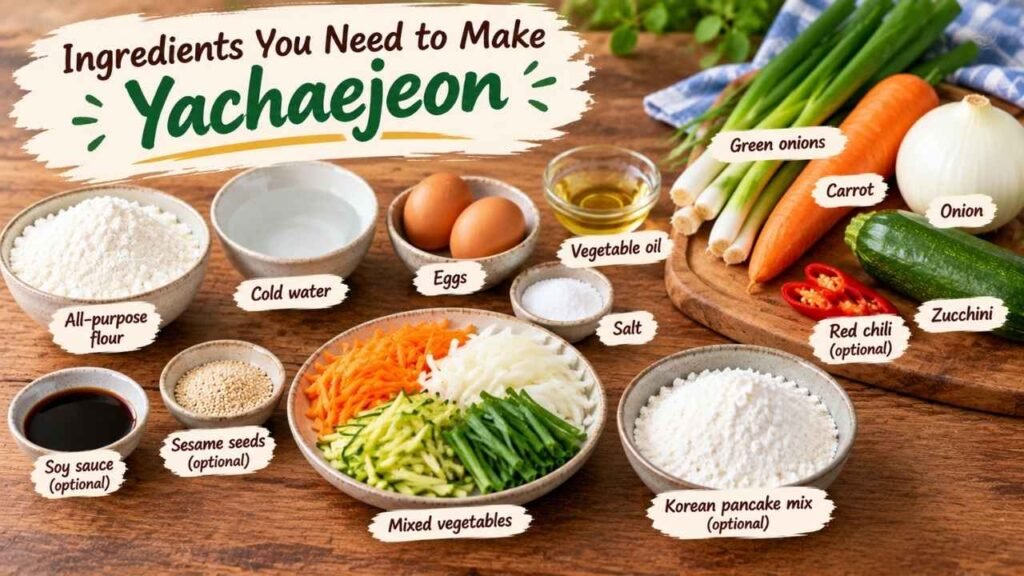
The ingredients for this Korean vegetable pancake recipe are simple. You need all-purpose flour, a little cornstarch or potato starch, cold water, salt, neutral cooking oil, and a mix of fresh vegetables. Zucchini, carrots, onion, and green onions make a tasty basic combination.
For extra flavor, you can add mushrooms, sweet potato, cabbage, or a little green chili. Potato starch or cornstarch can help create a lighter and crispier surface. Cold water is also useful when making the batter.
Ingredients
- All-purpose flour
- Cornstarch or potato starch
- Cold water
- Salt
- Zucchini
- Carrot
- Onion
- Green onions
- Cooking oil
- Optional mushrooms, cabbage, chili, or sweet potato
Keep the batter light rather than using too much flour.
What Vegetables Are Best for Yachaejeon?
One of the best things about Yachaejeon is that you can change the vegetables easily. Zucchini, carrots, onions, and green onions are excellent choices because they cook quickly and add different textures. Mushrooms can add a deeper savory flavor, while sweet potato gives the pancake a slightly sweet taste.
For the best Korean vegetable pancakes, cut the vegetables into thin, narrow pieces. This helps them cook evenly and makes the pancake easier to flip. You can also use cabbage, bell peppers, Asian chives, or leftover vegetables.
Try not to use vegetables with too much water unless you control their moisture first. Excess water can make your crispy Yachaejeon soft instead of golden and crisp.
How to Make the Perfect Yachaejeon Batter
The batter is important because it affects the final texture of your Yachaejeon. Start with all-purpose flour, a small amount of cornstarch or potato starch, salt, and cold water. Mix gently until you have a thin batter that can lightly coat the vegetables.
Avoid making the batter too thick. Too much flour can make the Korean vegetable pancake heavy and doughy. If the mixture looks very thick, add a little more cold water. If it looks too thin and watery, add a small amount of flour.
The goal is a batter that holds the vegetables together without covering them in a thick layer. A light coating helps create crispy edges while allowing the vegetables to remain tender.
How to Make Yachaejeon Step by Step
To make Yachaejeon, first wash and thinly slice your vegetables. Prepare the batter by mixing flour, starch, salt, and cold water until smooth. Add the vegetables and gently mix until they are lightly coated.
Heat a skillet over medium-high heat and add enough neutral oil to lightly cover the cooking surface. Once the pan is hot, spread the vegetable mixture into a thin, even layer. Do not make the pancake too thick.
Cook until the bottom becomes golden and firm. Carefully loosen the edges, then flip the pancake with a wide spatula. Cook the second side until golden and crisp. Once finished, transfer it to a plate and serve your Korean savory pancake while hot for the best texture.
How to Make Yachaejeon Extra Crispy
The secret to crispy Yachaejeon is controlling moisture, heat, oil, and thickness. First, make sure your vegetables are not overly wet. Too much moisture can create steam and prevent the pancake from becoming crisp.
Next, properly preheat the pan before adding the mixture. Use enough oil to help the bottom brown evenly, but avoid flooding the pan. Spread the vegetable mixture into a thin pancake instead of making a thick layer.
Cook over medium to medium-high heat and allow the first side to become golden before flipping. Do not turn it too early. Using a little potato starch or cornstarch in the batter can also help create a crisp surface. These simple steps make a big difference.
Common Yachaejeon Mistakes and How to Avoid Them
Making Korean vegetable pancakes is simple, but a few mistakes can affect the texture. One common problem is using too much batter. A thick layer can leave the center soft and doughy. Another mistake is adding vegetables that contain too much water without draining them first.
A cold pan can also cause the pancake to absorb oil instead of becoming crisp. Make sure the skillet is properly heated before cooking. Flipping too early may cause the pancake to break, so wait until the bottom is firm and golden.
Finally, avoid overcrowding the pan. Give the pancake enough space to cook evenly. Following these simple tips will help you make crispy Korean vegetable pancakes with a better texture every time.
How to Flip Yachaejeon Without Breaking It
Flipping can feel like the hardest part when making Yachaejeon, especially if you are preparing one large pancake. The key is to wait until the bottom is firm before turning it. If the pancake still moves or looks wet around the edges, give it more time.
Run a wide spatula gently underneath the edges to loosen the pancake. Once the bottom is golden and firm, slide the spatula farther underneath. Flip it in one confident movement.
If you are new to making Korean pancakes, try cooking smaller pancakes instead of one large one. Smaller pieces are easier to handle and usually cook more evenly. This simple method also makes it easier to get crispy edges without breaking the pancake.
Easy Yachaejeon Dipping Sauce
A simple Yachaejeon dipping sauce adds a bright, savory flavor to the crispy pancake. You only need a few basic ingredients. Mix soy sauce with rice vinegar, then add sesame seeds for a little texture. You can also add gochugaru if you enjoy a mild spicy taste.
For a richer sauce, add a few drops of sesame oil. If you prefer a slightly sweet flavor, a small amount of sugar can also work well. Keep the sauce balanced rather than making it too salty.
Serve the dipping sauce in a small bowl beside your Korean vegetable pancake. Dip each crispy piece just before eating. The salty and slightly sour sauce works especially well with the fresh vegetables and golden pancake.
Easy Yachaejeon Variations and Substitutions
The basic Yachaejeon recipe is easy to change based on your needs. For a vegan Yachaejeon, use vegetable ingredients and avoid any animal-based stock or seafood additions. You can also make an egg-free version because eggs are not required for the basic batter.
For a different texture, replace part of the all-purpose flour with rice flour, cornstarch, or potato starch. If you need a gluten-free option, use a suitable gluten-free flour blend and check that your other ingredients are gluten-free.
You can also change the vegetables. Try mushrooms, cabbage, sweet potato, bell peppers, or Asian chives. These simple changes let you create different Korean vegetable pancakes while keeping the same basic cooking method.
What to Serve With Yachaejeon
Yachaejeon is delicious on its own, but a few simple sides can turn it into a fuller Korean-style meal. The most common choice is a small bowl of Korean pancake dipping sauce made with soy sauce and vinegar.
You can also serve the pancake with kimchi, steamed rice, or other Korean side dishes. Fresh vegetables and light banchan can balance the rich, crispy texture of the pancake.
For a casual meal, cut the Korean vegetable pancake into small pieces and serve it as an appetizer or snack. It also works well as a side dish with rice and soup. Serve it soon after cooking because the pancake is at its best when the outside is hot and crispy.
How to Store and Reheat Yachaejeon
If you have leftover Yachaejeon, let it cool before placing it in an airtight container. Keep it in the refrigerator and use it within a few days for the best quality. Avoid stacking very hot pancakes together because trapped steam can make them soft.
For reheating, a skillet is one of the best choices. Heat the pan over medium heat and warm the pancake on both sides until the surface becomes crisp again. You can add a small amount of oil if needed.
Avoid using the microwave alone when possible because it can make Korean vegetable pancakes soft and chewy. If you freeze Yachaejeon, separate the pieces before freezing so they are easier to reheat. A hot skillet helps bring back those crispy edges.
FAQs
What does Yachaejeon mean?
Yachaejeon means a Korean vegetable pancake, made with vegetables and a light savory batter.
What vegetables can I use in Yachaejeon?
You can use zucchini, carrots, onions, green onions, mushrooms, cabbage, or sweet potato.
Why is my Yachaejeon soggy?
Too much vegetable moisture, a cold pan, a thick batter, or too little oil can make Yachaejeon soggy.
How do I make Yachaejeon crispy?
Use a hot pan, enough oil, a thin layer of batter, and well-drained vegetables.
Can I make Yachaejeon without eggs?
Yes. A basic vegan Yachaejeon does not require eggs or dairy.
Can I freeze Yachaejeon?
Yes, you can freeze cooked Yachaejeon and reheat it in a skillet to restore some crispness.
How do I reheat Yachaejeon?
Reheat it in a hot skillet until both sides are warm and crispy again.
Conclusion
Yachaejeon is a simple and tasty way to enjoy fresh vegetables in a crispy Korean vegetable pancake. With a light batter, thinly sliced vegetables, enough oil, and a properly heated pan, you can make golden pancakes with crisp edges and tender centers.
The recipe is also easy to customize with your favorite vegetables or made as a vegan Yachaejeon. Serve it hot with a savory Yachaejeon dipping sauce for the best flavor.
Once you learn the basic technique, this easy Korean recipe can become a quick snack, side dish, or light meal whenever you want something homemade and satisfying.