
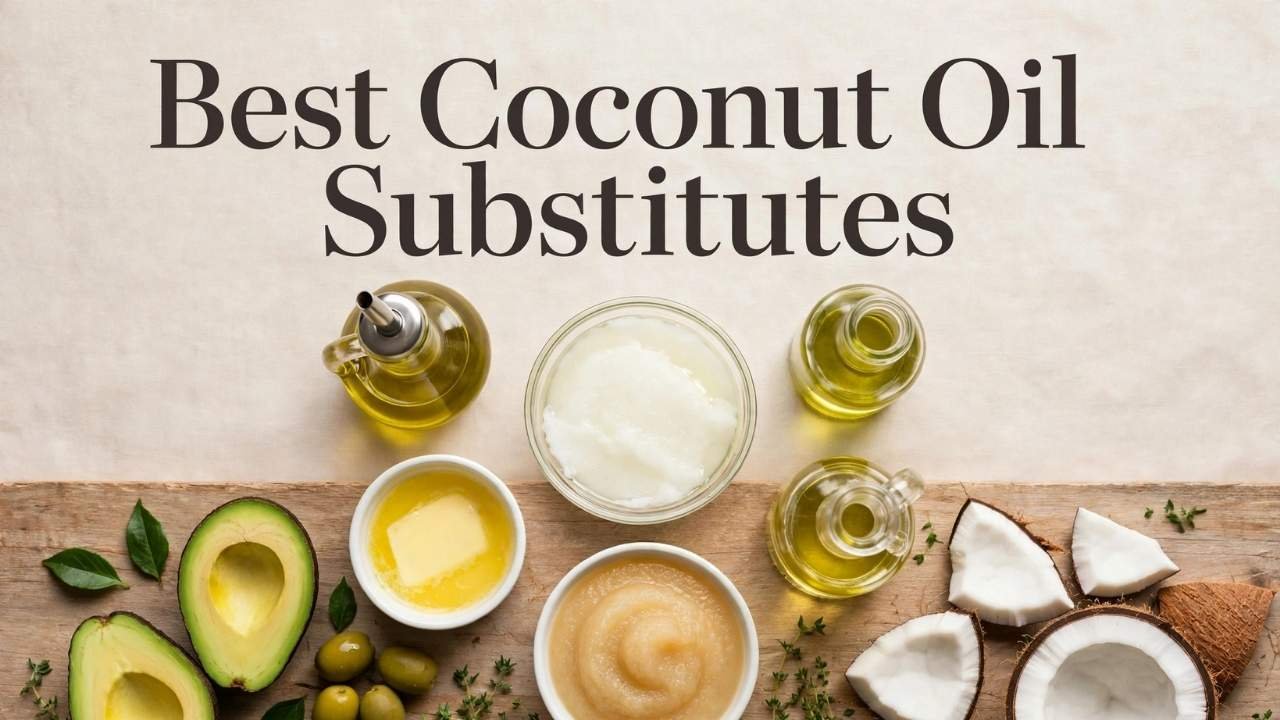
If you need the best coconut oil substitutes, you have several easy options to choose from. The right coconut oil substitute depends on what you are making and how the coconut oil is used in the recipe. Some alternatives work better for baking, while others are better for frying, sautéing, or high-heat cooking.
Butter, avocado oil, canola oil, olive oil, ghee, and vegan butter are some of the most useful substitutes for coconut oil. For baking, the texture of the original recipe matters, especially when the recipe uses solid coconut oil. If the recipe calls for melted coconut oil, a liquid oil may be a better choice.
In this guide, you will learn what can replace coconut oil, how different substitutes affect flavor and texture, and which option works best for cookies, cakes, frying, cooking, and other recipes. This makes choosing a coconut oil replacement much easier.
Quick Answer
The best coconut oil substitutes depend on your recipe. Butter or vegan butter works well for baking, while avocado oil and canola oil are useful for cooking and high-heat recipes. Olive oil is a good choice for sautéing, while ghee adds a rich flavor. For recipes using melted coconut oil, liquid oils often work best. Always consider the recipe’s texture, flavor, heat, and substitution ratio.
What Is the Best Substitute for Coconut Oil?

The best substitute for coconut oil depends on the recipe and how you plan to use it. For baking, butter, vegan butter, and shortening are useful choices because they can provide a solid texture. For cooking, avocado oil, canola oil, and vegetable oil are simple options with mild flavors. Olive oil works well for sautéing and savory dishes, while ghee adds a rich taste and works well with heat.
The form of coconut oil also matters. If the recipe uses melted coconut oil, a liquid oil is often the easiest replacement. If it uses solid coconut oil, choose another solid fat substitute for better texture.
Your final choice should match the recipe’s flavor, texture, heat level, and dietary needs.
Best Coconut Oil Substitutes at a Glance
Choosing the right coconut oil substitute becomes much easier when you compare how each option works. Butter is best when a recipe needs a rich flavor and solid texture. Avocado oil is useful for high-heat cooking and has a mild taste. Canola oil and vegetable oil are good choices when you want a neutral flavor. Olive oil works especially well for sautéing and savory dishes. Ghee adds a rich, slightly nutty taste, while vegan butter is helpful for dairy-free recipes.
Shortening is useful for pastries and pie crusts because it stays solid. Sunflower oil works well in everyday cooking and baking. For lower-fat baking, applesauce may replace some coconut oil while adding moisture.
Butter
Butter is one of the easiest coconut oil substitutes for baking. It works especially well in cookies, cakes, pastries, and some pie crusts because it is solid at room temperature and helps give baked foods structure. Butter also adds a rich and familiar flavor.
When replacing solid coconut oil, butter can often work in a similar amount, but the result may not be exactly the same because butter contains water and milk solids. It is also not suitable for vegan recipes.
Avocado Oil
Avocado oil is a versatile coconut oil alternative for cooking and baking. Its mild flavor makes it useful when you do not want the oil to change the taste of your food. It is especially suitable for sautéing, roasting, frying, and other higher-heat cooking methods.
When a recipe uses melted coconut oil, avocado oil can often be used in a 1:1 ratio. However, it remains liquid at room temperature, so it may not provide the same texture as solid coconut oil in cookies or pastries.
Canola Oil
Canola oil is a simple and affordable substitute for coconut oil. It has a mild, neutral flavor, which makes it useful for cakes, muffins, quick breads, and many everyday cooking recipes. It is particularly convenient when the recipe calls for melted coconut oil.
You can often use canola oil in a 1:1 ratio when replacing melted coconut oil. Since it stays liquid, it may not work as well when a recipe depends on solid coconut oil for structure. Still, it is one of the best choices when you want a neutral coconut oil replacement.
Olive Oil
Olive oil can be a good coconut oil substitute for cooking, especially for sautéing, roasting, and savory recipes. It can also work in some baked foods when the recipe uses melted coconut oil. However, olive oil has a stronger flavor than canola or avocado oil.
Extra-virgin olive oil may add a fruity or peppery taste, so it is important to consider the other ingredients. It is not usually the best choice for recipes that need solid fat, such as some cookies, pastries, or pie crusts.
Ghee
Ghee is a useful coconut oil alternative when you want a rich flavor and a fat that handles heat well. It works for sautéing, roasting, cooking, and some baked recipes. Ghee is also solid at cooler room temperatures, so it can be more useful than liquid oils when texture matters.
Its slightly nutty flavor can add extra richness to food. Because ghee comes from butter, it is not a vegan option. When you need a solid coconut oil substitute, ghee can be a practical choice.
Vegan Butter
Vegan butter is one of the best choices for a vegan coconut oil substitute, especially in baking. Many vegan butter products are solid when cool, so they can work well in cookies, cakes, pastries, and pie crusts where solid fat is important.
It also provides a buttery flavor without using dairy. However, different vegan butter brands can have different amounts of fat and water, so baking results may vary. Check the label and choose a product designed for baking when possible.
Vegetable Oil
Vegetable oil is a practical coconut oil replacement for many everyday recipes. Its mild flavor makes it useful for cakes, muffins, quick breads, sauces, and general cooking. It is especially convenient when the original recipe uses melted coconut oil.
In many recipes, vegetable oil can replace melted coconut oil in a 1:1 ratio. However, because it stays liquid, it will not create the same structure as solid coconut oil. For cookies, pastries, and pie crusts, a solid fat such as butter or shortening may give better results.
Shortening
Shortening is a helpful solid coconut oil substitute for baking. It stays firm at room temperature and can help create a tender or flaky texture. This makes it particularly useful for cookies, pie crusts, pastries, and other baked foods that depend on solid fat.
Shortening also has a fairly neutral flavor, so it does not strongly change the taste of a recipe. It is a useful option when you want solid fat without the buttery taste of butter. It is not suitable for people avoiding certain fats for dietary reasons.
Sunflower Oil
Sunflower oil is a mild and flexible coconut oil alternative for cooking and baking. Its neutral flavor allows the main ingredients to remain the focus. It can work well in cakes, muffins, quick breads, sautéed foods, and some frying recipes.
When replacing melted coconut oil, sunflower oil can often be used in a 1:1 ratio. Since it remains liquid, it may not be a good match for recipes that need solid coconut oil. Still, it is a useful plant-based choice when you want a simple, mild-tasting replacement.
Applesauce
Applesauce is different from most traditional coconut oil substitutes because it adds moisture instead of replacing fat in exactly the same way. It can be useful in cakes, muffins, and quick breads when you want to reduce the amount of added fat.
However, applesauce should not automatically replace all the coconut oil in a recipe. Too much can change the texture and make baked foods softer or heavier. It also adds a mild fruity taste, so it usually works better in sweet recipes than savory ones.
How to Choose a Coconut Oil Substitute
The best way to choose a coconut oil substitute is to look at the recipe first. Start by checking whether the coconut oil is solid or melted. Solid coconut oil is usually better matched with butter, vegan butter, shortening, or ghee, while melted coconut oil can often be replaced with a liquid oil.
Next, consider flavor. Choose canola or avocado oil for a mild taste, or butter and ghee for a richer result. You should also think about the cooking method. Frying and high-heat cooking need a suitable oil, while baking may depend more on texture.
Finally, consider dietary needs. A vegan coconut oil substitute should not contain dairy, while a dairy-free recipe needs an appropriate plant-based choice.
Choose Based on Whether Coconut Oil Is Solid or Melted
The form of coconut oil can make a big difference. Solid coconut oil works as a firm fat, so recipes such as cookies, pastries, and pie crusts may need another solid ingredient. Butter, vegan butter, shortening, and ghee can be better choices in these cases.
When the recipe calls for melted coconut oil, liquid oils are usually easier replacements. Canola, avocado, vegetable, and sunflower oil can often be used in a similar amount. Matching the texture of the original ingredient helps protect the final structure and mouthfeel of the recipe.
Choose Based on the Recipe
Different recipes need different types of fat. For cookies and pastries, a solid fat can help support shape and texture. For cakes, muffins, and quick breads, liquid oils often work well, especially when the recipe already uses melted coconut oil.
For sautéing, olive or avocado oil can be useful. For frying, canola, avocado, sunflower, or peanut oil may be suitable depending on the heat and food. Thinking about the recipe first helps you choose a coconut oil replacement that gives a better result.
Choose Based on Flavor
Flavor is another important part of choosing a coconut oil substitute. If you want the replacement to stay in the background, canola oil, vegetable oil, or sunflower oil are useful choices. Avocado oil also has a mild flavor.
For a richer result, butter or ghee can add more taste. Olive oil may bring a fruity or slightly peppery note, which can work well in savory recipes. Choosing a replacement based on flavor helps keep the finished dish balanced instead of adding a taste you did not expect.
Choose Based on Dietary Needs
Your diet can also affect which coconut oil alternative works best. For vegan recipes, choose vegan butter, avocado oil, canola oil, sunflower oil, or another plant-based option. For dairy-free baking, avoid butter and ghee unless they are specifically labeled as suitable.
If you want a lower-fat option for certain baked foods, applesauce may replace some of the oil. Always consider how the replacement affects texture as well as dietary needs. A good substitute should fit both the recipe and your food preferences.
Best Coconut Oil Substitute for Baking
The best coconut oil substitute for baking depends on the type of baked food and whether the coconut oil is solid or melted. Butter, vegan butter, and shortening are useful for cookies, pastries, and pie crusts because they provide solid fat. They can help support shape and texture in recipes that need a firm fat.
For cakes, muffins, brownies, and quick breads, canola oil, vegetable oil, or avocado oil may work well when melted coconut oil is used. Butter can also add a richer flavor. For vegan baking, vegan butter or plant-based oils are suitable choices.
If you want to lower the added fat, applesauce may work in certain recipes. However, it changes moisture and texture, so it should be used carefully.
For Cookies
For cookies, butter, vegan butter, and shortening are often better than liquid oils when replacing solid coconut oil. These fats can help the dough hold its shape and provide a more familiar cookie texture.
Butter gives a rich taste, while vegan butter works well for dairy-free or vegan recipes. Shortening has a more neutral flavor and can create a tender texture. If the recipe specifically calls for melted coconut oil, a liquid oil may work, but the final cookie can turn out softer or spread differently.
For Cakes and Muffins
For cakes and muffins, canola oil, vegetable oil, avocado oil, or melted butter can often replace melted coconut oil. These recipes usually do not need the same firm fat structure as cookies or pie crusts.
Canola and vegetable oil are useful when you want a neutral flavor, while avocado oil has a mild taste. Butter can add extra richness. The best choice depends on whether you want to maintain a neutral flavor or create a richer baked product.
For Brownies
For brownies, butter, canola oil, avocado oil, or vegetable oil can work as coconut oil replacements, depending on the recipe. Butter gives brownies a rich taste and can help create a soft, dense texture.
Liquid oils can also work when the original recipe uses melted coconut oil. Canola and vegetable oil are good choices when you want a neutral flavor, while avocado oil has a mild taste. The right option depends on the texture and richness you want from the finished brownies.
For Pie Crust and Pastries
For pie crusts and pastries, solid fats are usually a better match because texture and structure are important. Butter, vegan butter, and shortening can work well as replacements for solid coconut oil.
Butter creates a rich flavor and flaky texture, while shortening can help produce tenderness and structure without adding much flavor. Vegan butter is useful when you need a dairy-free or plant-based option. Liquid oils may not give the same flaky result because they remain fluid.
Best Coconut Oil Substitute for Cooking
The best coconut oil substitute for cooking depends on the method, temperature, and flavor you want. Avocado oil is a versatile option for higher-heat cooking because of its mild taste. Canola oil and vegetable oil are useful when you want a more neutral flavor.
For sautéing, olive oil can be a good choice, especially for vegetables and savory dishes. Sunflower oil is another mild option for everyday cooking. If the recipe uses melted coconut oil, most liquid oils can be used more easily than solid fats.
Before choosing a replacement, think about the heat level, flavor, and type of food. This will help you pick an oil that fits the recipe rather than simply replacing coconut oil by volume.
For Sautéing
Olive oil, avocado oil, and canola oil are useful coconut oil substitutes for sautéing. Olive oil can add a pleasant flavor to vegetables, garlic, sauces, and savory dishes. Avocado oil has a milder taste, while canola oil is useful when you want a neutral result.
The best choice depends on the food and the heat level. Since these are liquid oils, they are especially convenient when the coconut oil would normally be melted during cooking.
For Frying
For frying, avocado oil, canola oil, sunflower oil, and peanut oil are useful options. Each has a different flavor, so choose one that fits the food you are preparing.
Avocado oil has a mild taste, while canola and sunflower oil are more neutral. Peanut oil can add a slight nutty flavor. When choosing a coconut oil substitute for frying, focus on the type of frying, the heat needed, and whether you want the oil to add flavor.
For Roasting and Grilling
For roasting and grilling, avocado oil, canola oil, and some olive oils can work well depending on the heat and recipe. Avocado oil is mild and versatile, while canola oil provides a more neutral flavor.
Olive oil can be a good choice when its taste fits the food. Before replacing coconut oil, consider the cooking temperature and the flavor of the dish. The best coconut oil alternative for high-heat cooking should suit both the heat and the ingredients.
Coconut Oil Substitution Ratios
A coconut oil substitution ratio depends on the type of replacement and how the original coconut oil is used. For many liquid oils, a 1:1 ratio is a simple starting point. One tablespoon of melted coconut oil can often be replaced with one tablespoon of canola, avocado, vegetable, or sunflower oil.
Butter, ghee, and shortening may also work in similar amounts, but they can change the final flavor and texture. Moisture-based options such as applesauce are different because they do not contain the same amount of fat.
Before making a coconut oil conversion, check whether the recipe uses solid or melted coconut oil. Matching the amount is important, but matching the function of the ingredient is just as important.
Can You Substitute Coconut Oil 1:1?
Yes, you can often substitute coconut oil 1:1 when using another liquid oil, especially if the original recipe calls for melted coconut oil. Canola oil, avocado oil, vegetable oil, and sunflower oil can often replace the same amount.
However, 1:1 does not always mean the recipe will behave exactly the same. Solid coconut oil can provide structure that liquid oil cannot. For cookies, pastries, and pie crusts, butter, vegan butter, shortening, or ghee may be a better match.
Moisture-based substitutes such as applesauce are also different. They add water and moisture rather than the same amount of fat. So, the coconut oil substitution ratio should always be considered alongside the recipe type.
What Is the Best Substitute for Melted Coconut Oil?
When a recipe uses melted coconut oil, liquid oils are usually the simplest replacements. Canola oil, avocado oil, vegetable oil, and sunflower oil can often be used in a 1:1 ratio because they are already liquid.
Olive oil can also work when its flavor fits the recipe. It is especially useful in savory dishes and some baked foods. The main advantage of using another liquid oil is that it can keep the recipe’s overall structure closer to the original.
For sweet recipes where a richer flavor is wanted, melted butter may also work. The best melted coconut oil substitute should match both the recipe’s texture and desired flavor.
What Is the Best Substitute for Solid Coconut Oil?
When a recipe uses solid coconut oil, another solid fat is usually the better choice. Butter, vegan butter, shortening, and ghee can all work depending on the recipe.
Butter provides rich flavor, vegan butter is useful for plant-based baking, shortening offers a more neutral taste, and ghee gives a rich, slightly nutty flavor. These choices can provide more structure than liquid oils.
This is especially important for cookies, pie crusts, pastries, and some frostings. A liquid oil may make the final product softer or change how it spreads. Matching the original physical form usually gives a more predictable result.
Coconut Oil Substitutes by Recipe
The best coconut oil substitute by recipe depends on what the food needs from the fat. For cookies, butter, vegan butter, or shortening are often useful because they provide solid structure. For cakes and muffins, canola, vegetable, or avocado oil can work well when melted coconut oil is used.
For brownies, butter or a mild liquid oil can be suitable. For pie crusts and pastries, butter, vegan butter, or shortening are better choices because solid fat helps with texture.
For frying, avocado, canola, sunflower, or peanut oil can be useful. For sautéing, olive or avocado oil works well. Choosing the replacement based on the recipe gives you a better chance of keeping the desired flavor, texture, and structure.
Common Mistakes When Replacing Coconut Oil
Replacing coconut oil may seem simple, but using the wrong type can change the final result. One common mistake is choosing a liquid oil when solid fat is needed. This can affect cookies, pastries, and pie crusts. Another mistake is ignoring flavor. Olive oil, butter, and ghee can add stronger tastes than neutral oils.
You should also consider heat when choosing a coconut oil substitute for frying or high-temperature cooking. Another mistake is assuming every substitute works perfectly in a 1:1 amount. Many liquid oils do, but butter and applesauce behave differently.
Finally, remember dietary needs. Butter and ghee are not vegan, while some plant-based options are. Always match the substitute to the recipe.
Using a Liquid Oil When the Recipe Needs Solid Fat
A liquid oil may not give the same structure as solid coconut oil. This can be a problem in cookies, pastries, and pie crusts where the fat helps shape and texture.
If the recipe uses solid coconut oil, consider butter, vegan butter, shortening, or ghee instead. These ingredients stay firm and can better support the recipe. A liquid oil may still work in some recipes, but the finished food can spread more or become softer.
Ignoring Flavor Differences
Not every coconut oil alternative tastes the same. Canola, vegetable, and sunflower oils are mild, while olive oil may have a fruity or peppery flavor. Butter and ghee can add richer tastes.
Before choosing a substitute, think about the other ingredients in the recipe. A stronger oil may work well in a savory dish but may not suit a delicate dessert. Choosing a flavor that fits the recipe helps create a more balanced result.
Choosing an Oil Without Considering Heat
A common mistake is choosing an oil without thinking about the cooking temperature. A coconut oil substitute for frying or high-heat cooking should be suitable for that cooking method.
For higher heat, options such as avocado oil or other suitable cooking oils may work well. For gentle sautéing, olive or canola oil can be useful. The cooking method should always be considered along with flavor and recipe needs.
Assuming Every Substitute Works 1:1
Many oils can be used 1:1, but that does not mean every coconut oil replacement works the same way. Liquid oils can often replace melted coconut oil directly, while solid fats may affect texture differently.
Ingredients such as applesauce are even more different because they add moisture instead of the same amount of fat. Always check the form of the original coconut oil and the role it plays in the recipe before making a simple 1:1 swap.
Forgetting Dairy or Vegan Requirements
Some substitutes may not fit the dietary needs of the recipe. Butter and ghee contain dairy, so they are not suitable for strict vegan recipes. For vegan or dairy-free cooking, choose options such as vegan butter, avocado oil, canola oil, sunflower oil, or vegetable oil.
Checking the ingredients before making a substitution is especially important when cooking for someone with dietary restrictions. The best coconut oil substitute should work both technically and for the people eating the dish.
FAQs
What is the best substitute for coconut oil?
Butter, vegan butter, avocado oil, and canola oil are popular choices. The best option depends on the recipe and whether you need solid or liquid fat.
Can I use butter instead of coconut oil?
Yes. Butter works well in cookies, cakes, pastries, and other baked foods. It adds a rich flavor and provides a solid texture.
Can I use olive oil instead of coconut oil?
Yes. Olive oil works well for sautéing, roasting, and some baking. Keep in mind that it has a stronger flavor than neutral oils.
What is the best coconut oil substitute for baking?
For baking, butter, vegan butter, or shortening work well when solid fat is needed. For cakes and muffins, canola or avocado oil can also work.
Can you substitute coconut oil 1:1?
Yes, many liquid oils can replace melted coconut oil 1:1. Solid coconut oil may need butter, vegan butter, shortening, or another solid fat.
Conclusion
There is no single best coconut oil substitute for every recipe. The right choice depends on whether the coconut oil is solid or melted, how much heat is involved, and what flavor and texture you want.
For solid coconut oil, butter, vegan butter, shortening, or ghee can be useful. For melted coconut oil, canola, avocado, vegetable, or sunflower oil are simple options. Olive oil works especially well for sautéing and savory recipes.
Before making a swap, consider the recipe, substitution ratio, flavor, texture, cooking temperature, and dietary needs. With these points in mind, choosing a coconut oil replacement becomes much easier.