
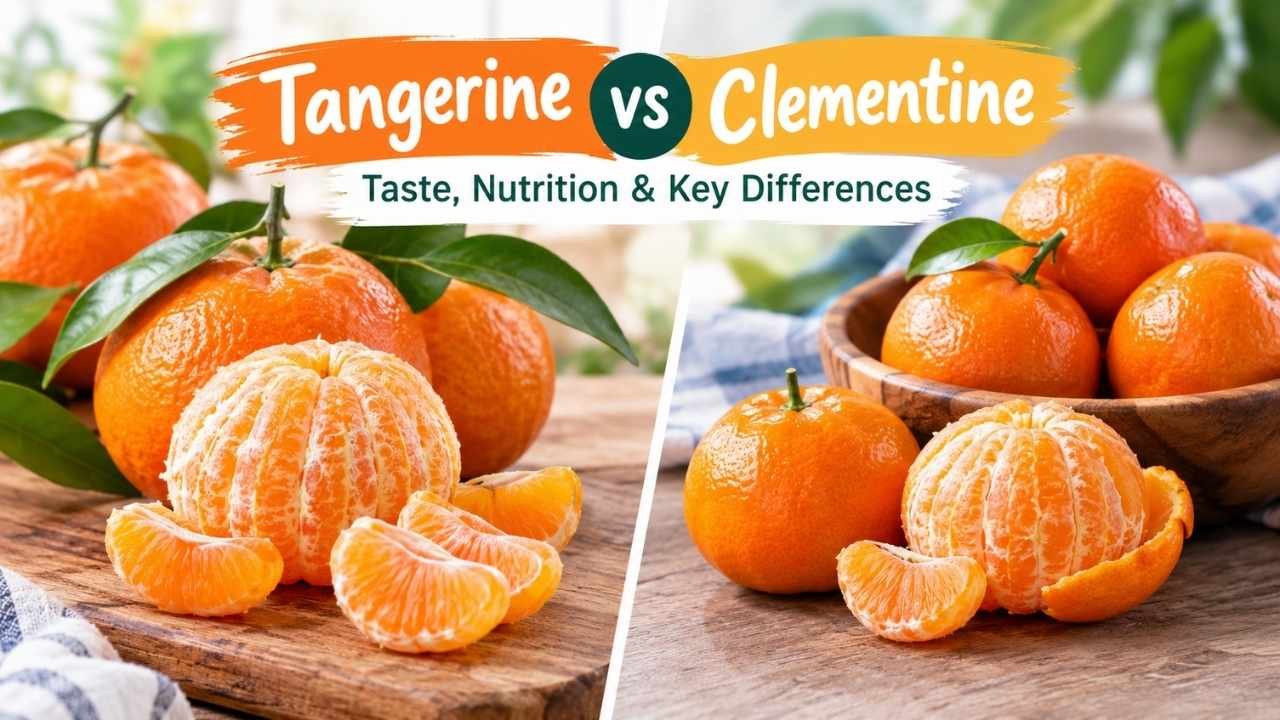
At first glance, Tangerine vs Clementine look almost the same, so it is easy to wonder if they are the same fruit. Both are citrus fruits closely related to mandarins, but they have some clear differences. A clementine is usually smaller, sweeter, smoother, and easier to peel, while a tangerine often has a slightly larger size, rougher skin, and a more sweet-tart flavor. Their seed content can also differ.
So, what is the difference between tangerines and clementines? The answer comes down mainly to their taste, size, skin, seeds, and varieties. In this guide, we’ll compare tangerines and clementines side by side, explain how they relate to mandarin oranges, look at their nutrition and common uses, and help you decide which fruit is right for you.
Quick Answer
Tangerines and clementines are closely related citrus fruits, but they are not exactly the same. Clementines are usually smaller, sweeter, smoother-skinned, and easier to peel, and they are typically seedless. Tangerines tend to be slightly larger, with a more textured peel and a stronger sweet-tart flavor. Both belong to the mandarin group and provide vitamin C, fiber, and other helpful nutrients.
Tangerine vs. Clementine at a Glance
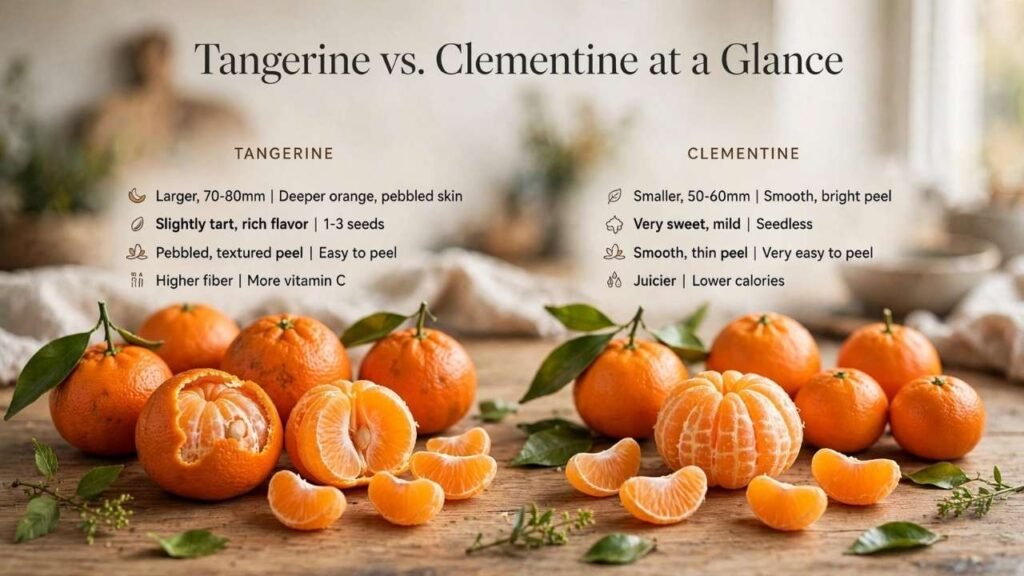
Tangerines and clementines are both mandarin citrus fruits, but they are not exactly the same. The easiest way to tell them apart is by looking at their size, shape, skin, taste, and seeds. Tangerines are often a little larger and have a deeper orange color with a slightly rough or pebbled peel. They usually have a sweet-tart and tangy flavor.
Clementines are generally smaller, rounder, bright orange, and have a smooth, thin peel. They are also known for being very easy to peel and are usually seedless.
Both fruits are juicy and make good snacks. Clementines are often a better choice if you want a sweet, mild, seedless fruit, while tangerines may suit you if you prefer a stronger citrus taste. Both can also be used in salads, desserts, juices, and other recipes.
What Is a Tangerine?
A tangerine is a type of citrus fruit closely related to the mandarin orange. It is usually smaller than a regular orange and has a bright to deep orange color. Tangerines often have a slightly flattened shape and a loose, textured peel, which makes them fairly easy to remove by hand. Their taste is usually sweet with a mild tart or tangy note, although the flavor can change between varieties.
Some tangerines contain seeds, while others may have few or no seeds. The word “tangerine” can also describe several related citrus varieties, so not every tangerine looks or tastes exactly the same. Tangerines are commonly eaten fresh, but they can also be used for juice, zest, salads, sauces, desserts, and marmalade. They are valued for their fresh citrus flavor and useful nutrients, including vitamin C and fiber.
What Is a Clementine?
A clementine is a small citrus fruit that belongs to the mandarin group. It is known for its bright orange color, smooth skin, sweet flavor, and easy-to-peel rind. Clementines are usually smaller than tangerines and often have a round or slightly oval shape. Their flavor is generally sweeter and milder, with less tartness than many tangerine varieties.
Most clementines are seedless, although seeds can sometimes develop when the fruit is exposed to pollen from other citrus trees. This is one reason it is better to say they are usually seedless rather than always seedless. Clementines are popular as a simple snack because they are small, portable, and easy to eat. They also work well in fruit salads, desserts, cakes, juices, and other recipes. Like other citrus fruits, they provide nutrients such as vitamin C and fiber.
Tangerine vs. Clementine: 7 Key Differences
Tangerines and clementines can look very similar, but several small details can help you tell them apart. Size and shape are often the first clues. Tangerines tend to be slightly larger and may look flatter, while clementines are usually smaller and rounder.
Their skin is another clear difference. Tangerines often have a rougher, more pebbled peel, while clementines usually have smooth, thin skin. When it comes to taste, clementines are generally sweeter and milder.
Tangerines often have a stronger sweet-tart or tangy flavor. Seeds can also help: clementines are usually seedless, while some tangerines contain seeds. Color, juiciness, and season can vary between varieties, so they are not perfect ways to identify each fruit. Overall, the best clues are peel texture, size, sweetness, and seed content.
Size and Shape
One of the easiest ways to compare a tangerine and a clementine is by looking at their size and shape. Tangerines are often a little larger and can have a slightly flattened or uneven shape. Clementines are usually smaller and more rounded, although their exact shape can vary.
Both fruits are much smaller than most common oranges, which makes them convenient for snacking. Size alone should not be used to identify the fruit because different citrus varieties can overlap in size.
Still, when you place a typical tangerine beside a typical clementine, the clementine will often look smaller and more compact. The shape may also give you a useful clue at the grocery store. If the fruit is small, round, bright orange, and smooth-skinned, it is more likely to be a clementine. A larger, slightly flatter fruit may be a tangerine.
Color
Both tangerines and clementines usually have orange-colored skin, but their shades can be slightly different. Clementines are often known for their bright, deep orange color, which gives them an appealing look when placed among other citrus fruits.
Tangerines can also be bright orange, but some varieties have a deeper reddish-orange tone. However, color is not a reliable way to tell every tangerine from every clementine.
Growing conditions, variety, ripeness, and storage can all affect the final color of the peel. This means you should not depend on color alone when trying to identify the fruit. It is better to look at color together with size, shape, and skin texture. A small, round, bright orange fruit with smooth skin is often a clementine, while a slightly larger fruit with a deeper orange color and textured peel may be a tangerine.
Skin and Peel
The skin or peel is one of the most useful differences between tangerines and clementines. Tangerines often have a rougher, slightly pebbled peel that can feel more textured when you hold the fruit. Clementines usually have smooth, thin skin that feels softer and tighter around the fruit. Both fruits are easy to peel compared with many oranges, but clementines are especially well known for being easy to peel.
Their thin rind can usually be removed quickly with your fingers, which makes them popular for snacks and lunchboxes. Tangerine peels can also come off easily because they are often loose from the flesh. Still, the exact peel can change from one variety to another. For this reason, skin texture works best when combined with other clues, such as size, shape, taste, and seed content.
Taste and Sweetness
Taste is perhaps the biggest reason people choose one fruit over the other. Clementines are generally sweeter and milder, making them popular with people who prefer a gentle citrus flavor. They have a pleasant sweetness with a light citrus note and usually less tartness. Tangerines often have a stronger, more sweet-tart flavor. They can taste sweeter than some oranges while still having a noticeable tangy or slightly acidic edge.
Of course, flavor can change depending on the variety, ripeness, and growing conditions. So, saying that every clementine is sweeter than every tangerine would be too simple. Still, as a general guide, choose a clementine for a sweeter and milder taste and a tangerine when you want a more noticeable citrus flavor. Both are juicy and refreshing and can be enjoyed fresh or added to recipes.
Seeds
Seed content is another useful difference between tangerines and clementines. Clementines are widely known as usually seedless, which is one reason they are so popular as an easy snack. However, a clementine can sometimes contain seeds if its flowers are pollinated by another compatible citrus variety. Tangerines are more likely to contain seeds, but this depends on the variety and growing conditions.
Some tangerine varieties can also be seedless or have very few seeds. Therefore, it is not accurate to say that all tangerines have seeds or that every clementine is completely seedless. If you are looking for a convenient fruit with fewer surprises, a typical clementine is often the better choice. If seeds do not bother you, both fruits can be enjoyed in the same basic ways, including fresh eating, salads, desserts, and juice.
Juiciness and Texture
Both fruits are juicy citrus fruits, but their texture and juice level can vary by variety and ripeness. Clementines usually have tender, juicy sections with a soft texture. Their small size also makes them easy to separate into sections and eat by hand. Tangerines can also be very juicy and may have a slightly stronger citrus flavor.
Some varieties are especially good for juicing because of their juice content and flavor. However, there is no simple rule that says one fruit is always juicier than the other. Freshness matters a lot. A ripe, heavy fruit that feels firm but not hard is often a good choice. When comparing the two, think about what you want: clementines are convenient for easy snacking, while tangerines can be appealing when you want a stronger citrus taste. Both work well in fresh recipes.
Are Tangerines and Clementines the Same Fruit?
Tangerines and clementines are not exactly the same fruit, although they are closely related. Both belong to the broad group of mandarin citrus fruits, which is why their appearance and names can cause confusion. Tangerine is a name used for certain types of mandarins, while a clementine is a particular mandarin hybrid. The terms are sometimes used loosely in stores and everyday conversation, which adds to the confusion.
Their main differences can be seen in their size, skin, taste, and seeds. Clementines are usually smaller, sweeter, smoother, and more often seedless. Tangerines tend to have a stronger sweet-tart flavor and may contain seeds. They also come in different varieties, so not every fruit labeled “tangerine” will look exactly the same. In simple terms, they are close relatives, not two names for one identical fruit.
Are Tangerines and Clementines Mandarins?
Yes, both are closely connected to the mandarin group. Mandarin is the broader term used for a large group of small, easy-to-peel citrus fruits. Tangerines are generally considered types of mandarins, although the exact use of the word can vary by region and citrus classification. Clementines are also part of the mandarin group and are commonly described as a mandarin hybrid.
This is why you may see the words mandarin, tangerine, and clementine used together in stores, recipes, and food articles. They are related, but the names do not always mean exactly the same thing. A simple way to remember it is that mandarin is the broader group, while tangerine and clementine refer to particular types within that group. This relationship also explains why all three fruits share traits such as bright orange skin, juicy flesh, and an easy-to-peel rind.
Tangerine vs. Clementine Nutrition
Both tangerines and clementines are nutritious citrus fruits, and the difference between them is usually small. Their exact nutrition depends on the fruit’s size, variety, and serving size. Both provide vitamin C, which supports normal immune function and helps the body absorb iron from plant foods. They also contain fiber, carbohydrates, water, and smaller amounts of minerals and plant compounds.
Citrus fruits also provide carotenoids and other natural compounds that contribute to their color and nutritional value. Instead of asking which fruit is always healthier, it is more useful to look at the overall diet. A fresh clementine or tangerine can be a good choice when you want a naturally sweet snack. If comparing nutrition labels, make sure you compare similar serving sizes because a larger fruit can naturally contain more calories and nutrients than a smaller one.
Which Is Healthier: Tangerines or Clementines?
There is no clear winner when comparing the health benefits of tangerines and clementines. Both are whole citrus fruits that can fit into a healthy diet. They provide vitamin C, fiber, water, and plant compounds, while being naturally sweet and relatively low in calories compared with many processed snacks. The exact nutritional value can vary by fruit size and variety, so one clementine may not have exactly the same nutrition as another.
Rather than choosing one because it is called “healthier,” focus on eating a variety of fruits and vegetables. Clementines may be more convenient because they are small, easy to peel, and usually seedless. Tangerines may appeal to people who enjoy a stronger flavor. If your main goal is better nutrition, either fruit is a good choice. The most important factor is the overall eating pattern, not a small difference between these two fruits.
Which Is Sweeter: Tangerines or Clementines?
In general, clementines are sweeter than tangerines. They usually have a mild, pleasant sweetness with less noticeable tartness. This makes them popular with people who prefer a gentle citrus flavor, including many children. Tangerines often have a more sweet-tart, tangy flavor, which can give them a stronger citrus taste.
However, sweetness is not exactly the same in every fruit. Variety, ripeness, growing conditions, and storage can all affect flavor. A very ripe tangerine may taste sweeter than a less ripe clementine. So, the best general guide is to choose a clementine when you want a sweet and mild citrus fruit and a tangerine when you prefer a more balanced sweet-and-tart flavor. Both can be refreshing snacks, and both work well in fruit salads, desserts, juices, and other recipes.
Which Is Easier to Peel?
Both fruits are fairly easy to peel, but clementines are especially known for their easy-to-remove skin. Their peel is usually thin, smooth, and easy to separate from the flesh with your fingers. This makes clementines convenient for quick snacks, lunchboxes, and travel. Tangerines also tend to have a loose peel, so they can usually be peeled without a knife. Their skin may feel more textured or slightly rough compared with a clementine.
The exact experience depends on the variety and how ripe the fruit is. If easy peeling is your main concern, a clementine is often the safer choice. If you enjoy a stronger citrus flavor and do not mind a slightly more textured peel, a tangerine is also a good option. In both cases, the peel should be removed before eating the fruit sections.
Which One Should You Choose?
The best choice depends on what you want from the fruit. Choose a clementine if you want something small, sweet, easy to peel, and usually seedless. Clementines are especially convenient for lunchboxes and quick snacks because you can peel them without much effort. Choose a tangerine if you prefer a stronger, more tangy citrus flavor and do not mind that some varieties may contain seeds. For everyday snacking, either fruit can be a good option. For recipes, the choice often depends on the flavor you want.
A sweeter clementine can work well in desserts and fruit salads, while a more tart tangerine can add extra citrus flavor to sauces or dressings. Since both fruits are nutritious, the final choice often comes down to taste, convenience, seed preference, and availability rather than health alone.
Can You Substitute Tangerines for Clementines?
Yes, tangerines and clementines can usually be substituted for each other in many recipes. Both have juicy citrus sections and a similar overall flavor, so they can work well in fruit salads, desserts, cakes, sauces, and some drinks. However, the final taste may change slightly. Clementines are generally sweeter and milder, while tangerines may add more tartness and a stronger citrus note.
If a recipe uses the fruit mainly for sweetness, a clementine may be a better match. If it needs a stronger citrus flavor, a tangerine can work well. You can also use their zest in some recipes, but wash the fruit well before zesting. When replacing one with the other, use a similar amount by weight or number of fruits and adjust sugar or other ingredients if the taste needs balancing.
How to Tell a Tangerine and Clementine Apart at the Store
Telling a tangerine from a clementine at the grocery store is not always easy because different varieties can look alike. Start with the size and shape. Clementines are usually smaller and more rounded, while tangerines may be slightly larger and flatter. Next, look at the skin. A clementine usually has a smooth, thin peel, while a tangerine often has a more textured or pebbled surface.
Color can provide another clue, but it should not be your only guide. You can also check the label, since stores may identify the variety. Remember that seeds cannot be checked without opening the fruit. Because there is natural variation, no single feature is perfect. The best approach is to consider size, shape, skin texture, color, and labeling together. With practice, these clues can make identification much easier.
Tangerine vs. Clementine vs. Mandarin vs. Satsuma
Mandarin, tangerine, clementine, and satsuma are closely related citrus terms, but they do not all mean the same thing. Mandarin is the broader term for a group of small citrus fruits. Tangerine is commonly used for certain mandarin types. Clementine is a specific mandarin hybrid known for its small size, sweetness, smooth peel, and usual lack of seeds. Satsuma is another type of mandarin that is also known for being easy to peel and often seedless. These fruits can overlap in appearance and taste, which is why shoppers sometimes find the names confusing. The easiest approach is to think of mandarin as the broader group and tangerine, clementine, and satsuma as related types. Their exact classification can be more complex in botany and commercial naming, so simple labels do not always tell the full story.
FAQs
Are tangerines and clementines the same?
No. They are closely related citrus fruits, but they are different types within the mandarin group.
Are clementines mandarins?
Yes. Clementines are commonly described as mandarin hybrids.
Are tangerines mandarins?
Yes. Tangerines are generally considered part of the mandarin group.
Which is sweeter, a tangerine or clementine?
Clementines are usually sweeter and milder, while tangerines often have a stronger sweet-tart flavor.
Do tangerines have seeds?
Some do. Seed content depends on the variety and growing conditions.
Are clementines seedless?
They are usually seedless, but seeds can sometimes develop when cross-pollination occurs.
Which is healthier?
Both are nutritious fruits that provide vitamin C, fiber, and other plant nutrients. Neither needs to be considered the clear winner.
Can you substitute one for the other?
Yes. They can usually be used interchangeably in salads, desserts, baking, sauces, and other recipes, although the flavor may differ slightly.
How can you tell them apart?
Look at size, shape, skin texture, and color. Clementines are usually smaller and smoother, while tangerines tend to be somewhat larger with more textured skin.
Conclusion
Tangerines and clementines are close relatives, but they have noticeable differences. Clementines are usually smaller, sweeter, smoother, easier to peel, and usually seedless. Tangerines tend to be slightly larger, more textured, and more sweet-tart in flavor. Both belong to the mandarin group and can provide vitamin C, fiber, and other useful nutrients.
If you want a sweet, easy-to-peel snack, a clementine is a great choice. If you prefer a stronger and more tangy citrus flavor, try a tangerine. You can also use either fruit in many of the same recipes. Ultimately, the better choice comes down to taste, convenience, seeds, and what is available. There is no need to pick one as universally better—the best fruit is the one you enjoy eating.