

If you are looking for fruits that start with C, you will find many choices beyond the familiar cherry or coconut. This list includes common fruits, tropical fruits, citrus fruits, berries, melons, and unusual C fruits from different parts of the world. Some are easy to find in local markets, while others are rare and may be less familiar.
In this guide, you will discover fruit names beginning with C, along with simple facts about their taste, appearance, origin, and common uses. You will also find exotic fruits that start with C, alternative fruit names, and helpful categories that make the list easy to explore.
Whether you need C fruit names for kids, want ideas for a trivia game, or simply want to learn what fruits start with C, this guide gives you a clear and useful place to start.
Quick Answer
Some popular fruits that start with C include cherry, coconut, cranberry, cantaloupe, clementine, carambola, citron, and custard apple. There are also many exotic C fruits, such as camu camu, canistel, cherimoya, cempedak, and cupuaçu. Other examples include calamansi, cape gooseberry, cloudberry, currant, chokeberry, and crab apple. These C fruits vary in taste, color, texture, origin, and culinary uses.
What Fruits Start With C?
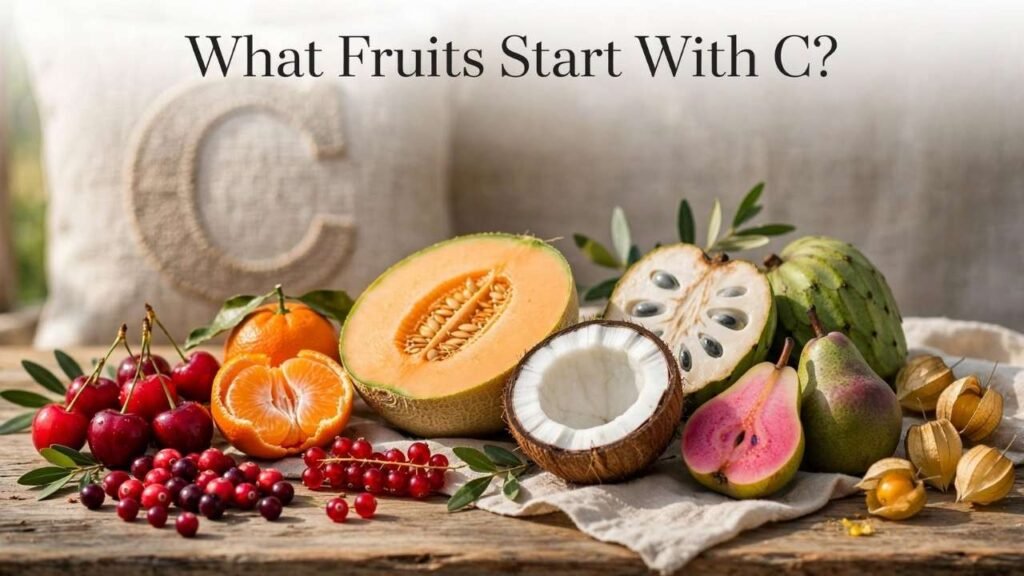
There are many fruits that start with C, ranging from everyday favorites to rare tropical varieties. Some of the most familiar fruit names beginning with C are cherry, coconut, cranberry, cantaloupe, clementine, and carambola. You can also find less common choices such as canistel, camu camu, cherimoya, cloudberry, cupuaçu, and cempedak.
Among citrus fruits that start with C, popular examples include citron, calamansi, calamondin, clementine, and caviar lime. For berry lovers, cranberry, cloudberry, chokeberry, chokecherry, crowberry, and currant are useful examples.
Some C fruits are sweet and juicy, while others have a sour, tart, creamy, or slightly tropical taste. Their colors and textures also vary widely. Whether you are searching for C fruit names for kids, trivia, or general knowledge, this list offers plenty of interesting choices.
Complete List of Fruits That Start With C
The list of fruits that start with C is much larger than many people expect. It includes familiar choices such as cherry, coconut, cranberry, cantaloupe, and clementine, as well as unusual fruits from different parts of the world. Some are sweet and juicy, while others are sour, creamy, or slightly tart.
Common Fruits That Start With C
Some of the most well-known C fruit names include cantaloupe, cherry, coconut, cranberry, clementine, carambola, custard apple, currant, crab apple, and cape gooseberry. These fruits are easier to recognize and are commonly used fresh, in salads, drinks, desserts, or snacks.
Exotic and Unusual Fruits That Start With C
For people interested in exotic fruits that start with C, there are many exciting options. Camu camu, canistel, cempedak, cherimoya, cupuaçu, charichuelo, catmon, cloudberry, and coco de mer are examples. Many of these fruits grow in tropical or less common regions and may not be available in regular markets.
C Fruits and Their Alternative Names
Some fruits beginning with C are known by more than one name. Knowing these names can make it easier to identify a fruit when shopping, reading recipes, or searching online. Carambola is widely known as star fruit, while canistel is often called egg fruit because of its smooth, creamy texture.
Cape gooseberry is also known by names such as Peruvian groundcherry, while Chinese wolfberry is commonly called goji berry. Calamondin and calamansi are closely related citrus fruits and may have different names depending on the region.
Other examples include cumquat and kumquat, which refer to the same citrus fruit, and cantaloupe, which is also commonly described as a type of melon. Including alternative names makes a list of fruits that start with C more useful and helps readers connect different names with the same fruit.
What Do C Fruits Taste Like?
The taste of C fruits can be very different from one fruit to another. Cantaloupe and cherry are generally sweet, while cranberry and citron have a stronger tart or sour taste. Citrus choices such as clementine, calamansi, and calamondin usually have a fresh and tangy flavor.
Some fruits have a soft or creamy texture. Canistel and custard apple, for example, are known for their smooth flesh. Other fruits, such as carambola, are crisp and juicy.
Tropical fruits such as coconut, cupuaçu, cempedak, and cherimoya can have rich, sweet, or unusual flavors. This variety makes fruits starting with C interesting to explore.
If you are choosing fruit based on taste, think about whether you prefer sweet, sour, tart, juicy, creamy, or crunchy fruit. This simple approach can help you find a C fruit that matches your preference.
Where Do C Fruits Grow?
Fruits that start with the letter C grow in many different parts of the world. Some are linked with warm tropical climates, while others grow well in cooler regions. Coconut, cupuaçu, cempedak, and camu camu are examples of tropical fruits commonly associated with warm areas.
Several C fruits from Asia include cempedak, cherimoya varieties, Chinese quince, and coconut. South and Central America are also home to fruits such as camu camu, cupuaçu, cherimoya, and carambola.
Other fruits, including cranberry, cloudberry, chokeberry, and currant, can grow in cooler climates. Australia and nearby regions also have less familiar fruits such as cedar bay cherry.
Because these fruits come from different environments, their sizes, colors, flavors, and growing seasons can vary greatly. Exploring their origins is a simple way to learn more about different fruits beginning with C.
How Are C Fruits Used?
There are many ways to enjoy fruits starting with C. Some are usually eaten fresh, while others are better suited to drinks, desserts, sauces, or cooked dishes. Cherries, cantaloupe, coconut, cranberries, and clementines can all be enjoyed in simple everyday meals.
Many C fruits work well in fruit salads and smoothies. Citrus fruits such as calamansi, clementine, citron, and calamondin can add a bright and fresh flavor to drinks and recipes. Cranberries are often used in sauces, baked foods, jams, and dried fruit products.
Tropical fruits such as cupuacu, cherimoya, and cempedak can be eaten fresh or added to desserts. Some fruits are also used to make juices, preserves, sauces, and other foods.
The best use depends on the fruit’s taste, texture, ripeness, and local availability.
Are Cucumber and Chayote Really Fruits?
Some fruits that start with C can cause confusion because they are treated as vegetables in everyday cooking. Cucumber and chayote are common examples. In botanical terms, a fruit develops from the flower of a plant and usually contains seeds. By this definition, cucumber and chayote are fruits.
In cooking, however, both are often prepared like vegetables. They can appear in salads, soups, stir-fries, and savory meals rather than sweet dishes. This difference between botanical and culinary classification explains why some fruit lists include them and others do not.
When creating a list of C fruits, it is useful to explain this difference instead of simply presenting every item as a traditional sweet fruit. This gives readers a clearer understanding of why certain foods may appear on different lists.
C Fruits by Category at a Glance
There are many useful ways to organize fruit names beginning with C. Grouping them by type makes a long list easier to understand and helps readers find the fruits they want.
Citrus fruits include clementine, citron, calamansi, calamondin, and caviar lime. These fruits often have bright, fresh, or tangy flavors.
Berries include cranberry, cloudberry, crowberry, chokeberry, chokecherry, and currant. Many have a sweet or tart taste and are used fresh, dried, or in preserves.
Melons include cantaloupe, Canary melon, Casaba melon, Christmas melon, and Crenshaw melon. These are usually juicy and refreshing.
Tropical fruits include coconut, camu camu, cempedak, cupuaçu, and cherimoya. Some are common in their native regions but less familiar elsewhere.
This category-based approach makes a complete list of fruits that start with C much easier to explore.
C Fruits for Kids and Students
Learning C fruit names can be a simple and fun way for kids and students to build vocabulary. Familiar examples such as cherry, coconut, cranberry, cantaloupe, and clementine are easy starting points. Children can then learn less common names such as carambola, canistel, citron, and cloudberry.
Teachers and parents can use fruits that start with C for kids in alphabet activities, spelling games, classroom lists, and simple quizzes. Pictures can also help children connect each fruit name with its shape and color.
For younger learners, it is better to begin with a short list of common fruits before introducing unusual names. Older students may enjoy learning about the fruit’s origin, taste, or uses.
A C-fruit list can also be useful for trivia, crossword puzzles, vocabulary practice, and alphabet learning. This makes the topic useful beyond simple fruit identification.
FAQs
What is the most common fruit that starts with C?
Cherry, coconut, cantaloupe, cranberry, and clementine are among the most familiar fruits that start with C. Availability can vary by country and season.
What tropical fruits start with C?
Examples of tropical fruits that start with C include coconut, camu camu, cempedak, cupuaçu, cherimoya, and carambola.
What citrus fruits start with C?
Common citrus fruits that start with C include clementine, citron, calamansi, calamondin, caviar lime, and Cara Cara.
What berries start with C?
Some berries that start with C include cranberry, cloudberry, crowberry, chokeberry, chokecherry, and currant.
What exotic fruit starts with C?
There are many exotic C fruits, including camu camu, canistel, cempedak, cupuaçu, cherimoya, and charichuelo.
Are cucumber and chayote fruits?
Yes. Botanically, cucumber and chayote are fruits because they develop from flowers and contain seeds. They are commonly treated as vegetables in cooking.
What fruits start with C for kids?
Easy choices include cherry, coconut, cranberry, cantaloupe, and clementine. These names are simple to read and remember.
What fruit starts with C and is also called star fruit?
Carambola is commonly called star fruit because its sliced shape resembles a star.
Conclusion
The world of fruits that start with C is surprisingly diverse. From familiar choices such as cherry, coconut, cantaloupe, cranberry, and clementine to unusual fruits such as camu camu, canistel, cherimoya, cempedak, and cupuaçu, there are many names to discover.
These fruits also cover different groups, including citrus fruits, berries, melons, tropical fruits, and exotic varieties. Their flavors range from sweet and creamy to sour, tart, crisp, and juicy.
Whether you are searching for C fruit names, preparing an alphabet activity, looking for trivia answers, or simply exploring new foods, this guide provides a useful starting point. Learning about their names, tastes, origins, alternative names, and common uses can make the topic more interesting and easier to remember.