
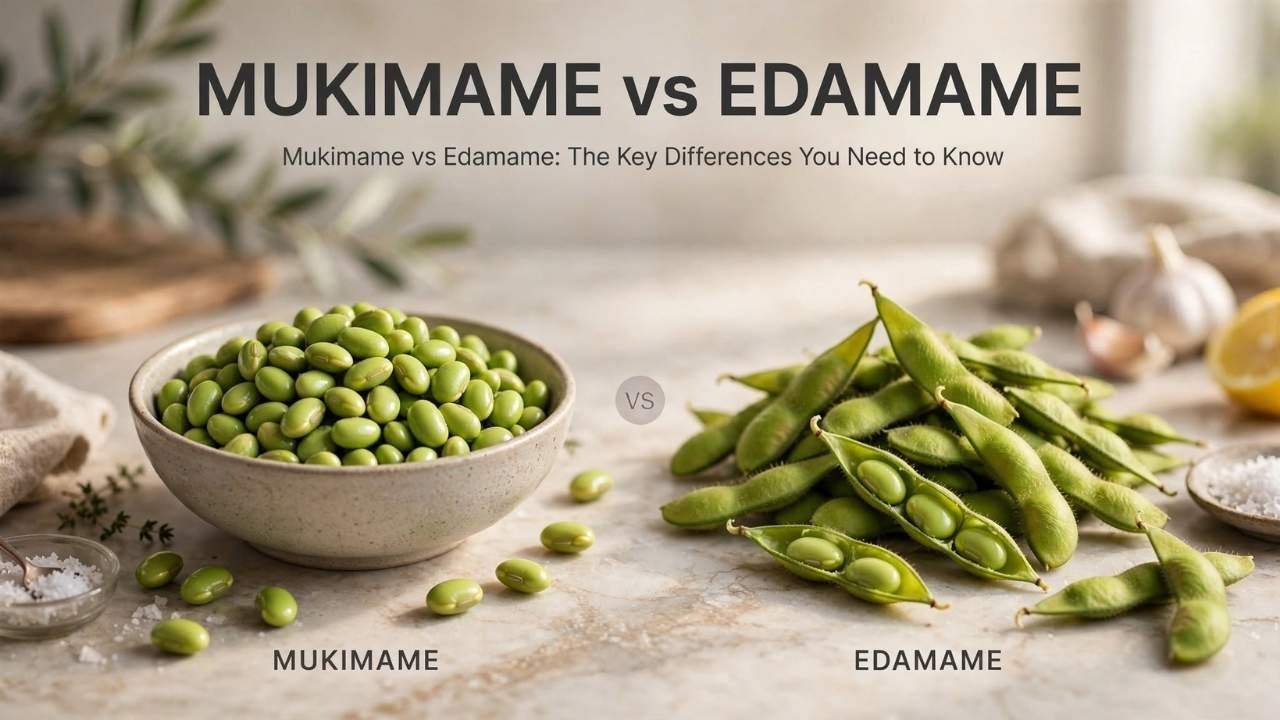
Mukimame vs. edamame can be confusing because both come from young soybeans and have a similar mild, slightly sweet, and nutty taste. The main difference is how they are prepared and served. Edamame is commonly sold or served in its pod, while mukimame refers to the beans after they have been removed from the pod.
This makes mukimame a convenient form of shelled edamame for salads, stir-fries, soups, grain bowls, and other recipes.
Both provide plant-based protein, fiber, vitamins, and minerals, so neither is automatically better. The better choice depends on how you plan to eat them. In this guide, we’ll explain the difference between mukimame and edamame, including their taste, texture, nutrition, cooking methods, uses, and whether you can substitute mukimame for edamame in recipes.
Quick Answer
Mukimame and edamame come from the same young soybean, but they are usually sold in different forms. Edamame is commonly served in its pod, while mukimame is the shelled bean, making it easier to use in recipes. Their taste, texture, and nutrition are very similar. You can usually substitute mukimame for shelled edamame in salads, stir-fries, soups, bowls, and other dishes.
Are Mukimame and Edamame the Same?
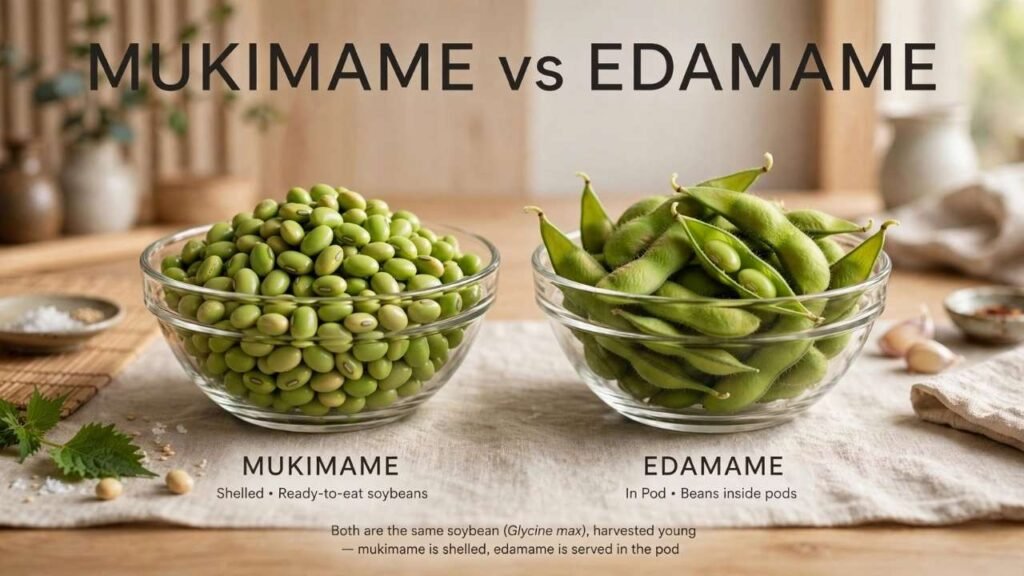
Mukimame and edamame are closely related because both are young soybeans. The main difference is usually their form when they are sold or served. Edamame is commonly found inside its green pod, while mukimame refers to the beans after they have been removed from the pod. This is why mukimame is often called shelled edamame.
The beans themselves have a similar taste, texture, and nutritional value. They are mild, slightly sweet, and a little nutty. Both can provide plant-based protein and fiber, making them useful in many healthy meals.
So, if you are wondering, “Is mukimame just shelled edamame?”, the simple answer is usually yes. The biggest difference is not the soybean itself, but how it is prepared and presented. This also makes mukimame more convenient for recipes where you do not need the pod.
What Is Edamame?
Edamame is the name commonly used for young, green soybeans that are harvested before they fully mature. You will often find them inside bright green pods, either fresh or frozen. They are popular as a snack, side dish, or appetizer and are especially common in Japanese and other East Asian meals.
Edamame has a mild, slightly sweet, and nutty flavor with a firm but tender texture. It is usually boiled or steamed and then seasoned with salt or other simple seasonings. When served in the pod, you normally squeeze or bite the beans out rather than eat the tough outer shell.
You can also buy shelled edamame, where the beans have already been removed from the pod. This is where the connection with mukimame becomes important. Shelled edamame is easier to add to salads, rice bowls, stir-fries, soups, and other recipes.
What Is Mukimame?
Mukimame refers to young soybean beans that have been removed from their pods. In many stores, the term is used for shelled edamame, especially when the beans are sold frozen and ready to add to meals. Unlike edamame in the pod, mukimame does not require you to remove the beans before eating.
The beans have a mild, slightly sweet, and nutty flavor, with a firm and tender texture. Their simple taste works well with many ingredients, so they can be added to salads, stir-fries, soups, grain bowls, pasta, and rice dishes.
One of the biggest benefits of mukimame is convenience. You can measure the beans, cook them quickly, and add them directly to a recipe. If you have ever wondered “what is mukimame?”, the easiest answer is shelled young soybeans, often sold as a convenient alternative to edamame in the pod.
Mukimame vs. Edamame: Main Differences
The main difference between mukimame and edamame is the way the beans are presented and eaten. Both come from young soybeans, so their basic flavor and nutrition are very similar. The biggest practical difference is the pod.
Mukimame is already shelled, which makes it quick and easy to use in recipes. Edamame is commonly sold in the pod, so you need to remove the beans before using them in most dishes. Edamame in the pod is also popular as a snack because it can be seasoned and eaten directly from the shell.
Mukimame is often the better choice for salads, stir-fries, soups, grain bowls, and meal prep because there is no shelling step. Edamame is a good choice when you want a simple snack or side dish. In short, the difference is mainly form and convenience, not the soybean itself.
Mukimame vs. Edamame: Taste and Texture
When it comes to mukimame vs. edamame taste, there is not a major difference because both are young soybeans. Both usually have a mild, slightly sweet, and nutty flavor. Their taste can change slightly depending on how they are cooked and what seasonings are added.
The texture is also very similar. The beans are generally firm, tender, and slightly chewy when cooked correctly. Mukimame may feel more convenient to eat because you only get the soft bean, while edamame served in the pod gives you a different eating experience.
The pod itself is usually firmer and tougher than the bean inside, which is why people normally remove or squeeze out the beans rather than eat the whole pod. Overall, mukimame and edamame have nearly the same flavor and bean texture. The biggest difference comes from whether the pod is attached, not from the bean itself.
Mukimame vs. Edamame Nutrition
The mukimame vs. edamame nutrition comparison is quite simple because both provide the same type of young soybean. They can be good sources of plant-based protein, fiber, vitamins, and minerals. The beans also contain carbohydrates and healthy fats as part of their natural nutrition.
Because mukimame is the shelled form, its nutrition is very similar to the edible beans inside edamame pods. However, serving comparisons can sometimes look different when one serving includes the weight of the pod and the other contains only the beans.
So, is one healthier? Not necessarily. When you compare similar amounts of the edible beans, their nutritional value is generally quite close. Both can fit into a balanced diet and provide useful nutrients.
If you are choosing between them, focus more on how you plan to eat them than on expecting a major nutritional difference. Mukimame mainly offers extra convenience because it is already shelled.
How to Cook Mukimame and Edamame
Both mukimame and edamame are easy to cook, but the method depends on whether the beans are shelled or still in the pod. Mukimame can be boiled, steamed, or added directly to dishes such as stir-fries and soups. If using frozen mukimame, follow the package instructions for the best cooking time.
Edamame in the pod is commonly boiled or steamed until the beans become tender. After cooking, you can add salt, garlic, chili, or other seasonings for extra flavor. The beans are then removed from the pod before eating.
For both types, avoid overcooking, as this can make the beans too soft. Mukimame is especially useful when you want a quick ingredient because there is no pod to remove. Whether you choose boiled, steamed, or stir-fried beans, simple cooking methods help keep their mild flavor and firm texture.
What Are Mukimame and Edamame Best Used For?
Mukimame and edamame can both be used in many meals, but their best uses are slightly different. Mukimame is especially useful when you want beans that can go straight into a recipe. Since the pods are already removed, you can easily add mukimame to salads, stir-fries, soups, grain bowls, rice bowls, pasta, and stews.
Edamame in the pod is more commonly enjoyed as a snack, appetizer, or side dish. It can be steamed or boiled, lightly salted, and served warm. Shelled edamame can also be used in recipes just like mukimame.
If convenience is your main goal, mukimame is often the easier choice. If you enjoy eating the beans from the pod, traditional edamame is a better fit. Both options can add plant-based protein, color, texture, and a mild nutty flavor to everyday meals without needing complicated preparation.
Can You Substitute Mukimame for Edamame?
Yes, in most recipes, you can substitute mukimame for shelled edamame without a problem. Since both are young soybean beans, they have a very similar taste, texture, and cooking behavior. This makes them easy to use interchangeably in salads, stir-fries, soups, rice bowls, and grain bowls.
The main exception is when a recipe specifically uses edamame in the pod. For example, if you are serving salted edamame as an appetizer, mukimame will not give you the same presentation or eating experience because the pod is already removed.
When replacing one with the other, you usually do not need major changes to the recipe. Just make sure you are comparing shelled beans with shelled beans for similar cooking results. So, if a recipe calls for shelled edamame and you only have mukimame, you can generally use it directly. This makes mukimame a useful and convenient edamame substitute.
Can You Eat Edamame Pods?
When edamame is served in the pod, the beans inside are the part normally eaten. The outer pod is generally tough, fibrous, and not pleasant to chew. Instead of eating the whole pod, people usually cook the edamame and then squeeze or bite the beans out of the shell.
This is one of the clearest differences between edamame and mukimame. With mukimame, the pod has already been removed, so you can eat the beans directly after proper cooking.
Edamame pods are often boiled or steamed and then seasoned with salt, garlic, chili, or other flavors. They make a simple snack or appetizer, especially when served warm.
If you are new to edamame, do not worry about removing the beans with a spoon. Simply hold the pod and gently push the beans into your mouth. Once the beans are removed, discard the pod rather than eating it.
How to Buy and Store Mukimame and Edamame
You can usually find edamame and mukimame in the frozen vegetable section of larger supermarkets, Asian grocery stores, health-food stores, or specialty food shops. Edamame may be sold in the pod or shelled, while mukimame is generally sold as shelled beans.
Frozen options are popular because they are convenient and can be stored for longer than fresh beans. When buying, check the package label to see whether the product is shelled, unshelled, fresh, or frozen.
For storage, keep frozen mukimame or edamame in the freezer until you are ready to use it. After opening, reseal the package well to help protect the beans from freezer burn.
Fresh beans should be kept refrigerated and used within the recommended time. If you are mainly looking for convenience, frozen mukimame is a practical choice because you can take out the amount you need without dealing with the pods.
Which One Should You Choose?
Choosing between mukimame and edamame mostly depends on how you want to use the beans. If you want a quick ingredient for everyday cooking, mukimame is a convenient choice because it is already shelled. It works especially well in salads, stir-fries, soups, grain bowls, and meal-prep dishes.
If you want a simple snack or appetizer, edamame in the pod may be more enjoyable. You can steam or boil the pods, season them with salt, and eat the beans directly from the shell.There is no clear winner when it comes to taste or nutrition because both provide similar young soybean beans. The main difference is convenience and presentation.
Choose mukimame when you want easy preparation and recipe flexibility. Choose edamame when you enjoy the traditional pod experience. For most recipes that call for shelled edamame, either option can work well.
Mukimame vs Edamame: Common Mistakes and Confusion
One common mistake is thinking mukimame and edamame come from completely different plants. They are both forms of young soybeans. The bigger difference is how the beans are sold and prepared.
Another common confusion is between mukimame and mature soybeans. Mukimame is not simply the same thing as the fully mature yellow soybeans used for many soy products. It refers to young beans that are commonly sold without their pods.
People also sometimes compare nutrition without considering the pod. A serving of edamame in the pod includes the shell weight, while mukimame is already shelled. This can make numbers look different even when the edible beans are quite similar.
Finally, some people assume the entire edamame pod should be eaten. Usually, the beans are eaten and the tough pod is discarded. Understanding these simple points makes the difference between mukimame and edamame much easier to understand.
FAQs
Is mukimame the same as edamame?
They come from the same type of young soybean. Mukimame usually refers to the shelled beans, while edamame is commonly sold in the pod.
Is mukimame just shelled edamame?
Usually, yes. Mukimame is commonly used to describe young soybeans that have been removed from their pods.
Which has more protein?
Their protein content is very similar when comparing equal amounts of the edible beans.
Can you substitute mukimame for edamame?
Yes. Mukimame can replace shelled edamame in most recipes, including salads, soups, stir-fries, and bowls.
Is mukimame healthy?
Yes. It can provide plant-based protein, fiber, vitamins, and minerals as part of a balanced diet.
How do you cook mukimame?
You can boil, steam, or stir-fry mukimame. Frozen beans can also be cooked according to their package instructions.
Can you eat edamame pods?
The beans are normally eaten, while the tough outer pod is usually discarded.
Conclusion
The main difference between mukimame and edamame is simple: both are young soybeans, but mukimame is shelled, while edamame is commonly served in its pod. This means mukimame is often easier to use in everyday recipes because you can add the beans directly to your meal.
Their taste, texture, and nutrition are very similar, so neither is automatically better. Edamame is a great choice for snacks, appetizers, and meals where you enjoy eating the beans from the pod. Mukimame is especially useful for salads, stir-fries, soups, grain bowls, rice dishes, and meal prep.
If a recipe calls for shelled edamame, you can usually use mukimame instead. In the end, the best choice depends on convenience and how you plan to serve it. Understanding this small difference makes it much easier to choose the right soybean for your next meal.