
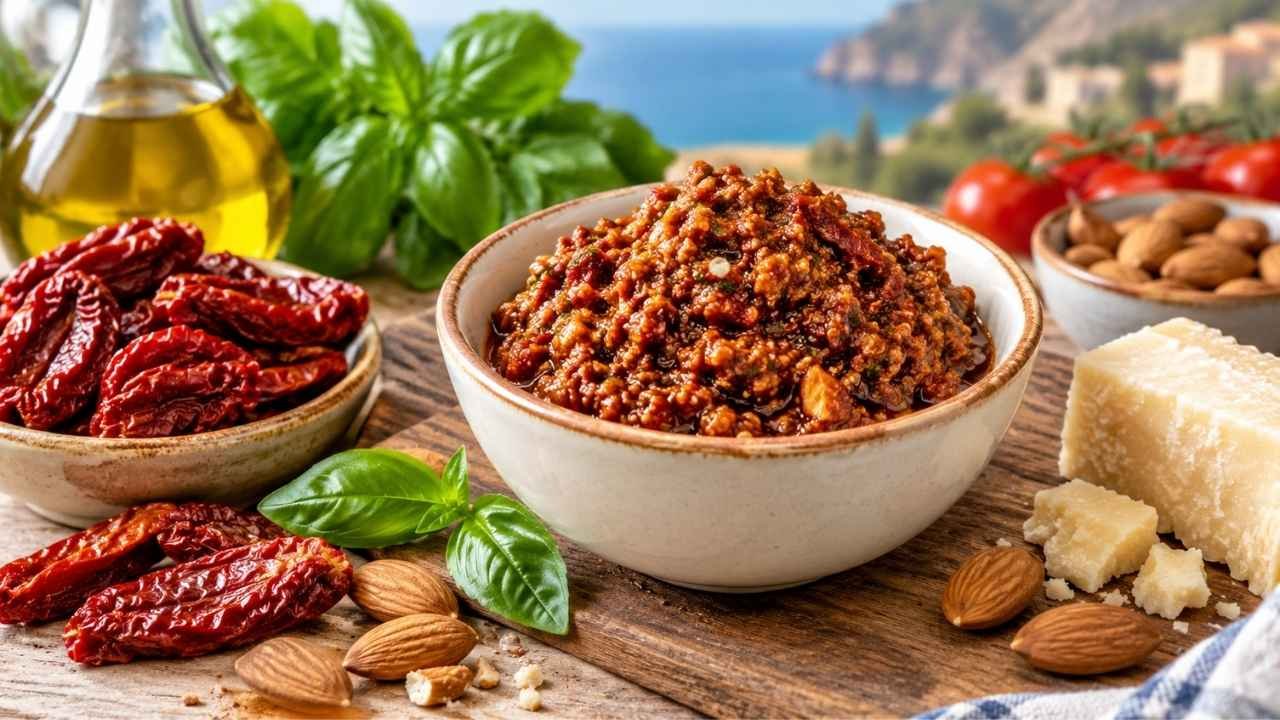
Capuliato is a traditional Sicilian condiment made mainly from finely minced or ground sun-dried tomatoes, olive oil, garlic, basil, and chili. Often called Capuliato Siciliano or Sicilian sun-dried tomato pesto, it has a rich tomato flavor, a rustic texture, and a pleasant balance of sweet, savory, herbal, and spicy notes.
This specialty is closely linked to Vittoria and the Ragusa area of Sicily, where drying tomatoes was once an important way to preserve the summer harvest.
But what exactly does Capuliato mean, and what makes an authentic Capuliato recipe different from ordinary sun-dried tomato pesto? In this guide, you’ll discover what Capuliato is, where it comes from, its traditional ingredients and preparation, how to make it at home, how to use Capuliato, how it compares with pesto rosso, and the best ways to store it.
Quick Answer
Capuliato is a traditional Sicilian condiment made from finely minced sun-dried tomatoes, olive oil, garlic, basil, and chili. Also known as Capuliato Siciliano, it is closely linked to Vittoria and Ragusa, Sicily. Its rich tomato flavor and rustic texture make it a versatile ingredient for pasta, bruschetta, bread, and more. In this guide, you’ll learn what Capuliato is, its history, authentic preparation, ingredients, uses, and storage.
What Is Capuliato?
Capuliato is a traditional Sicilian condiment made mainly from sun-dried tomatoes. The tomatoes are finely chopped or ground and mixed with extra-virgin olive oil, garlic, basil, chili, and sometimes oregano. The result is a thick, rustic mixture with a strong tomato taste and a rich aroma. Many English-language recipes call it Sicilian sun-dried tomato pesto, although Capuliato has its own Sicilian identity and traditional method.
So, what is Capuliato made of? The basic recipe is simple, but the exact ingredients can change from one family or area to another. Some versions may include capers or anchovies, while others keep the recipe very simple. Capuliato is often served with pasta, bread, bruschetta, pizza, or sandwiches. Its strong flavor means that a small amount can add plenty of taste to a dish.
What Does Capuliato Mean?
The word Capuliato comes from a Sicilian term linked to the idea of mincing, chopping, or grinding food. This name fits the traditional preparation because the dried tomatoes are processed into small pieces instead of being turned into a completely smooth sauce. You may also see the spelling Capuliatu or, in some contexts, Capuliata.
The meaning can change slightly depending on the area of Sicily and the food being discussed. In some local uses, similar words can refer to minced or chopped meat, so the word does not always mean tomato pesto. This is why it helps to explain the term when introducing Capuliato Siciliano to readers who are new to it.
In the case of this traditional condiment, Capuliato means a minced or chopped preparation, which helps explain its rustic texture and traditional character.
Capuliato, Capuliatu, or Capuliata?
You may find several names when searching for this Sicilian food, including Capuliato, Capuliatu, and Capuliata. These terms can look confusing, especially when different Italian or Sicilian sources use them in different ways. The word is connected with the idea of mincing, chopping, or grinding, which describes an important part of the traditional preparation.
Capuliato is the spelling most commonly used in English-language content about the Sicilian sun-dried tomato condiment. Capuliatu is a common Sicilian form, while Capuliata may appear in regional food names or descriptions. The exact meaning can depend on the local dialect and the dish being discussed.
For this reason, these words should not always be treated as perfect synonyms. When people search for Capuliato Siciliano, however, they are usually looking for the traditional Sicilian sun-dried tomato condiment made from minced dried tomatoes.
Where Does Capuliato Come From?
Capuliato comes from Sicily, the large Italian island in the Mediterranean. More specifically, this traditional food is strongly connected with Vittoria and the Ragusa area in southeastern Sicily. The local connection is an important part of the story because Capuliato grew from the simple need to preserve tomatoes after the summer harvest.
In the warm Sicilian climate, tomatoes could be dried in the sun and kept for later use. This gave families a way to enjoy the taste of summer tomatoes during colder months. The dried tomatoes were later minced and mixed with olive oil and seasonings to create a flavorful condiment.
Today, Capuliato Siciliano is still linked with the food traditions of the area. It is more than a simple tomato pesto; it reflects a long tradition of Sicilian cuisine, tomato drying, and home food preservation.
The History Behind Capuliato
The history of Capuliato is closely tied to the old Sicilian habit of preserving seasonal food. Before modern refrigeration, families needed simple ways to keep summer produce for later months. Tomatoes were especially useful because they could be dried under the hot Sicilian sun and stored for future meals.
In the Vittoria and Ragusa area, dried tomatoes became part of local cooking. Once prepared, they could be minced and mixed with olive oil, garlic, herbs, and chili. This created a flavorful mixture that could be served with pasta, bread, or other everyday foods.
This traditional method shows why Capuliato is closely connected to Sicilian food culture. It was practical, simple, and based on ingredients that were easy to find locally. Over time, the homemade preparation became a recognized regional specialty and is now enjoyed well beyond Sicily.
What Does Traditional Capuliato Taste Like?
Traditional Capuliato has a strong, rich tomato flavor because drying removes much of the water from the tomatoes and concentrates their natural taste. You can expect a mix of sweet, salty, savory, and slightly spicy flavors. The olive oil adds richness, while garlic and basil give the mixture a fresh, herbal smell.
The exact taste depends on the ingredients and their amounts. More chili creates extra heat, while garlic gives a stronger savory note. Oregano can add a deeper herbal flavor.
Good Capuliato should taste mainly of tomatoes, with the other ingredients supporting rather than hiding that flavor. It should feel rich but not overly oily. Because the tomatoes are dried, even a small spoonful can add a strong taste to pasta, bruschetta, pizza, sandwiches, and other dishes.
What Texture Should Capuliato Have?
The traditional Capuliato texture is usually fine, rustic, and slightly coarse, rather than perfectly smooth. This texture comes from finely mincing or grinding the dried tomatoes. Traditionally, a meat grinder could be used to process the tomatoes into small pieces.
If you use a food processor, it is better to pulse the tomatoes instead of blending them continuously. Over-processing can turn the mixture into a very smooth paste, which is different from the more rustic texture expected from traditional Capuliato.
The finished mixture should be easy to spread and mix with pasta while still showing small pieces of tomato. Texture also affects how Capuliato feels on bread or bruschetta. A little roughness gives it more character and makes the condiment feel homemade. This is one reason traditional preparation remains important when making authentic Capuliato.
What Is Capuliato Made Of?
The basic Capuliato ingredients are simple. The main ingredient is sun-dried tomatoes, which provide the deep tomato flavor and color. These are mixed with extra-virgin olive oil, which adds richness and helps create the right consistency.
Common flavoring ingredients include fresh basil, garlic, chili pepper, and oregano. However, not every traditional recipe uses the same combination. Family recipes can vary, and some versions may include capers or anchovies for a stronger savory taste.
It is useful to separate the basic ingredients from optional additions. Sun-dried tomatoes and olive oil form the foundation, while herbs and seasonings can be changed to suit the recipe. This flexibility is part of the charm of homemade Capuliato.
When preparing a traditional recipe, the goal is to let the tomatoes remain the main flavor while the herbs, garlic, chili, and olive oil add balance.
Which Ingredients Are Essential?
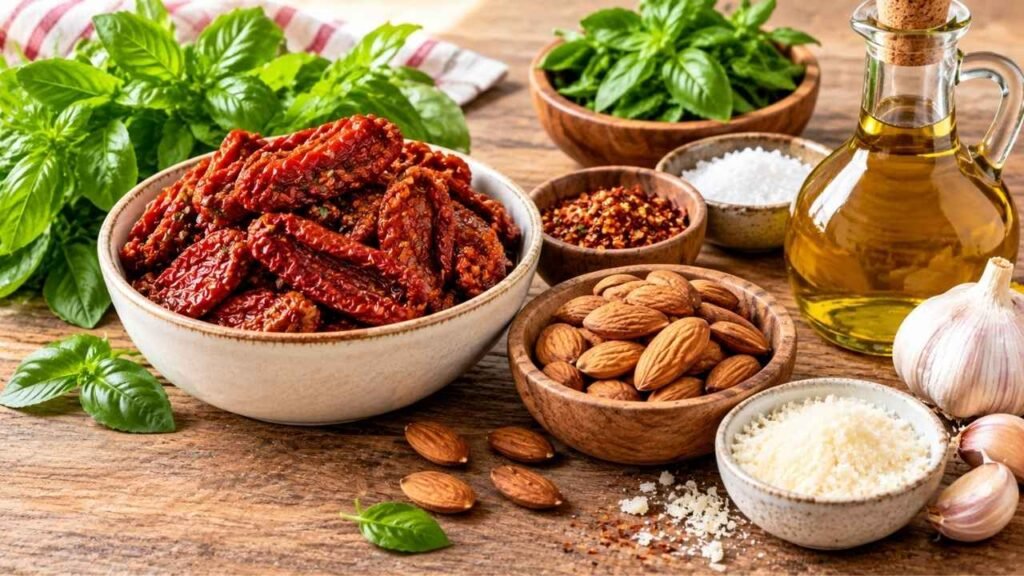
There is no single ingredient list that represents every traditional Capuliato recipe. However, sun-dried tomatoes and olive oil are the main foundation of the condiment. Without them, the mixture would lose the character that makes it recognizable as Capuliato.
Garlic, basil, chili, and oregano are common additions, but their use can vary by recipe. Some cooks prefer a simple mixture with only a few ingredients, while others add extra herbs or savory ingredients such as capers or anchovies.
This means that an authentic recipe does not need to contain a long list of ingredients. In fact, keeping the recipe simple can help the natural tomato flavor stand out. The most important things are good-quality tomatoes, good olive oil, the right texture, and balanced seasoning. Regional and family differences should be seen as part of the tradition rather than as mistakes.
How to Choose the Best Sun-Dried Tomatoes
Choosing the right sun-dried tomatoes can make a big difference in homemade Capuliato. Look for tomatoes with a strong tomato smell and a deep red color. They should be dried enough to have a rich flavor but not so hard that they are difficult to chop or grind.
You may find both dry-packed and oil-packed sun-dried tomatoes. Dry-packed tomatoes often need some preparation before use, while oil-packed tomatoes are softer and already contain oil. Check how salty the tomatoes are before adding more seasoning.
The amount of moisture also affects the final texture. Very dry tomatoes may need softening, while very moist tomatoes can make the mixture too loose. Always follow the needs of your chosen recipe.
Good tomatoes should provide the main flavor of the finished Capuliato pesto, so using a quality product is more important than adding many extra ingredients.
Traditional Capuliato vs. Modern Preparation
The traditional way to prepare Capuliato Siciliano focuses on finely mincing or grinding the dried tomatoes. A meat grinder was traditionally useful because it created small pieces while keeping a rustic texture. This method also fits the meaning behind the name Capuliato.
Today, most home cooks use a food processor because it is faster and easier. However, the tomatoes should be pulsed carefully. Continuous blending can make them too smooth and change the traditional texture.
You can also chop the tomatoes by hand with a sharp knife. This takes more time but gives you excellent control over the size of the pieces.
The goal is not simply to make the mixture quickly. A good modern method should still keep the traditional character of Capuliato. Whether you use a meat grinder, food processor, or knife, aim for a fine but slightly rustic texture.
How to Make Traditional Capuliato
To make traditional Capuliato, start by preparing your sun-dried tomatoes. If they are very dry, follow the recipe instructions for softening them. Once ready, drain or dry them as needed so they do not add too much moisture.
Next, mince or grind the tomatoes until they reach a fine, rustic texture. Avoid turning them into a completely smooth paste. Add chopped garlic, basil, chili, and oregano according to your preferred flavor.
Slowly mix in extra-virgin olive oil until the mixture becomes rich and spreadable. Taste it and adjust the seasoning carefully.
Finally, place the Capuliato in a clean container and follow appropriate storage guidance. The finished mixture can be used right away, although allowing the flavors to come together can improve the taste.
The key is simple: good tomatoes, balanced seasoning, quality olive oil, and the right texture.
How to Use Capuliato
There are many ways to use Capuliato in everyday cooking. One of the most popular choices is pasta. Mix it with hot pasta and a little pasta water to create a quick and flavorful sauce. It works especially well with spaghetti and other simple pasta shapes.
You can also spread Capuliato over bruschetta, crostini, or toasted bread. It makes an easy appetizer and pairs well with other Mediterranean ingredients.
For something different, use it as a pizza topping or sandwich spread. It can also add tomato flavor to sauces, soups, vegetables, meat, and fish.
In Sicily, Capuliato is also connected with rustic foods such as scaccia and other savory breads. Its strong flavor means you usually do not need much. A small spoonful can bring color, aroma, and rich tomato taste to many dishes.
Capuliato With Pasta
Capuliato pasta is one of the easiest ways to enjoy this Sicilian condiment. Its rich tomato flavor works well with simple pasta dishes because you do not need many other ingredients. Spaghetti is a popular choice, but other pasta shapes can work too.
To make a quick pasta sauce, warm some Capuliato with olive oil and then add cooked pasta. A small amount of pasta water can help loosen the mixture and spread the tomato flavor evenly. You can add garlic, chili, herbs, or breadcrumbs depending on the style you want.
Capuliato can also be mixed with other ingredients to create a fuller meal. The important point is not to use too much. Its flavor is concentrated, so a small amount can be enough.
For a simple Sicilian-style meal, combine Capuliato, pasta, olive oil, and a little pasta water, then finish with fresh herbs if desired.
Capuliato vs. Pesto Rosso: What’s the Difference?
Capuliato and pesto rosso can look similar because both may use dried tomatoes and olive oil. However, they are not always the same preparation. Pesto rosso is a broader Italian term for red pesto, and recipes can contain different ingredients such as nuts, cheese, garlic, or herbs.
Traditional Capuliato has a stronger connection to Sicilian cuisine, dried tomatoes, and a minced or ground texture. Its ingredient list can also be simpler than many pesto rosso recipes.
So, is Capuliato pesto? It can be described as a rustic Sicilian tomato pesto, especially when explaining it to readers who are unfamiliar with the dish. However, it is better to keep its regional identity clear.
In simple terms, Capuliato may look like sun-dried tomato pesto, but its history, traditional preparation, texture, and Sicilian roots give it a distinct identity.
Common Mistakes When Making Capuliato
Making Capuliato is simple, but a few mistakes can affect the final result. One common problem is over-blending the tomatoes. This can create a smooth paste instead of the traditional rustic texture. Pulse the food processor and check the mixture often.
Using very salty tomatoes can also make the finished condiment too salty. Taste the tomatoes first and adjust the added salt carefully. Another mistake is adding too much olive oil. The mixture should be rich and moist, but it should not become overly oily.
Too much garlic or chili can also cover the natural tomato flavor. Start with a small amount and add more if needed.
Finally, make sure the mixture is stored properly. Good Capuliato should have a balanced tomato flavor, a fine texture, and enough oil to create the right consistency without overwhelming the other ingredients.
How to Store Capuliato Safely
Proper Capuliato storage is important, especially when making it at home. Homemade Capuliato contains oil and other ingredients that require careful handling. Follow a tested food-safety method rather than assuming that covering the mixture with oil makes it safe for long-term storage.
For a homemade version, refrigeration is generally the safer choice unless you are following a properly tested preservation process. Use a clean container and clean utensils each time you serve it. Avoid leaving the mixture at room temperature for long periods.
You may also wonder, can you freeze Capuliato? Freezing can be an option for some homemade preparations, but the texture may change after thawing.
Because recipes and storage claims vary, there is no single shelf-life rule that applies to every Capuliato recipe. When in doubt, follow reliable food-safety guidance and discard the mixture if you notice an unusual smell, appearance, or texture.
Is Capuliato Healthy?
Capuliato is made mainly from tomatoes and olive oil, so it can be part of a balanced diet when eaten in sensible amounts. Sun-dried tomatoes provide nutrients found naturally in tomatoes, while olive oil adds unsaturated fat.
However, Capuliato can also be high in sodium, especially when salted or preserved tomatoes are used. Olive oil is nutritious but also contains a lot of calories, so portion size matters.
The exact nutrition will depend on the recipe. Versions made with capers, anchovies, cheese, or extra salt may have different amounts of sodium and other nutrients.
It is better to think of Capuliato as a flavorful condiment rather than a health food. A small amount can add plenty of taste to pasta, bread, vegetables, or other meals. Choosing quality ingredients and keeping portions reasonable is the simplest approach.
Is Capuliato Vegan and Vegetarian?
A basic Capuliato recipe made with sun-dried tomatoes, olive oil, garlic, basil, chili, and oregano can be vegan and vegetarian. These ingredients come from plants and do not require animal products.
However, not every Capuliato recipe is automatically vegan. Some variations may contain anchovies, cheese, or other animal-based ingredients. This is especially important when buying prepared Capuliato from a store or restaurant.
If you follow a vegan diet, check the ingredient list before buying a prepared product. When making it at home, you have complete control over the ingredients and can easily leave out anchovies or cheese.
For a simple vegan version, focus on sun-dried tomatoes, extra-virgin olive oil, garlic, basil, chili, and oregano. This keeps the recipe close to the basic style while making it suitable for both vegan and vegetarian diets.
FAQs
What is Capuliato?
Capuliato is a traditional Sicilian condiment made mainly from minced or ground sun-dried tomatoes, olive oil, garlic, herbs, and chili.
What does Capuliato mean?
The name is linked to a Sicilian term meaning minced, chopped, or ground, referring to how the tomatoes are prepared.
Is Capuliato the same as pesto?
Not exactly. It can be described as a rustic Sicilian tomato pesto, but it has its own regional history and preparation style.
Where does Capuliato come from?
It is strongly associated with Vittoria and the Ragusa area of Sicily.
What can you eat Capuliato with?
Try it with pasta, spaghetti, bruschetta, crostini, bread, pizza, sandwiches, meat, fish, or vegetables.
Can I make Capuliato without a meat grinder?
Yes. A food processor or sharp knife can be used. Pulse the tomatoes carefully to keep a rustic texture.
Can I use oil-packed sun-dried tomatoes?
Yes, depending on the recipe. Their softer texture and added oil may change the amount of olive oil needed.
How should Capuliato be stored?
Homemade Capuliato should be handled and stored according to reliable food-safety guidance, with refrigeration generally preferred for home preparations.
Conclusion
Capuliato is much more than a simple sun-dried tomato pesto. This traditional Sicilian condiment brings together dried tomatoes, olive oil, garlic, herbs, and chili in a rich and rustic mixture. Its roots in Vittoria and Ragusa, Sicily, along with its traditional method of mincing tomatoes, give it a special place in Sicilian cuisine.
Whether you spread it on bruschetta, mix it with pasta, or use it on pizza and sandwiches, Capuliato adds bold tomato flavor to simple dishes. With good-quality ingredients and the right texture, you can easily make authentic Capuliato at home and enjoy a small taste of Sicily in your everyday cooking.