
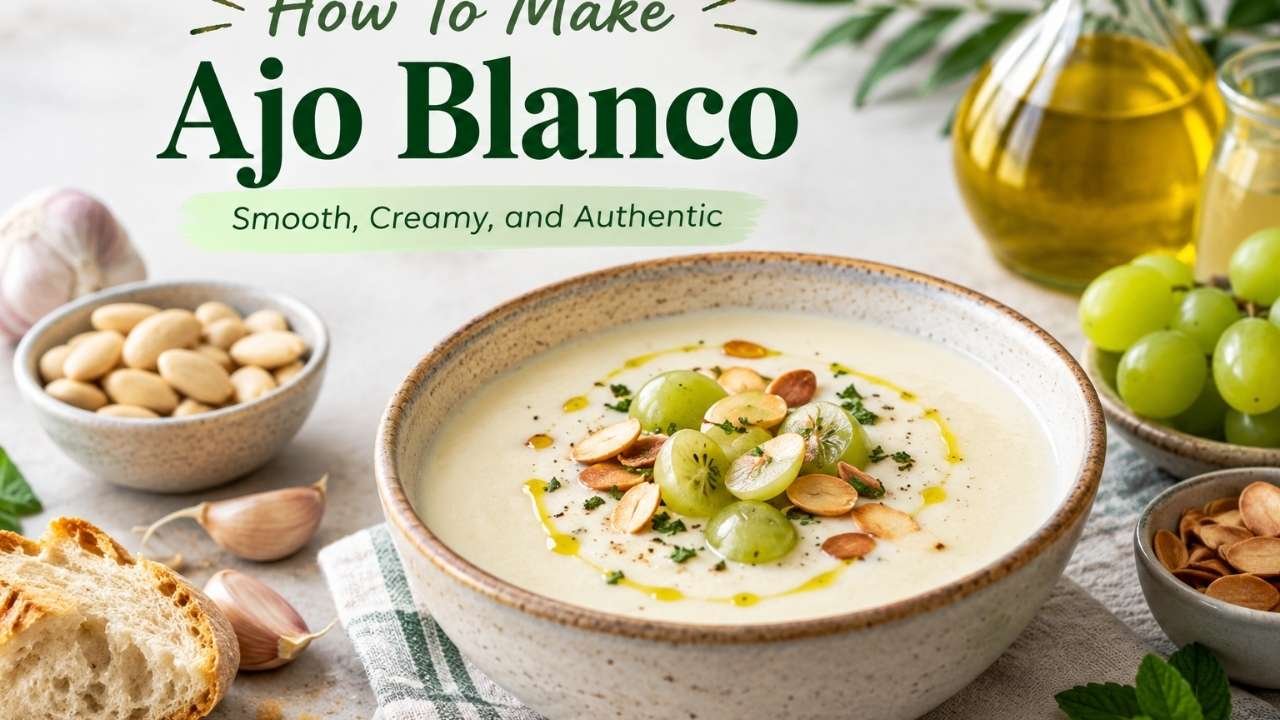
If you love refreshing soups with a creamy texture and rich flavor, ajo blanco is a recipe worth trying. This traditional Spanish almond soup comes from Andalusia and is often called white gazpacho because of its pale color and chilled serving style.
Unlike tomato-based gazpacho, an ajo blanco recipe uses almonds, bread, garlic, extra-virgin olive oil, and vinegar to create a smooth, flavorful soup.
Learning how to make ajo blanco at home is simple, even if you are new to Spanish cooking. With the right ingredients and a few easy steps, you can prepare a delicious Spanish chilled almond soup for warm days. Serve it cold with fresh grapes or toasted almonds for a classic finish that feels light, fresh, and satisfying.
Quick Answer
To make ajo blanco, blend blanched almonds, soaked white bread, garlic, cold water, extra-virgin olive oil, sherry vinegar, and salt until smooth. Adjust the thickness with water, then chill the soup for at least two hours. Serve cold with fresh green grapes, toasted almonds, or a drizzle of olive oil for a refreshing Spanish almond soup.
What Is Ajo Blanco?
Ajo blanco is a traditional Spanish chilled almond soup that comes from Andalusia, a region in southern Spain. It is also known as white gazpacho because of its pale color and cool, refreshing style. Unlike tomato-based gazpacho, this soup gets its rich taste and creamy texture from almonds, bread, garlic, and olive oil.
The name ajo blanco means “white garlic” in Spanish. Although garlic adds flavor, almonds are the main ingredient that gives the soup its smooth body. Sherry vinegar adds a little sharpness, helping balance the rich taste of the nuts.
This Spanish chilled almond soup is often served during warm weather as a light starter. Fresh grapes or melon make a lovely topping, adding natural sweetness to each spoonful.
Ingredients You’ll Need for Ajo Blanco
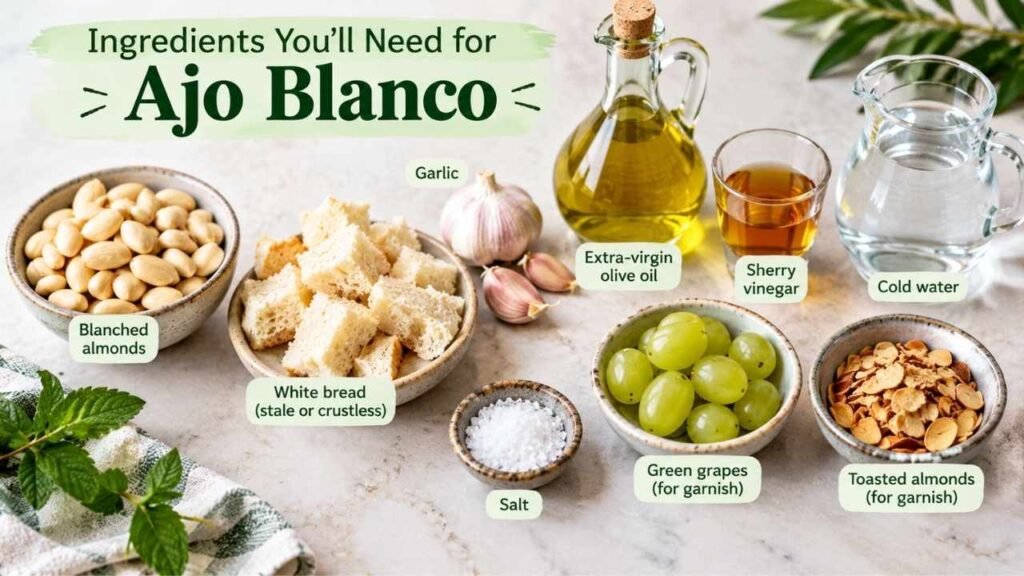
You only need a few simple ingredients to make a flavorful ajo blanco recipe at home. Each ingredient plays an important role in the final taste and texture.
- Blanched almonds: Create the creamy base. Skinless almonds help give the soup a pale color.
- White bread: Thickens the soup and makes it smooth. Slightly stale bread works well.
- Garlic: Adds a strong, savory flavor. Start with a small amount if you prefer a mild taste.
- Extra-virgin olive oil: Gives the soup a rich texture and fruity flavor.
- Sherry vinegar: Adds acidity and balances the almonds.
- Cold water: Helps blend the ingredients and control the thickness.
- Salt: Brings out the flavors.
- Green grapes or toasted almonds: Optional toppings for serving.
For the best result, use fresh almonds and good-quality olive oil.
How to Make Ajo Blanco Step by Step
Making traditional ajo blanco is easy when you follow a few simple steps. A blender makes the process faster and helps create a smooth, creamy soup.
Step 1: Prepare the Bread
Remove the crusts from the white bread if needed. Place the bread in a bowl with a little cold water and let it soften. Gently squeeze out excess water before blending.
Step 2: Blend the Almonds and Garlic
Add the blanched almonds, softened bread, garlic, and some cold water to a blender. Blend until the mixture becomes as smooth as possible. Scrape down the sides if needed.
Step 3: Add the Olive Oil
With the blender running at a low speed, slowly pour in the extra-virgin olive oil. This helps the oil mix evenly with the almond mixture, creating a creamy texture.
Step 4: Season and Chill
Add the sherry vinegar and salt. Blend again, then add more cold water if the soup is too thick. Strain it if you want an extra-smooth finish. Cover and refrigerate for at least two hours before serving.
Tips for Smooth and Creamy Ajo Blanco
The secret to good ajo blanco is balancing the ingredients and blending them well. A few small changes can improve the texture and flavor of your Spanish almond soup.
First, use blanched almonds for a pale color and smooth finish. Blend them long enough to break them down as much as your equipment allows. If the soup still feels grainy, pass it through a fine-mesh sieve.
Next, add the olive oil slowly while blending. This helps create an even texture instead of leaving a layer of oil on top. Add water a little at a time until the soup reaches your preferred thickness.
Finally, taste the soup before chilling it. Add a little more salt or sherry vinegar if needed. If the garlic tastes too strong, avoid adding more and allow the soup to chill before adjusting the flavor again.
What to Serve With Ajo Blanco
Ajo blanco tastes best when served cold with a topping that adds freshness or crunch. In traditional Spanish recipes, green grapes are a popular choice because their sweetness balances the garlic and vinegar.
You can also add toasted almonds for extra crunch. Small pieces of melon, cucumber, or apple work well if you want to try a different flavor. Fresh mint is another option, although it is not required for a traditional version.
Serve this Spanish cold almond soup in small bowls or cups as a starter before a main meal. It also works well as a light lunch on a warm day.
For a simple finish, drizzle a little extra-virgin olive oil over each serving and add a few grapes. Keep the toppings light so the creamy almond flavor remains the main focus.
How to Store and Make Ajo Blanco Ahead
One of the best things about ajo blanco is that you can prepare it ahead of time. After blending, transfer the soup to a clean, covered container and place it in the refrigerator.
For the best quality, enjoy it within two to three days, keeping it refrigerated at 40°F (4°C) or below. Follow local food-safety guidance, and do not leave the soup at room temperature for long periods.
The soup may become thicker while chilling because the bread and almonds absorb liquid. Before serving, stir it well and add a little cold water if needed. Taste again and adjust the seasoning.
Freezing is not the best option because the texture may change after thawing. For the freshest flavor and smoothest consistency, prepare only what you expect to serve within a few days.
FAQs
Can you make ajo blanco without bread?
Yes. You can make a bread-free version by blending the almonds with cold water, garlic, olive oil, vinegar, and salt. The texture may be thinner, so adjust the water carefully. This variation is useful for people avoiding gluten, provided all other ingredients meet their dietary needs.
Can you make ajo blanco without a high-speed blender?
Yes. A regular blender can work, but it may take longer to break down the almonds. Blend in batches if needed, and strain the soup through a fine-mesh sieve for a smoother finish.
Can you prepare ajo blanco the day before?
Yes. Preparing it the day before allows the flavors to settle and saves time. Keep it covered in the refrigerator and stir it before serving. Add a little cold water if it becomes too thick.
Is ajo blanco vegan and dairy-free?
Traditional ajo blanco can be vegan and dairy-free because its creamy texture comes from almonds, bread, and olive oil rather than dairy products. Check the bread label and other ingredients if you follow a strict vegan diet.
Should ajo blanco be served cold?
Yes. Ajo blanco is traditionally served chilled. Refrigerate it for at least two hours before serving, and add fresh grapes or other toppings just before bringing it to the table.
Conclusion
Learning how to make ajo blanco is a simple way to enjoy a traditional Spanish dish at home. With almonds, bread, garlic, olive oil, and vinegar, you can create a refreshing soup with a rich flavor and smooth texture.
The key is to blend the ingredients well, add the olive oil slowly, and give the soup enough time to chill. Adjust the seasoning and thickness to suit your taste, and choose simple toppings such as green grapes or toasted almonds.
Serve this Spanish chilled almond soup as a starter, a light lunch, or part of a summer meal. Once you learn the basic method, you can try small variations while keeping the classic flavor at the heart of the recipe.