
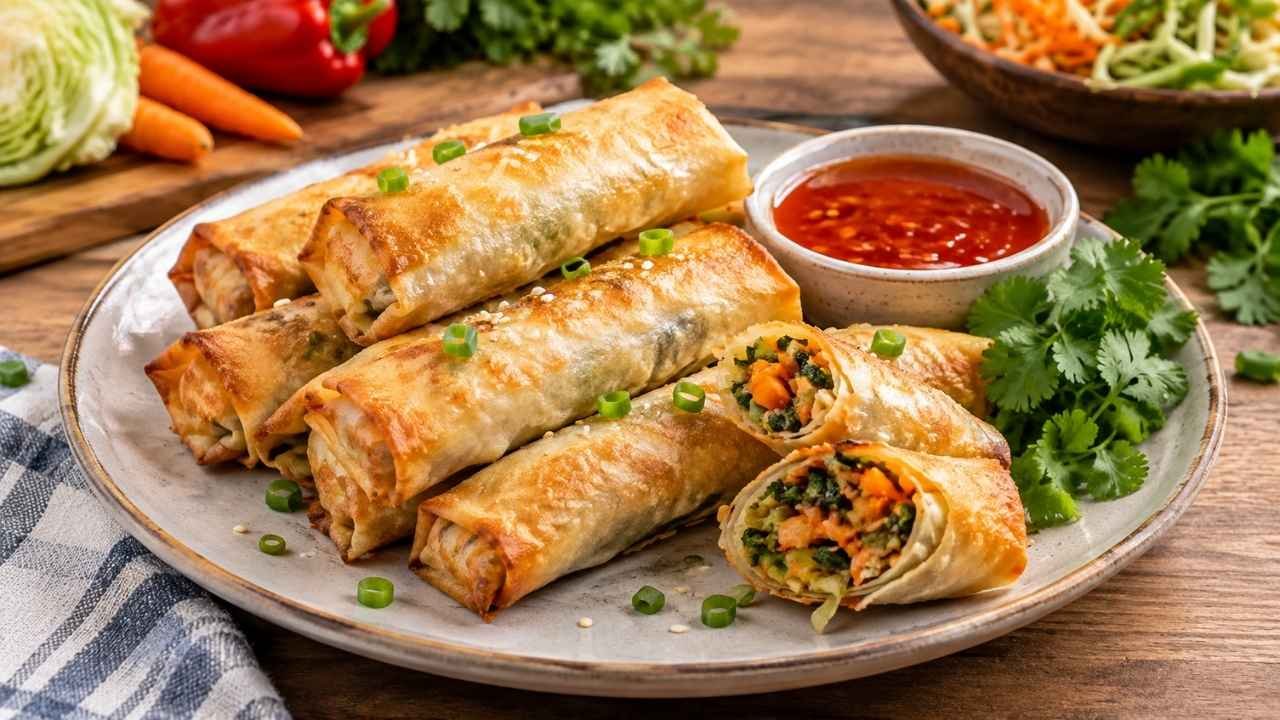
Looking for baked vegetable spring rolls that are crispy, flavorful, and easy to make? This baked vegetable spring rolls recipe is a simple way to enjoy a favorite appetizer without deep-frying. The rolls are filled with fresh cabbage, carrots, bell peppers, and spring onions, then wrapped and baked until golden brown and crunchy.
The secret to truly crispy baked vegetable spring rolls is not just the oven temperature. You also need to keep the vegetable filling fairly dry, cool it before wrapping, avoid overfilling the wrappers, and use a light coating of oil. These small steps help prevent soggy spring rolls and give the wrappers a crisp finish.
Serve these oven-baked vegetable spring rolls with sweet chili sauce, peanut sauce, or your favorite dipping sauce. They make an easy vegetarian appetizer, snack, or party food that everyone can enjoy.
Why You’ll Love These Baked Vegetable Spring Rolls
These baked vegetable spring rolls are a simple, tasty choice when you want something crispy without deep-frying. They have a golden wrapper, flavorful vegetable filling, and a light texture that works well as an appetizer or snack. You can also customize the filling with cabbage, carrots, bell peppers, mushrooms, or bean sprouts. Serve these crispy vegetable spring rolls with sweet chili or peanut dipping sauce for an easy homemade treat.
Ingredients You’ll Need
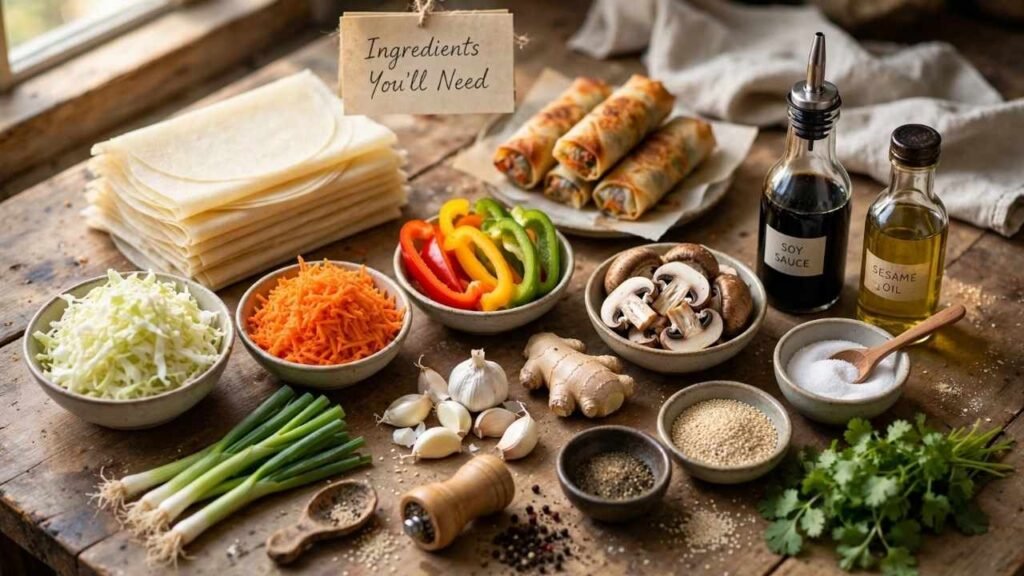
The ingredients for these baked vegetable spring rolls are simple and easy to find. You need a mix of fresh vegetables, basic seasonings, spring roll wrappers, and a little oil for baking.
For the Vegetable Filling
Use cabbage, carrots, bell peppers, and spring onions as the main vegetables. You can also add mushrooms, bean sprouts, or green beans for more flavor and texture. Garlic and ginger give the filling a fresh, savory taste.
For the Seasoning
A simple mix of soy sauce, sesame oil, rice vinegar, and black pepper works well. Add chili sauce if you like a little heat.
For the Wrappers
Use spring roll wrappers, either fresh or frozen. If using frozen wrappers, thaw them as directed on the package.
For Brushing and Sealing
Keep some neutral oil for brushing the rolls. You can also use a little flour-water paste to seal the edges.
How to Make Baked Vegetable Spring Rolls
Making these baked vegetable spring rolls is easier than it may seem. Start by preparing all your vegetables before you begin cooking. This makes the process faster and easier.
1. Prepare the Vegetables
Finely shred the cabbage and carrots, then cut the bell peppers and spring onions into thin strips.
2. Cook the Filling
Heat a pan over medium-high heat. Add a little oil, then stir-fry the vegetables with garlic and ginger. Add soy sauce, sesame oil, rice vinegar, and black pepper. Cook until the vegetables are tender but still slightly crisp.
3. Cool the Filling
Drain any extra liquid and let the filling cool completely. A cool, dry filling helps prevent soggy spring rolls.
4. Fill and Roll
Place a wrapper on a flat surface, add a small amount of filling, fold the sides, and roll tightly. Seal the edge.
5. Bake
Brush lightly with oil and bake until the wrappers are golden brown and crispy.
How to Make Spring Rolls Extra Crispy
Getting crispy baked vegetable spring rolls is all about controlling moisture. First, avoid adding too much sauce to the vegetable filling. Extra liquid can make the wrappers soft instead of crunchy. After cooking the vegetables, drain them well and let the filling cool before wrapping.
Do not overfill the spring roll wrappers. A thin, even layer of filling allows the wrapper to cook and crisp properly. Roll each spring roll tightly so there are no loose areas.
Before baking, brush or lightly spray the wrappers with oil. Place the rolls in a single layer with enough space between them. This helps hot air move around each roll.
Finally, make sure your oven is fully preheated before the rolls go in. Bake until they are golden, crisp, and lightly browned, then serve them right away for the best texture.
Why Do My Baked Spring Rolls Get Soggy?
Soggy spring rolls are usually caused by too much moisture. If your vegetable filling contains extra water, the moisture can soften the wrapper while it bakes. After stir-frying the vegetables, drain them well and allow them to cool before filling the wrappers.
Using too much filling can also make baked spring rolls soft. Keep the filling amount small and roll the wrapper tightly. Another common mistake is placing too many rolls close together on the baking tray. Leave some space between them so hot air can circulate.
A cold oven may also prevent the wrappers from becoming crispy and golden brown. Always preheat the oven fully before baking.
Finally, avoid storing the rolls for too long before serving. Even perfectly baked spring rolls can lose their crisp texture as they sit. Serve them hot and fresh whenever possible.
The Best Vegetables for Spring Rolls
The best vegetables for vegetable spring rolls are those that cook quickly and add both flavor and texture. Cabbage and carrots are classic choices because they stay slightly crisp after cooking. Bell peppers add a mild sweetness and bright color, while spring onions give the filling a fresh taste.
You can also add mushrooms, bean sprouts, or green beans. Mushrooms give the filling a deeper flavor, while bean sprouts add a light crunch. Green beans work well when sliced into very thin pieces.
Try not to use vegetables that release a lot of water unless you cook and drain them first. Too much moisture can make the wrappers soggy.
For more variety, you can add cooked rice noodles or vermicelli. Keep the filling balanced and avoid adding too much of any one ingredient. A simple mix of colorful vegetables usually gives the best crispy baked spring rolls.
Best Spring Roll Wrappers for Baking
Choosing the right spring roll wrappers can make a big difference in the final texture. Thin wheat-based spring roll wrappers usually work well for baked vegetable spring rolls because they become crisp and golden in a hot oven.
Frozen spring roll wrappers are also a convenient choice. Thaw them according to the package directions, and keep the unused wrappers covered with a clean, slightly damp towel so they do not dry out.Some recipes use filo or phyllo pastry, which can create a light and flaky texture. However, filo is different from traditional spring roll wrappers, so the baking time and handling may vary.
Avoid treating rice paper as a direct replacement. Rice paper wrappers have a different texture and cooking method and may not give you the same crisp result.For this recipe, use the wrapper recommended in the recipe card and follow the package instructions for thawing and handling.
Can You Make These Spring Rolls in an Air Fryer?
Yes, you can make vegetable spring rolls in an air fryer. In fact, an air fryer is a useful option when you want a small batch of crispy spring rolls without heating the whole oven.
Lightly brush or spray the assembled spring rolls with oil. Arrange them in the air-fryer basket in a single layer. Avoid stacking them, as this can stop the hot air from reaching all sides.Cook at a high temperature until the wrappers become golden brown and crisp. Cooking time can vary depending on the size of the rolls and your air fryer, so start checking them early.
If your air fryer has a strong fan, the wrappers may brown faster than they do in an oven. Turn the rolls halfway through cooking if needed.The air fryer is especially useful for reheating leftover spring rolls because it can help bring back some of their crisp texture.
Can You Freeze Vegetable Spring Rolls?
Yes, vegetable spring rolls can be frozen, and freezing is a great way to prepare them ahead of time. For the best texture, freeze the rolls before baking. Once the rolls are assembled, place them on a tray in a single layer and freeze until firm.After that, transfer them to a freezer-safe bag or airtight container. Keep them separated if possible so they do not stick together.
When you are ready to cook them, you may be able to bake the frozen spring rolls without thawing them first. Add a little extra cooking time and check that the wrappers are fully golden and crispy.You can also freeze cooked spring rolls, but the texture may not be as crisp after reheating.
For the best results, prepare the vegetable filling in advance, assemble the rolls, freeze them properly, and bake them when needed. This makes homemade spring rolls easy for busy days or parties.
How to Store and Reheat Baked Spring Rolls
Baked vegetable spring rolls are best served fresh because the wrappers are at their crispiest right after baking. If you have leftovers, let them cool before placing them in an airtight container. Store them in the refrigerator and use them within a few days.
Avoid reheating spring rolls in the microwave if you want a crispy texture. The microwave can make the wrappers soft and chewy.Instead, use an oven or air fryer. Heat the rolls until they are warmed through and the outside becomes crisp again. Leave some space between the rolls so hot air can circulate.
If the rolls were frozen, reheat them using a high, dry heat rather than adding extra moisture.Keep in mind that reheated spring rolls may not be quite as crisp as freshly baked ones. For the best result, serve your crispy vegetable spring rolls soon after cooking with your favorite dipping sauce.
What to Serve With Baked Vegetable Spring Rolls
These baked vegetable spring rolls taste great with a simple dipping sauce. Sweet chili sauce is one of the easiest choices because its sweet and spicy flavor pairs well with the savory vegetable filling.
For a richer option, try a peanut dipping sauce made with peanut butter, soy sauce, lime juice, and a little water. You can also serve the rolls with soy-chili sauce, hoisin sauce, or Schezwan sauce.
If you are serving the spring rolls as part of a larger meal, pair them with vegetable fried rice, noodles, Asian-style soup, or a fresh salad. They also work well on an appetizer platter for parties and family gatherings.
For a lighter snack, simply serve two or three crispy spring rolls with a small bowl of dipping sauce. Keep the sauce on the side so the wrappers stay crisp.Serve the rolls hot and fresh for the best texture and flavor.
Easy Variations
One of the best things about vegetable spring rolls is how easy they are to change. You can adjust the filling based on what you already have in your kitchen.
For spicy spring rolls, add chili flakes, fresh chili, or a little Schezwan sauce. For a deeper savory flavor, add mushrooms, extra garlic, or ginger. You can also add rice vermicelli for noodle-filled spring rolls.For a simple vegan spring roll, use plant-based wrappers and sauces that contain no animal ingredients. If you want a more filling version, add cooked tofu or another plant-based protein.
You can also make kid-friendly spring rolls by using mild vegetables and reducing the spice. Keep the filling simple with cabbage, carrots, and sweet bell peppers.For an extra-crispy result, keep the filling dry and use a light coating of oil before baking. These small changes let you create different flavors while keeping the basic recipe easy.
Make-Ahead Instructions
These baked vegetable spring rolls are easy to prepare ahead, which makes them useful for parties, family meals, or busy days. You can cook the vegetable filling several hours in advance. After cooking, drain it well and let it cool completely before storing it in the refrigerator.
When you are ready to make the spring rolls, bring out the wrappers, fill them, and roll them just before baking. You can also assemble the rolls ahead and keep them chilled for a short time.For longer storage, freeze the unbaked spring rolls in a single layer until firm. Then move them to a freezer-safe container or bag.
When it is time to cook, bake them according to the recipe instructions and check that the wrappers are golden and crispy.Preparing the filling or assembled rolls ahead can save time while still giving you fresh, homemade vegetable spring rolls when you need them.
FAQs
Can you bake vegetable spring rolls instead of frying them?
Yes. Baking vegetable spring rolls is an easy alternative to deep-frying. A hot oven and a light coating of oil can give the wrappers a golden, crisp finish.
How do you make baked spring rolls crispy?
Keep the filling dry and cool, avoid overfilling, use a light coating of oil, and bake in a fully preheated oven.
Why are my baked spring rolls soggy?
Too much moisture is the most common reason. Drain the vegetables well and avoid adding too much sauce.
Can I use frozen spring-roll wrappers?
Yes. Thaw them according to the package directions and keep unused wrappers covered.
Can I freeze vegetable spring rolls?
Yes. Unbaked spring rolls can be frozen and cooked later.
Can I make spring rolls in an air fryer?
Yes. An air fryer can make small batches of crispy vegetable spring rolls quickly.
What sauce goes best with spring rolls?
Sweet chili sauce, peanut sauce, soy-chili sauce, and hoisin sauce are all good choices.
Conclusion
These baked vegetable spring rolls are a simple way to enjoy a crispy, flavorful appetizer without deep-frying. With fresh vegetables, thin spring roll wrappers, and a light coating of oil, you can make golden rolls right in your oven.
The most important tips are to keep the filling dry, cool it before wrapping, avoid overfilling, and leave space between the rolls while baking. These steps help you get the crisp texture that makes spring rolls so enjoyable.
You can also prepare them ahead, freeze unbaked rolls, or use an air fryer when you want a quick batch. Serve your crispy vegetable spring rolls hot with sweet chili, peanut, or soy-chili sauce.Once you know how to control moisture and heat, making crispy baked vegetable spring rolls at home becomes easy, flexible, and delicious.