
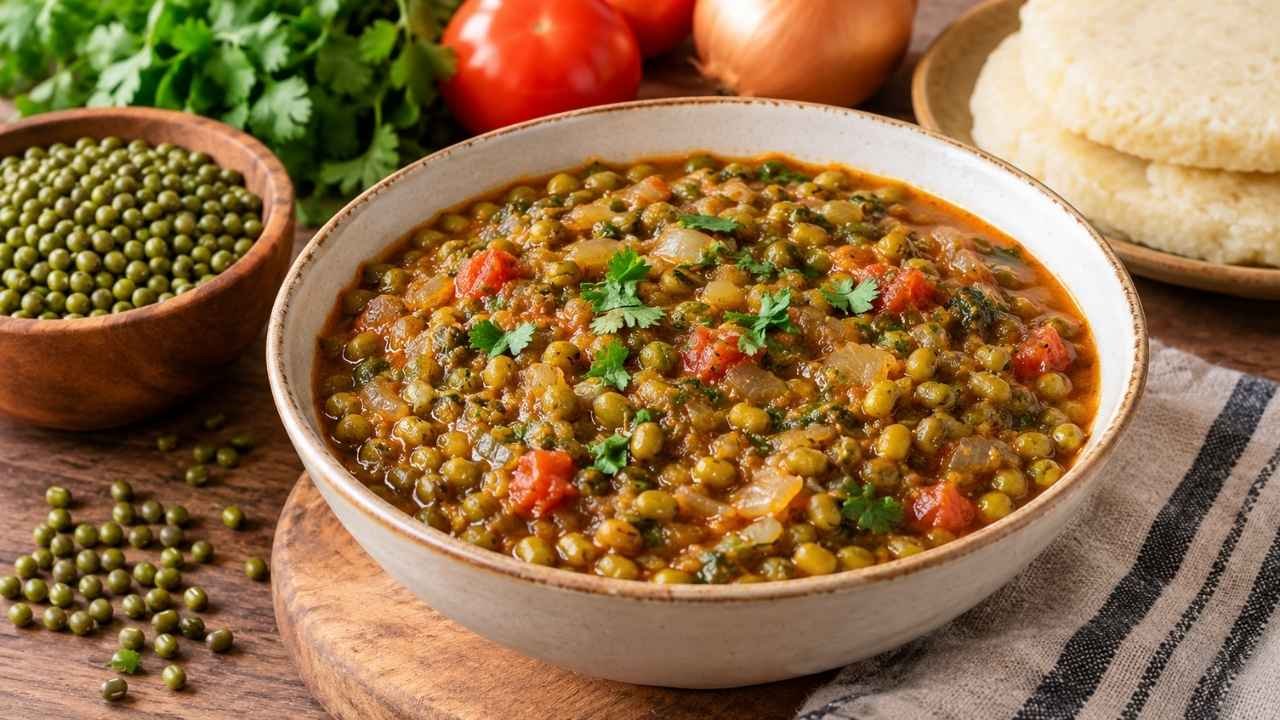
Ndengu stew is a comforting Kenyan dish made with tender ndengu, also known as green grams or mung beans, cooked in a rich tomato-based sauce with onions, garlic, ginger, and warm spices. This Kenyan ndengu stew is simple, filling, and easy to make for a family meal. The beans add a hearty texture, while ingredients such as curry powder, cumin, turmeric, and fresh coriander bring plenty of flavor.
You can also add coconut milk for a creamy finish or keep the stew tomato-based for a lighter option. Traditionally, ndengu stew is enjoyed with chapati, rice, or ugali, making it a flexible main dish. Whether you are looking for an easy ndengu stew recipe, a Kenyan green grams stew, or a tasty mung bean curry, this recipe gives you a simple way to prepare it at home.
Quick Answer
Ndengu stew is a flavorful Kenyan dish made with green grams or mung beans, tomatoes, onions, garlic, ginger, and warm spices. The beans are cooked until tender, then simmered in a rich tomato sauce with optional coconut milk for extra creaminess. This easy Kenyan ndengu recipe pairs well with chapati, rice, or ugali. It is filling, budget-friendly, naturally plant-based, and perfect for a comforting family meal any day.
What Is Ndengu Stew?
Ndengu stew is a popular Kenyan dish made with ndengu, green grams, or mung beans cooked in a savory sauce. The stew usually starts with onions, tomatoes, garlic, and ginger, then gets more flavor from spices such as curry powder, turmeric, cumin, and garam masala.
Some versions include coconut milk, which makes the sauce creamy and rich. This Kenyan green grams stew is filling without being heavy and works well as an everyday family meal. While it is often called mung bean curry, the texture and cooking style can vary from one home to another. It is commonly served with chapati, rice, or ugali, making it a flexible part of Kenyan cuisine.
Why You’ll Love This Kenyan Ndengu Stew
There are plenty of reasons to make this easy ndengu stew recipe at home. It uses simple ingredients that are easy to find and turns affordable mung beans into a flavorful and satisfying meal. The tomato, onion, garlic, and ginger base gives the stew a deep taste without requiring complicated cooking skills. You can also adjust the spices and vegetables to suit your family.
Simple and Budget-Friendly
Ndengu stew is a great choice when you want a filling meal without spending too much. Green grams are affordable and provide a hearty texture, while basic ingredients such as tomatoes, onions, carrots, and spices create plenty of flavor. You can serve the stew with rice, chapati, or ugali for a complete meal.
Easy to Make Ahead
This Kenyan mung bean stew is also useful for meal prep because the flavors develop as it rests. You can make a larger batch, keep portions in the refrigerator, or freeze some for later. When reheated, add a little water or stock if the sauce becomes too thick.
Ingredients You’ll Need for Ndengu Stew
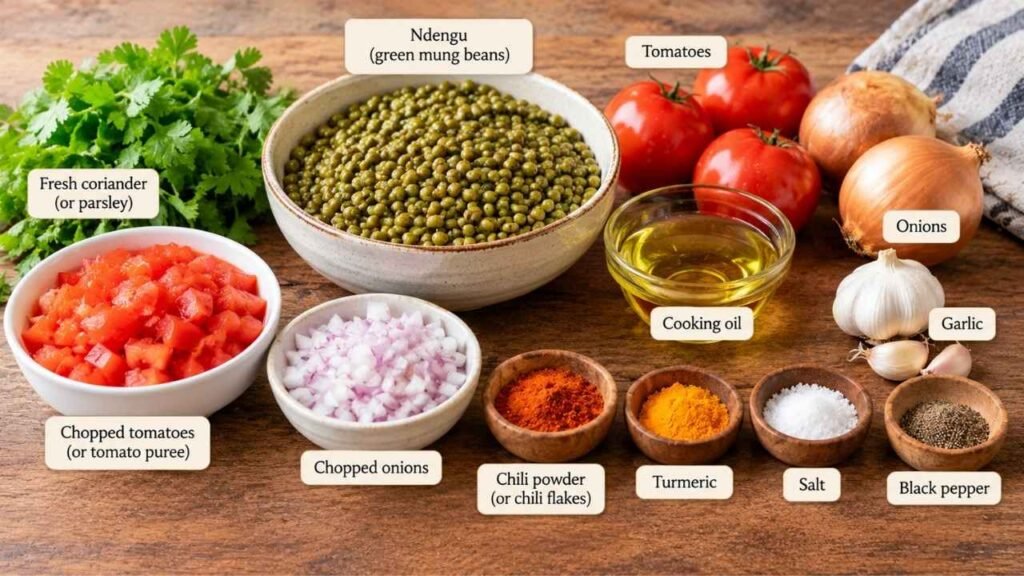
- Ndengu or green grams
- Onion
- Tomatoes
- Garlic
- Ginger
- Cooking oil
- Tomato paste
- Curry powder
- Cumin
- Turmeric
- Garam masala
- Black pepper
- Coconut milk (optional)
- Carrots (optional)
- Bell peppers (optional)
- Fresh coriander
- Vegetable stock or water
- Salt
How to Prepare Ndengu Before Cooking
Before making the stew, take a few minutes to prepare the ndengu properly. If using dried green grams or mung beans, spread them out and check for small stones, damaged beans, or other debris. Rinse them well under cool water until the water runs mostly clear. You can soak the beans for several hours or overnight if you want to reduce cooking time.
However, soaking is not always required, so you can also cook them directly with extra time. After soaking, drain and rinse them again. Proper preparation helps the beans cook evenly and gives your Kenyan green grams stew a better texture.
How to Make Ndengu Stew
Making ndengu stew is simple once the beans are cooked until tender. Start by boiling the prepared mung beans in water until they are soft but still hold their shape. While they cook, heat oil in a pot and sauté the onion until soft. Add garlic and ginger, then stir in tomatoes and tomato paste.
Cook until the tomato mixture becomes thick and rich. Add curry powder, turmeric, cumin, and garam masala, stirring until fragrant. Add the cooked ndengu and enough water or stock to create your preferred sauce. For a creamy mung bean curry, stir in coconut milk. Let everything simmer together so the beans absorb the flavors.
How to Get the Perfect Ndengu Stew Consistency
The right consistency makes a big difference in a good ndengu stew. It should have enough sauce to coat the beans without becoming watery. If your stew looks too thin, leave the pot uncovered and let it simmer for a few extra minutes.
You can also mash a small amount of the cooked green grams against the side of the pot to naturally thicken the sauce. If it becomes too thick, add a little warm water or vegetable stock. Stir gently while simmering so the beans do not break apart. For a creamy version, coconut milk adds body and richness while keeping the sauce smooth and flavorful.
Do You Need Coconut Milk in Ndengu Stew?
Coconut milk is optional, but it can make ndengu stew creamy, rich, and slightly sweet. It works especially well with warm spices such as curry powder, turmeric, and cumin. If you prefer a lighter tomato-based stew, simply leave it out and use water or vegetable stock instead.
You can also use a little milk or cream if that suits your recipe, although coconut milk gives the dish a distinct flavor. A Kenyan mung bean curry does not have to follow one fixed method, so choose the version that fits your taste. Both creamy and tomato-based versions can be served with chapati, rice, or ugali.
What to Serve With Ndengu Stew
Ndengu stew is filling on its own, but traditional sides make it even more satisfying. Chapati is one of the most popular pairings because its soft, flaky texture works well for scooping up the thick stew. Steamed or seasoned rice is another easy choice and helps balance the rich tomato or coconut sauce.
You can also serve Kenyan ndengu with ugali, especially when you want a hearty meal. For freshness, add kachumbari, a simple tomato and onion salad, or some cooked sukuma wiki. These combinations give you several ways to enjoy Kenyan green grams stew without changing the main recipe.
Easy Variations of Ndengu Stew
Once you know how to make basic ndengu stew, it is easy to change the recipe. Add carrots, potatoes, bell peppers, or spinach to create a more filling vegetable ndengu stew. For extra heat, add fresh chili or chili powder.
You can also make a creamy coconut ndengu by increasing the coconut milk. If you do not enjoy coconut, keep the stew tomato-based and use vegetable stock for extra flavor. A little extra curry powder or garam masala can create a stronger mung bean curry flavor. These simple changes let you make the dish according to what you have in your kitchen.
Spicy Ndengu Stew
For a spicy version, add fresh chili, chili flakes, or chili powder when cooking the onion and spices. Start with a small amount and increase it if needed. You can also add black pepper or paprika for extra warmth without making the stew too hot. Fresh coriander added at the end helps balance the stronger flavors.
Vegetable Ndengu Stew
To make vegetable ndengu stew, add chopped carrots, potatoes, bell peppers, or spinach. Add firm vegetables earlier so they have enough time to soften, while spinach can go in near the end. The vegetables add color, texture, and extra flavor while making the green gram stew even more filling.
Common Mistakes to Avoid When Cooking Ndengu
A few simple mistakes can affect your ndengu stew. One common problem is cooking the beans for too little time, which leaves them hard in the center. Another is adding too much water, resulting in a thin sauce. Make sure the tomato mixture cooks down before adding the beans so the stew has a richer flavor.
Avoid adding too much salt at the beginning, especially if you are using stock. Finally, give the finished stew enough time to simmer so the mung beans absorb the spices. Gentle cooking also helps prevent the beans from breaking apart and turning the sauce overly thick.
How to Store, Freeze, and Reheat Ndengu Stew
Leftover ndengu stew is easy to store, making it useful for meal prep. Let the stew cool before transferring it to an airtight container. Keep it in the refrigerator if you plan to eat it soon, or freeze individual portions for longer storage.
When reheating, warm it gently on the stove or in the microwave and stir occasionally. The beans may absorb more liquid while stored, so add a splash of water or stock if the stew becomes too thick. If you have frozen mung bean stew, thaw it safely before reheating and heat until it is steaming hot throughout.
Ndengu Stew Substitutions
You can adjust this Kenyan ndengu recipe when you do not have every ingredient available. Dried green grams can be replaced with cooked or canned mung beans to save time. If using canned beans, drain and rinse them before adding them to the sauce.
Coconut milk can be left out for a tomato-based version or replaced with another creamy ingredient if preferred. Vegetable stock can be replaced with water, although stock adds more flavor. Fresh coriander can be replaced with parsley if needed. These simple substitutions help you prepare an easy mung bean curry without making a special shopping trip.
FAQs
What is ndengu?
Ndengu are commonly known as green grams or mung beans, and they are widely used in Kenyan cooking.
Are ndengu the same as mung beans?
Yes. In this context, ndengu refers to whole green grams, also known as mung beans.
Do ndengu need to be soaked?
No. Soaking is optional, but it can help reduce cooking time and soften dried beans more quickly.
How long do ndengu take to cook?
Cooking time varies, but dried ndengu generally need enough time to become fully tender before making the stew.
Can I make ndengu without coconut milk?
Yes. Make a tomato-based ndengu stew with water or vegetable stock instead.
What do you eat with ndengu?
Popular choices include chapati, rice, ugali, kachumbari, and sukuma wiki.
Can ndengu stew be frozen?
Yes. Cool the stew, place it in an airtight container, and freeze in portions for convenient meals.
How do I thicken ndengu stew?
Simmer it uncovered to reduce excess liquid, or mash a small amount of cooked ndengu into the sauce.
Conclusion
Ndengu stew is a simple, flavorful, and filling dish that brings the comforting taste of Kenyan cuisine to your kitchen. Made with tender green grams or mung beans, tomatoes, onions, garlic, ginger, and warm spices, it is easy to adjust to your taste. Add coconut milk for a creamy finish or keep it tomato-based for a lighter version.
Serve your Kenyan ndengu stew with soft chapati, rice, or ugali for a complete meal. You can also add vegetables, make it spicy, or prepare it ahead for busy days. With simple ingredients and easy steps, this ndengu recipe is a practical and delicious choice for a family dinner or comforting homemade meal.