
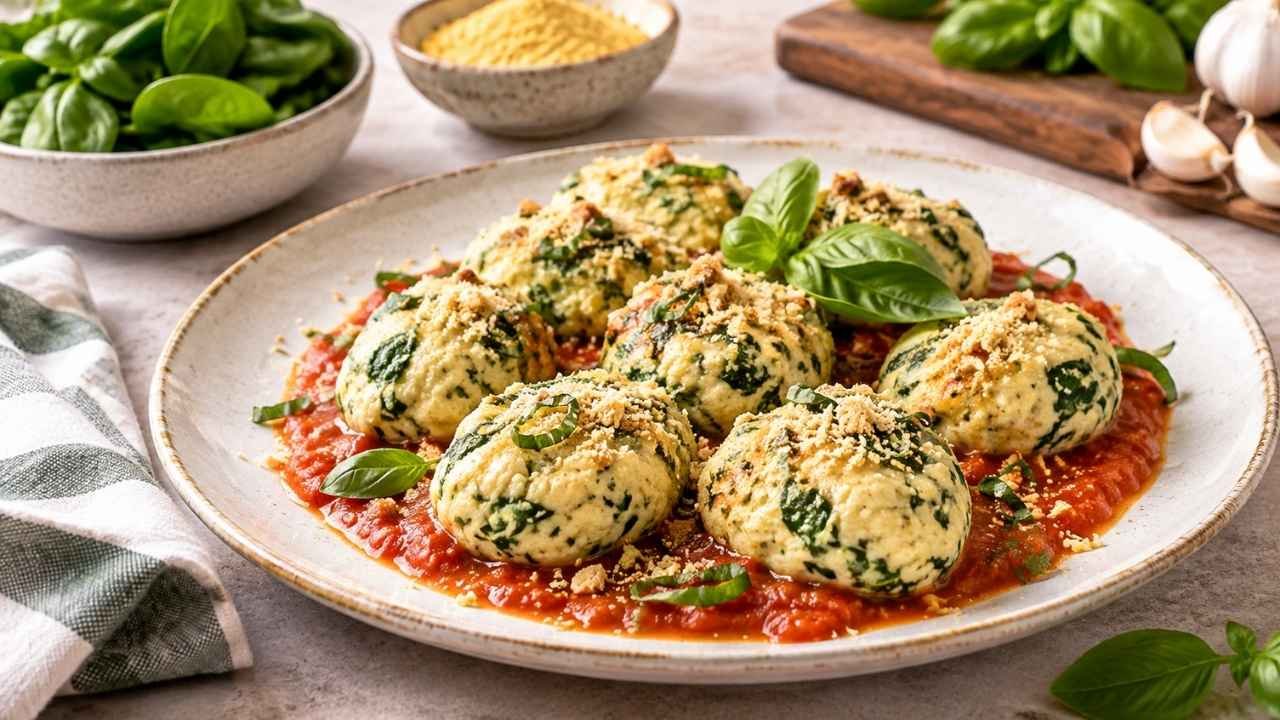
If you love soft Italian dumplings but want a plant-based recipe, these vegan gnudi are a delicious choice. Made with tender spinach, creamy vegan ricotta, and simple seasonings, they have a soft, pillowy texture without using dairy or eggs. Gnudi are often called “naked ravioli” because they are made from the filling traditionally found inside ravioli, served without the pasta shell.
This vegan gnudi recipe keeps that classic idea while making it completely dairy-free and egg-free. The key is removing excess moisture from the spinach and ricotta so the dumplings stay together while cooking.
Whether you use tofu ricotta or cashew ricotta, these Italian-inspired dumplings make a comforting dinner with tomato sauce, vegan sage butter, or walnut sage pesto. This guide also shares simple tips for shaping, cooking, storing, and freezing vegan gnudi.
Quick Answer
Vegan gnudi are soft Italian dumplings made with spinach, vegan ricotta, and simple seasonings instead of traditional dairy ricotta and eggs. They are often called naked ravioli because they use the filling without the pasta shell. The key to successful vegan gnudi is removing excess moisture and gently cooking them so they hold together. Serve them with tomato sauce, vegan sage butter, or walnut sage pesto.
What Are Vegan Gnudi?
Vegan gnudi are soft Italian dumplings made from the filling traditionally used inside ravioli, but without the pasta wrapper. The word “gnudi” means “naked,” which explains the name naked ravioli.
Traditional gnudi often combine ricotta, spinach, egg, and Parmesan, while this vegan version uses plant-based ingredients. They are different from classic gnocchi because they are centered on a ricotta-style filling rather than a potato-based dough.
The finished dumplings should be tender, light, and slightly creamy inside. Once you understand this simple idea, vegan gnudi are easy to make at home. They can be served with tomato sauce, vegan sage butter, or walnut sage pesto for a comforting Italian-inspired meal.
Why You’ll Love This Vegan Gnudi Recipe
This vegan gnudi recipe is a great choice when you want something comforting without using dairy or eggs. The combination of spinach and vegan ricotta creates soft, flavorful dumplings with a light texture.
They are also easy to change depending on what you have in your kitchen. You can use tofu ricotta for a firm mixture or cashew ricotta for a richer result. These Italian vegan dumplings work well for both a relaxed family dinner and a special meal.
The recipe also includes simple ways to prevent the gnudi from falling apart, which is one of the biggest concerns when making them at home. Serve them with your favorite sauce and finish with fresh herbs or vegan Parmesan for extra flavor.
Ingredients for Vegan Gnudi
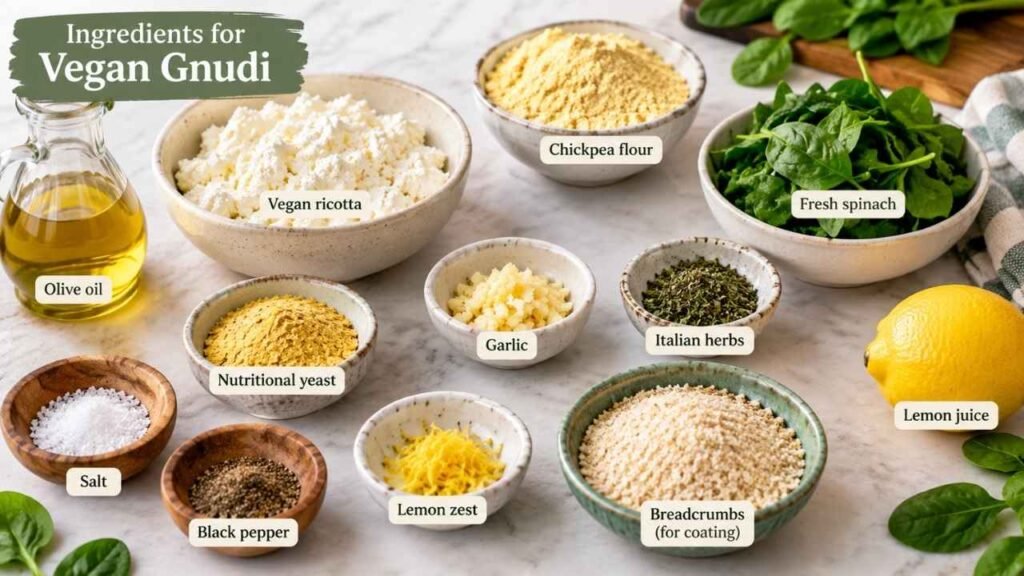
The ingredients for these vegan spinach gnudi are simple, but each one has an important job. You need cooked spinach and a creamy vegan ricotta as the main base. Nutritional yeast or vegan Parmesan adds a savory, cheesy taste, while flour and a little cornstarch help the dumplings hold their shape.
A small amount of nutmeg, garlic, salt, black pepper, and lemon juice adds more flavor without making the mixture heavy. You can use all-purpose flour or choose a gluten-free flour blend if needed. Semolina can also be useful for lightly coating shaped gnudi.
The most important thing is to keep the mixture fairly dry. Too much moisture from spinach or vegan ricotta can make the dumplings soft and difficult to handle.
How to Make Vegan Ricotta for Gnudi
Tofu Ricotta
Tofu ricotta is a practical choice for vegan gnudi because it gives the mixture a firm base. Use well-drained firm or extra-firm tofu and break it into pieces. Blend it with nutritional yeast, lemon juice, a little miso, garlic, salt, and pepper until it resembles soft ricotta. Do not make it completely smooth because a slightly crumbly texture works better.
If the tofu seems wet, press it longer before blending. The finished mixture should be creamy but not watery. This plant-based ricotta works especially well when you want gnudi that are easy to shape and hold together during gentle cooking.
Cashew Ricotta
Cashew ricotta gives vegan gnudi a rich and creamy texture. Soak raw cashews until they become soft, then drain them well before blending. Add lemon juice, nutritional yeast, salt, and a little garlic for a simple dairy-free ricotta flavor. Blend until creamy but leave a little texture instead of making a completely smooth paste.
Because cashews can create a richer mixture, use only enough moisture to blend them. If the ricotta becomes too loose, chill it before mixing it with the spinach. This is a useful vegan ricotta alternative for anyone who prefers a nut-based filling instead of tofu.
How to Prepare the Spinach Properly
Spinach is one of the most important parts of vegan spinach dumplings, but it can also add too much water. Cook fresh spinach until wilted, then let it cool enough to handle. If you use frozen spinach, thaw it completely first.
Place the spinach in a clean towel or use your hands to squeeze out as much water as possible. This step should not be rushed. Once drained, chop the spinach finely so it mixes evenly with the vegan ricotta.
Wet spinach can make the mixture sticky and cause the gnudi to fall apart in boiling water. Dry, finely chopped spinach gives you a much better base for shaping Italian spinach dumplings that stay tender but hold their form.
How to Make Vegan Gnudi
Start by combining the well-drained spinach and vegan ricotta in a large bowl. Add nutritional yeast or vegan Parmesan, flour, cornstarch, nutmeg, salt, pepper, and any other seasonings you prefer. Mix gently until everything comes together into a soft mixture.
Avoid adding too much flour because this can make your vegan ricotta gnudi heavy and dense. If the mixture feels very wet, add a small amount of flour or cornstarch and mix again. Once it is shapeable, cover and chill it so the mixture becomes easier to handle.
Form small balls with lightly floured hands, then place them on a floured surface. You can lightly coat them with flour or semolina before cooking to help protect their shape.
How to Keep Vegan Gnudi From Falling Apart
The biggest secret to successful vegan gnudi that don’t fall apart is controlling moisture. Make sure the spinach and vegan ricotta are well drained before mixing. The mixture should feel soft but firm enough to hold a ball shape.
Chilling the mixture before shaping can also make it easier to work with. Do not make the dumplings too large because smaller gnudi cook more evenly and are easier to handle. Before cooking the entire batch, try one test gnudi in gently simmering water.
If it breaks apart, add a little more binder and chill the mixture again. Finally, avoid a strong rolling boil. Gentle cooking and careful handling help delicate dumplings stay together.
How to Cook Vegan Gnudi
Bring a large pot of salted water to a gentle simmer. You want small bubbles rather than a strong, aggressive boil because vegan gnudi are delicate. Carefully lower a few dumplings into the water, leaving enough room for them to move without being crowded.
Avoid stirring them too much during cooking, as rough movement can break their soft surface. When the gnudi rise toward the top and feel firm enough to handle, remove them gently with a slotted spoon. Cook the remaining batch in the same way.
You can serve them immediately with sauce or briefly brown them in a pan with vegan butter or olive oil. This extra step adds a light golden surface while keeping the inside soft and tender.
The Best Sauces for Vegan Gnudi
Tomato Sauce
A simple tomato sauce is one of the easiest ways to serve vegan gnudi. Use crushed tomatoes or tomato passata with garlic, olive oil, salt, pepper, and fresh basil. Keep the sauce fairly light so it does not cover the delicate flavor of the dumplings.
Marinara also works well when you want a slightly richer Italian-style meal. Spoon the warm sauce onto a plate, add the cooked gnudi, and finish with fresh herbs or vegan Parmesan. This option is especially useful for a quick weeknight dinner because the sauce can be prepared while the dumplings cook.
Vegan Sage Butter
Vegan sage butter gives gnudi a rich, simple finish inspired by traditional Italian cooking. Melt vegan butter gently in a pan, then add fresh sage leaves and let them cook until fragrant. A little garlic or lemon zest can add extra freshness if desired. Once the gnudi are cooked, add them carefully to the pan and coat them lightly with the butter sauce.
Keep the heat moderate so the dumplings do not break. Finish with black pepper, vegan Parmesan, or toasted nuts. This sauce works particularly well when you want the soft texture and mild flavor of the gnudi to remain the main focus.
Walnut Sage Pesto
Walnut sage pesto adds a nutty, herby flavor and a pleasant crunch to vegan gnudi. Blend toasted walnuts with fresh sage, parsley, garlic, lemon juice, olive oil, and nutritional yeast or vegan Parmesan. Keep the pesto slightly textured rather than completely smooth. Toss the cooked gnudi gently with a small amount of pesto or spoon it over the top before serving.
The walnuts add richness while lemon keeps the dish fresh. This combination is especially useful for anyone looking for something different from tomato sauce. It also gives your vegan Italian dumplings a more special, dinner-party feel.
Vegan Gnudi Variations and Substitutions
There are several easy ways to adapt this vegan gnudi recipe. For the ricotta base, use tofu ricotta when you want a firmer mixture or cashew ricotta for a richer texture. Fresh spinach can be replaced with frozen spinach as long as you remove the extra water.
For a gluten-free version, use a suitable gluten-free flour blend instead of regular flour. Cornstarch can help provide extra binding when needed. You can also replace nutritional yeast with vegan Parmesan for a stronger cheesy flavor.
Add lemon zest, fresh basil, parsley, or garlic for a different taste. If you want more variety, try serving the gnudi with tomato sauce, sage butter, or pesto. These simple changes make the recipe flexible without changing its basic character.
Common Vegan Gnudi Mistakes
One common mistake is leaving too much water in the spinach or vegan ricotta. This makes the mixture weak and can cause the dumplings to break apart. Another mistake is adding too much flour.
Although flour helps with binding, too much can turn tender gnudi into heavy, dense dumplings. Making the gnudi too large can also cause uneven cooking. Avoid placing them into rapidly boiling water because strong movement can damage their delicate shape. Another useful tip is not to skip chilling.
Cold dough is usually easier to shape and handle. Finally, always cook a test dumpling before cooking the full batch. This simple step lets you correct the mixture before you risk losing the entire batch.
Can You Make Vegan Gnudi Ahead of Time?
Yes, vegan gnudi can be prepared ahead of time, which makes them useful for entertaining or busy evenings. After shaping the dumplings, place them on a lightly floured tray without letting them touch each other. Cover the tray and refrigerate them until you are ready to cook. Chilling can also help the dumplings become firmer and easier to handle.
If you plan to prepare them earlier in the day, keep them cold until cooking time. The sauce can be made separately and warmed just before serving.
Avoid leaving shaped gnudi at room temperature for a long time because the mixture can soften. Preparing the components ahead also makes dinner much easier because you only need to cook the dumplings and finish the sauce.
How to Store and Freeze Vegan Gnudi
For short-term storage, place cooked vegan gnudi in an airtight container and refrigerate them. Keep them separate from the sauce when possible because this helps prevent them from becoming too soft.
To freeze uncooked gnudi, arrange them in a single layer on a tray and freeze until firm. Then transfer them to a freezer-safe container or bag. This prevents the dumplings from sticking together. When ready to cook, frozen gnudi can generally be added carefully to gently simmering water without fully thawing first.
Cook them until heated through and firm. For refrigerated leftovers, warm them gently with sauce in a pan rather than using high heat. This helps protect their delicate texture.
What to Serve With Vegan Gnudi
Vegan gnudi are filling enough to work as a main dish, but simple sides can make the meal feel complete. A fresh green salad with lemon and olive oil adds brightness next to the soft dumplings. You can also serve them with roasted vegetables such as zucchini, broccoli, asparagus, or peppers.
Crusty Italian bread is useful for soaking up tomato sauce, sage butter, or pesto. For a lighter meal, pair the gnudi with steamed greens and a simple lemon dressing.
Fresh basil, parsley, toasted walnuts, or vegan Parmesan can be added just before serving. Because gnudi are soft and delicate, choose sides with some fresh or crisp texture rather than adding another heavy dish.
FAQs
Are vegan gnudi the same as gnocchi?
No. Gnudi are based on a ricotta-style filling, while gnocchi are a different type of Italian dumpling.
Why do my vegan gnudi fall apart?
The mixture is often too wet, so drain the spinach and vegan ricotta well and use enough binder.
Can I use frozen spinach?
Yes. Thaw it completely and squeeze out as much water as possible before mixing.
Can I make vegan gnudi gluten-free?
Yes. Use a suitable gluten-free flour or starch-based binder.
Can I freeze vegan gnudi?
Yes. Freeze uncooked gnudi in a single layer before transferring them to a freezer-safe container.
What sauce goes with vegan gnudi?
Tomato sauce, vegan sage butter, and walnut sage pesto all work well.
Can I make vegan gnudi without tofu?
Yes. Cashew ricotta or another firm vegan ricotta can be used instead.
Conclusion
Making vegan gnudi at home is easier than it may seem when you focus on a few simple details. Well-drained spinach, firm vegan ricotta, and the right amount of binder help create soft dumplings that hold together during cooking. Chilling the mixture and testing one gnudi before cooking the full batch can also make a big difference.
Serve these tender vegan spinach dumplings with tomato sauce, vegan sage butter, or walnut sage pesto for a comforting Italian-inspired meal.
You can also prepare them ahead, refrigerate them, or freeze them for another day. With their soft texture, rich flavor, and simple plant-based ingredients, this vegan gnudi recipe is a delicious way to enjoy the idea of traditional naked ravioli without dairy or eggs.