
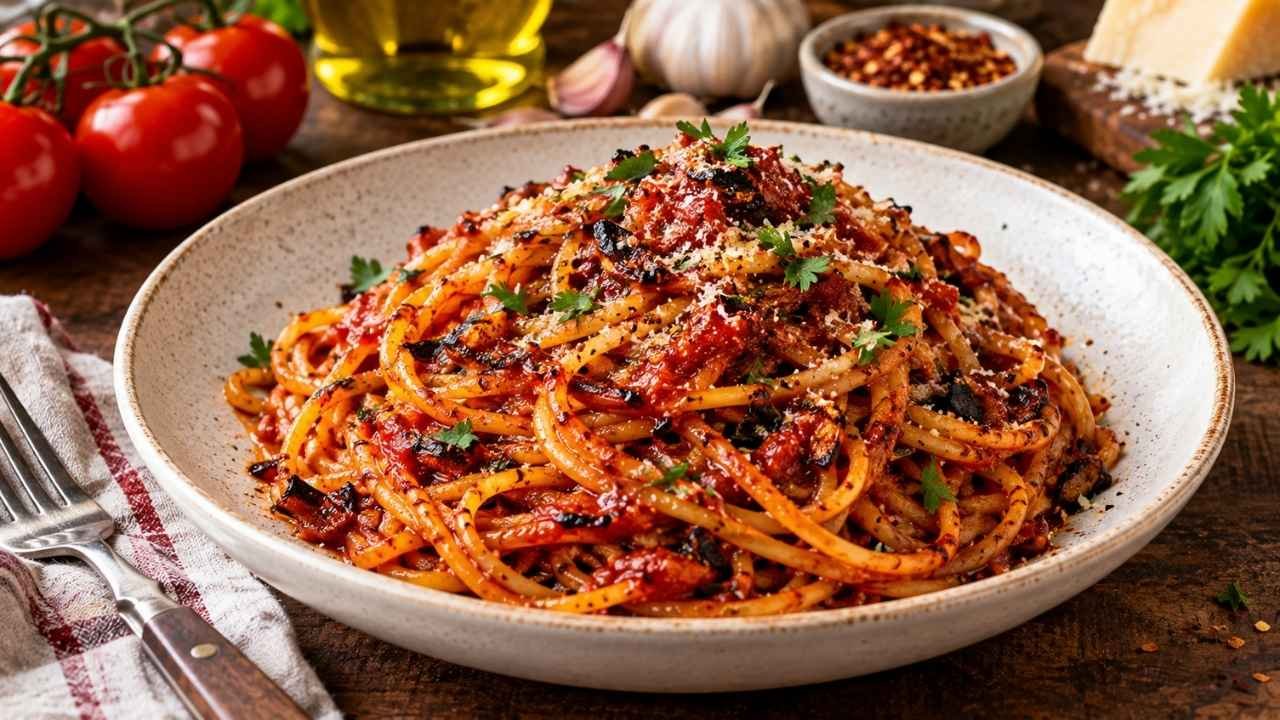
Pasta All’Assassina is a bold and unusual Italian pasta dish from Bari, Puglia. Also known as Spaghetti All’Assassina, Assassin’s Spaghetti, or Killer Spaghetti, it stands out because the pasta is cooked directly in a pan instead of being boiled first. This simple change creates a delicious mix of crispy, charred edges, tender spaghetti, and a rich tomato flavor.
The spaghetti slowly absorbs a spicy tomato broth while it cooks, allowing the sauce to caramelize and the pasta to develop its famous crust. Garlic, extra virgin olive oil, and chili add warmth and depth to every bite. If you enjoy bold Italian flavors, this authentic Spaghetti All’Assassina recipe is worth trying. It is easy to understand, exciting to cook, and completely different from ordinary tomato spaghetti.
Quick Answer
Pasta All’Assassina is a spicy Italian pasta from Bari, Puglia, made by cooking dry spaghetti directly in a pan with tomato sauce, garlic, olive oil, and chili. Unlike regular pasta, it is not boiled first. The spaghetti gradually absorbs tomato broth while developing a crispy, charred, caramelized texture. This unique risottata-style method creates a rich, smoky flavor and makes this authentic dish truly special.
What Is Pasta All’Assassina?
Pasta All’Assassina, also called Spaghetti All’Assassina, is a traditional pasta dish linked to Bari, Puglia in southern Italy. It is sometimes called Assassin’s Spaghetti, Killer Spaghetti, or spaghetti bruciati. What makes this dish different is the cooking method. Instead of boiling spaghetti separately, the raw pasta cooks directly in a pan with tomato sauce and broth.
As the spaghetti cooks, it absorbs the tomato mixture while touching the hot pan. This creates crispy, charred, and caramelized edges that give the dish its special taste. Garlic, olive oil, and chili add a warm, spicy flavor. The result is a simple but bold Italian pasta with a texture that is very different from ordinary tomato spaghetti.
Why Is It Called Pasta All’Assassina?
The name Pasta All’Assassina translates roughly to “Assassin’s Pasta,” which naturally makes people curious. The dish is strongly connected with Bari, and several stories explain how the unusual name became part of its identity. One common explanation points to the pasta’s strong chili heat, which can feel intense enough to be “killer.”
Another idea is linked to the aggressive cooking method, where the spaghetti is browned and almost burned against the pan. Because historical accounts differ, it is better to treat these stories as part of the dish’s food culture rather than one proven explanation. Whatever the exact reason, the dramatic name perfectly matches this spicy, crispy, charred spaghetti.
Where Did Spaghetti All’Assassina Originate?
Spaghetti All’Assassina originated in Bari, Puglia, a region known for simple dishes built around strong local ingredients. The recipe is generally connected with Al Sorso Preferito, a restaurant in Bari, and chef Enzo Francavilla. It became known in the late 1960s and later grew into one of Bari’s recognizable pasta dishes.
The recipe reflects a practical Italian cooking style: use simple ingredients, build strong flavor, and make the most of the cooking process. Today, different cooks may use slightly different amounts of tomato, chili, or oil, but the central idea remains the same. Raw spaghetti is cooked directly in the pan, gradually absorbing tomato liquid while developing its famous crispy surface.
Ingredients for Pasta All’Assassina
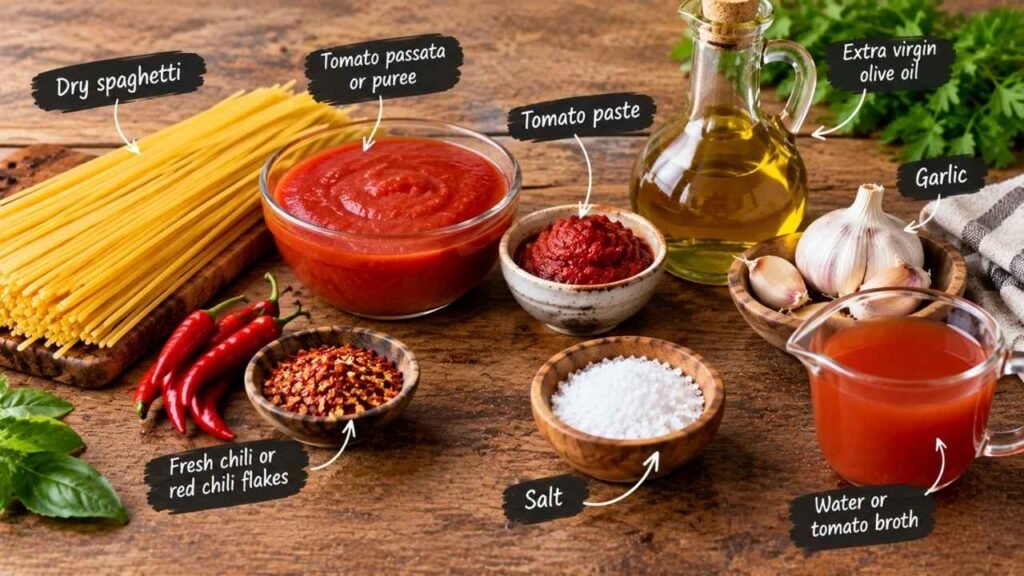
The ingredients for Pasta All’Assassina are simple, but each one has an important job. You need dry spaghetti, tomato passata or tomato puree, a little tomato paste, extra virgin olive oil, garlic, chili, salt, and water or tomato broth. The tomato gives the pasta its rich base, while garlic and chili create its bold Italian flavor.
- Dry spaghetti
- Tomato passata or puree
- Tomato paste
- Extra virgin olive oil
- Garlic
- Fresh chili or red chili flakes
- Salt
- Water or tomato broth
Using good-quality tomatoes and olive oil can make a noticeable difference. Since the pasta cooks directly in the sauce, the ingredients stay closely connected throughout the cooking process.
Why Each Ingredient Matters
Spaghetti provides the main structure and needs to stay firm while developing a crisp surface. Tomato passata creates the main sauce, while tomato paste gives deeper flavor and color. Olive oil helps the pasta brown and prevents the pan from becoming too dry.
Garlic and chili bring the classic spicy Italian taste, while salt balances the tomato. Water or tomato broth is added gradually as the spaghetti cooks. Together, these ingredients create the rich, spicy, slightly smoky flavor that makes authentic Spaghetti All’Assassina different from regular tomato pasta.
What Type of Spaghetti Is Best for All’Assassina?
Choosing the right pasta can help you get the best texture. Dry spaghetti is the traditional choice because it can absorb the tomato broth slowly while becoming browned on the outside. Many cooks prefer spaghetti with a relatively smooth surface because it can move across the pan and develop good contact with the cooking surface.
A medium-thickness spaghetti works well because it needs enough time to cook while the outside becomes crispy. You can experiment with different brands, but avoid very thin pasta because it may cook too quickly. The goal is to create a contrast between a crispy outside and tender, al dente center.
Smooth vs. Rough Pasta
The surface of spaghetti can affect how it behaves in the pan. Smooth spaghetti can slide more easily across the cooking surface, which helps when you are trying to create browned and crispy areas. Rougher pasta can hold more sauce, but it may behave differently during direct-pan cooking.
For a classic Spaghetti All’Assassina recipe, smooth dried spaghetti is a useful choice. Still, you do not need a special Italian brand to make the dish. Focus on good-quality dry spaghetti, the right pan, steady heat, and enough cooking time to develop the desired charred and caramelized texture.
How to Make Pasta All’Assassina
Start by preparing a warm tomato broth with tomato passata, tomato paste, water, and salt. In a wide pan, heat extra virgin olive oil with garlic and chili until fragrant. Add the dry spaghetti directly to the pan instead of boiling it first. Let the pasta touch the hot surface so it can begin to toast.
Add small amounts of warm tomato broth as the spaghetti absorbs the liquid. Move and turn the pasta gently so different parts can touch the pan. Continue adding broth gradually until the spaghetti becomes al dente. Allow some areas to brown and become crispy before adding more liquid. The finished pasta should be spicy, tomato-rich, slightly charred, and coated with a concentrated sauce.
Preparing the Tomato Broth
The tomato broth should be warm before it reaches the pasta. Combine tomato passata, tomato paste, water, and salt in a saucepan and bring it to a gentle simmer. Keeping the broth hot helps the cooking process continue smoothly when you add it to the spaghetti.
The mixture should be loose enough for the pasta to absorb but not so watery that it washes away the developing flavor. Keep the broth nearby throughout cooking. You will add it gradually rather than all at once, allowing the spaghetti to switch between toasting and absorbing liquid as it cooks.
How Does the Risottata Cooking Method Work?
The special cooking style used for Spaghetti All’Assassina is often compared with the way risotto is prepared. Instead of covering the pasta with a large amount of liquid, you add small amounts of tomato broth gradually. The spaghetti absorbs the liquid while staying in direct contact with the hot pan.
This method is sometimes called risottata-style cooking. It gives the tomato flavor more time to become concentrated and allows parts of the spaghetti to brown between additions of broth. The process also helps create the dish’s famous combination of textures. You get a tender, al dente center along with crispy, browned sections on the outside. This is what makes the cooking method so different from ordinary boiled spaghetti.
How to Get Crispy and Charred Spaghetti Without Burning It
Getting the right amount of char is one of the most important parts of Pasta All’Assassina. The pan should be hot enough to brown the spaghetti, but the heat should not be so high that the tomato burns before the pasta cooks. Use enough olive oil to help the spaghetti make good contact with the pan.
After adding broth, let the liquid absorb before adding more. Give the pasta time to sit against the hot surface instead of stirring constantly. This creates crispy, caramelized areas and a deeper tomato flavor. The goal is a pleasant roasted taste, not bitter or blackened pasta.
Charred vs. Burnt
There is an important difference between charred spaghetti and burnt spaghetti. Properly cooked All’Assassina should have dark, crispy areas with a rich roasted flavor. Completely black or bitter pasta means the heat has gone too far.
Watch the bottom of the pan carefully and adjust the heat when needed. If the spaghetti is darkening too quickly while remaining hard inside, add a little more warm tomato broth. Good Pasta All’Assassina should have crunchy edges, caramelized tomato flavor, and an al dente center, rather than a harsh burnt taste.
What Pan Is Best for Pasta All’Assassina?
A wide pan is important because the spaghetti needs plenty of contact with the cooking surface. A cast iron skillet, carbon steel pan, or heavy frying pan can work well because these pans hold heat and help create browned areas. A good nonstick skillet can also be useful, especially for beginners.
Choose a pan large enough for the spaghetti to spread out without being tightly packed. Too much crowding can make it harder for the pasta to brown evenly. The main goal is not simply choosing a particular material. It is creating enough hot surface contact for the spaghetti to toast while still having room to absorb tomato broth.
Common Mistakes When Making Pasta All’Assassina
The biggest mistake is treating this dish like ordinary spaghetti. Do not boil the pasta first if you are following the traditional direct-pan method. Adding too much broth at once can also prevent the spaghetti from browning and may leave you with watery sauce.
Another common problem is stirring constantly. The pasta needs time to sit against the pan so it can develop a crispy surface. Very high heat can burn the tomato before the spaghetti is cooked, while very low heat may prevent proper caramelization. Using too little oil, choosing a narrow pan, or adding cold broth can also make the cooking process harder.
How to Know When Pasta All’Assassina Is Done
Your Pasta All’Assassina is ready when the spaghetti is cooked through but still al dente, with some crisp and browned areas around the surface. The tomato sauce should be thick and concentrated rather than watery. You should also notice a deep tomato color and a pleasant roasted smell.
Taste a strand before turning off the heat. It should have a tender center with some bite, while the browned parts should provide a light crunch. If the spaghetti is still hard, add a small amount of warm broth and continue cooking. If it is cooked but lacks color, allow it to sit against the pan for another short period.
Pasta All’Assassina vs Regular Spaghetti and Arrabbiata
Pasta All’Assassina may look similar to other tomato-based Italian pasta dishes, but its cooking method makes it unique. Regular spaghetti is normally boiled in salted water before being combined with sauce. All’Assassina cooks the dry spaghetti directly in the pan, allowing it to brown and absorb tomato broth.
Arrabbiata is also known for tomato, garlic, and chili, but its sauce is usually prepared separately before being mixed with boiled pasta. All’Assassina focuses much more on direct heat, caramelization, crispiness, and char. This gives it a deeper roasted taste and a different texture. In simple terms, the ingredients may overlap, but the cooking process creates a completely different pasta experience.
Tips for Adjusting the Spice and Flavor
The level of heat in Spaghetti All’Assassina can be adjusted to suit your taste. Use fresh chili for a brighter heat or red chili flakes for an easy option. Start with a small amount if you are unsure, because the spicy tomato sauce becomes more concentrated as the pasta cooks.
Garlic and olive oil also help shape the final flavor. Good tomatoes can add natural sweetness that balances the chili. If you want a stronger tomato taste, a small amount of tomato paste can help. Keep the basic cooking method unchanged while adjusting the seasoning. This allows you to make the pasta milder or hotter without losing its crispy, caramelized character.
FAQs
What is Pasta All’Assassina?
Pasta All’Assassina is a spicy Bari-style pasta made by cooking dry spaghetti directly in tomato sauce until it becomes crispy and slightly charred.
Why don’t you boil the spaghetti?
The direct-pan method allows the spaghetti to absorb tomato broth while browning, creating its signature crispy and caramelized texture.
Why is it called Assassin’s spaghetti?
The name is linked to the dish’s strong chili heat and dramatic cooking style, although several stories explain its exact origin.
Can I use a nonstick pan?
Yes. A wide nonstick skillet can work, although traditional versions often use iron or other heavy pans.
Why isn’t my spaghetti crispy?
You may be adding too much broth or stirring too often. Allow the pasta to touch the hot pan between broth additions.
Can I make it less spicy?
Yes. Reduce the amount of fresh chili or chili flakes while keeping the other ingredients and cooking method the same.
Conclusion
Pasta All’Assassina is proof that simple ingredients can create something truly special. With dry spaghetti, tomato, garlic, olive oil, and chili, you can make a bold Bari-style pasta with a crispy, caramelized, and slightly charred texture.
The key is to cook the spaghetti directly in the pan and add tomato broth gradually, giving it time to absorb flavor and develop its signature crust. Keep the heat controlled, avoid adding too much liquid at once, and let the pasta make contact with the pan.
Whether you call it Spaghetti All’Assassina, Assassin’s Spaghetti, or Killer Spaghetti, this unique Italian dish offers a fun change from regular tomato pasta. Serve it hot and enjoy the rich, spicy flavor and satisfying crunch.