
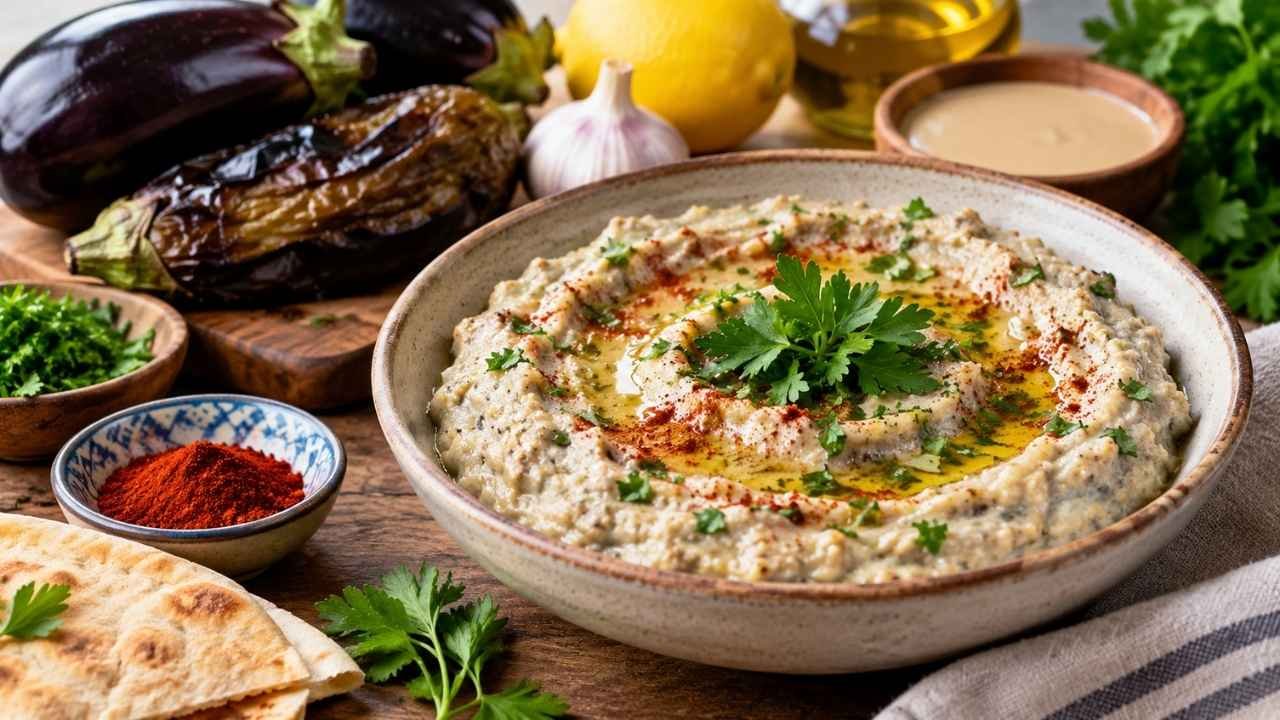
Mutabal is a creamy and smoky Middle Eastern eggplant dip made from roasted or charred eggplant, tahini, lemon, and garlic. It is a popular part of Levantine cuisine and is often served as part of a mezze spread with warm pita, fresh vegetables, and other flavorful dips. The deep smoky taste comes from cooking the eggplant until the skin is well charred and the inside becomes soft and tender.
This simple Mutabal recipe is easy to make at home and needs only a few basic ingredients. You may also see it written as Mutabbal or Moutabal, depending on the spelling used. In this guide, you’ll learn how to make a delicious eggplant dip, choose the right eggplant, create a creamy texture, and get that rich smoky flavor.
Quick Answer
Mutabal is a creamy, smoky Middle Eastern eggplant dip made with roasted or charred eggplant, tahini, lemon juice, garlic, and salt. It is often served as part of a mezze spread with warm pita, fresh vegetables, and other dips. To make Mutabal, roast the eggplant until very soft, drain it well, then mash it with tahini and seasonings. Finish with olive oil and fresh herbs.
What Is Mutabal?
Mutabal is a traditional Middle Eastern eggplant dip known for its creamy texture and deep smoky flavor. It is especially linked with Levantine cuisine and is commonly enjoyed as part of a mezze meal. The main ingredients are roasted or charred eggplant, tahini, lemon juice, garlic, and salt. Some versions also include yogurt, olive oil, or pomegranate molasses.
You may find the name written as Mutabbal or Moutabal, depending on the region and spelling. While recipes can vary, the smoky eggplant and tahini remain key parts of many versions. This simple dip is usually served with warm pita bread, fresh vegetables, or other Middle Eastern dishes. Its rich flavor and soft texture make it a popular choice for both everyday meals and special gatherings.
What Does Mutabal Taste Like?
A good Mutabal recipe has a rich, smoky, creamy, and slightly tangy taste. The charred eggplant gives the dip its deep smoky flavor, while tahini adds a smooth and nutty taste. Fresh lemon juice brings brightness and helps balance the richness of the sesame paste. Garlic adds a mild sharpness that becomes softer as the ingredients rest together.
Depending on the recipe, yogurt can make the dip lighter and creamier, while pomegranate molasses adds a sweet and tangy note. The final flavor should let the roasted eggplant remain noticeable rather than being covered by other ingredients. If you enjoy smoky eggplant dip, creamy spreads, and savory mezze dishes, Mutabal offers a simple combination of flavors that works well with bread, vegetables, and grilled foods.
Ingredients You’ll Need for Mutabal
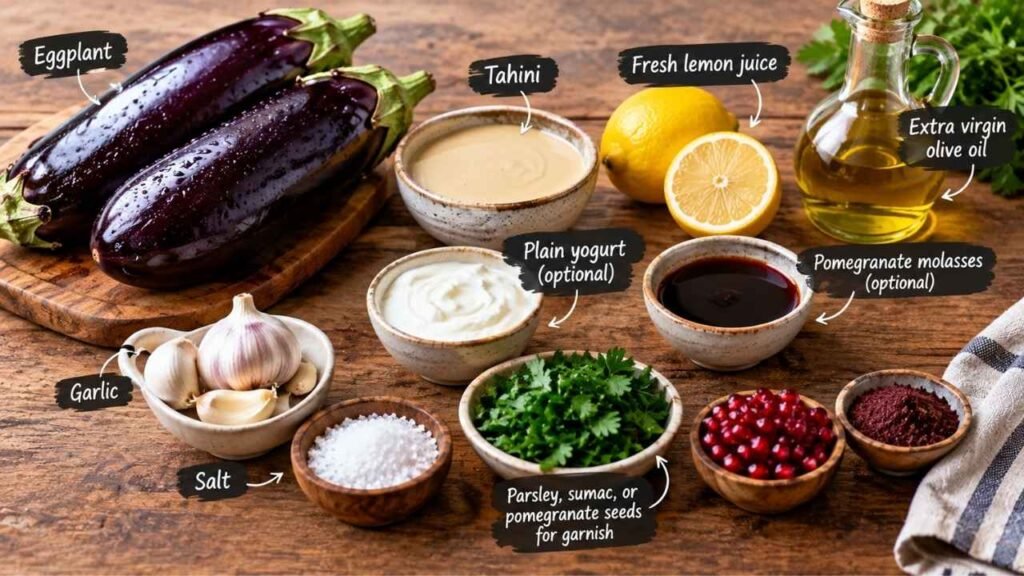
- Eggplant
- Tahini
- Fresh lemon juice
- Garlic
- Salt
- Extra virgin olive oil
- Plain yogurt, optional
- Pomegranate molasses, optional
- Parsley, sumac, or pomegranate seeds for garnish
How to Choose the Best Eggplant for Mutabal
Choosing the right eggplant can make a noticeable difference in your Mutabal. Look for eggplants that feel firm but not hard, with smooth, shiny skin and no large soft spots. Medium-sized eggplants are often a practical choice because they cook evenly and have tender flesh. Very old or oversized eggplants may contain more seeds and can sometimes have a stronger bitter taste.
For a smoky eggplant dip, the most important thing is that the inside becomes completely soft during cooking. Fresh eggplant also gives you a better texture after roasting and draining. If possible, choose eggplants that feel heavy for their size, as this can indicate good moisture. Before cooking, wash and dry them well. Good-quality eggplant helps create the soft, creamy base needed for an excellent Mutabal recipe.
How to Roast Eggplant for the Best Smoky Flavor
The smoky flavor is one of the most important parts of Mutabal Recipe. For the strongest result, cook the whole eggplant over an open flame until the skin becomes deeply charred and the inside turns very soft. A grill can also create excellent flavor. If you do not have a gas stove or grill, you can roast eggplant in the oven and finish it under the broiler for extra color.
Cook the eggplant until a knife can easily pass through the flesh. The outside should look heavily charred, but the inside should be soft and tender. Let the cooked eggplant cool before removing the skin. This roasting method gives the dip its classic smoky eggplant taste and helps create a rich base for the tahini, lemon, and garlic.
How to Make Mutabal Step by Step
Making Mutabal at home is simple once the eggplant is properly cooked. First, roast or char the eggplants until the skin is blackened and the flesh is very soft. Let them cool, then peel away the skin and place the flesh in a strainer so excess liquid can drain. Mash the eggplant with a fork or chop it into a soft, rustic mixture.
Add tahini, fresh lemon juice, minced garlic, and salt, then mix until well combined. Taste the dip and adjust the lemon, garlic, or salt as needed. You can add a little yogurt if you prefer a softer texture. Spoon the finished Mutabal dip into a serving bowl, drizzle with olive oil, and finish with parsley, sumac, or pomegranate seeds for a fresh touch.
How to Get the Perfect Mutabal Texture
The ideal Mutabal texture is creamy and soft but does not always need to be completely smooth. For a more traditional, rustic feel, mash or finely chop the cooked eggplant instead of blending it for a long time. Before mixing, make sure the eggplant has been drained well because excess liquid can make the dip watery.
If your Mutabal feels too thick, add a small amount of lemon juice or water and mix again. If it is too loose, let it rest in the refrigerator for a short time. Tahini also affects the final texture, so add it gradually when needed. Avoid over-processing the eggplant because this can make the dip too smooth or slightly gummy. A soft, creamy texture with a little natural eggplant texture works especially well with pita.
Mutabal vs Baba Ganoush: What’s the Difference?
Mutabal vs baba ganoush can be confusing because the names are sometimes used differently from one region or recipe to another. A common distinction is that Mutabal usually contains tahini, while some versions of baba ganoush focus more on roasted eggplant and other vegetables or seasonings.
Both dishes use cooked eggplant and can have a smoky flavor. Their texture and extra ingredients may also vary. Some recipes even use the two names almost interchangeably. For this reason, it is better to think of them as closely related Middle Eastern eggplant dips rather than completely separate foods with one fixed recipe. If you are looking for a creamy eggplant dip made with tahini, lemon, garlic, and charred eggplant, the recipe in this guide fits the common style of Mutabal.
Common Mistakes When Making Mutabal
A few simple mistakes can affect the flavor and texture of Mutabal. One common problem is using eggplant that has not cooked long enough. The flesh should be very soft before you remove the skin. Another issue is failing to drain the roasted eggplant, which can leave your dip watery.
Too much tahini may make the flavor heavy, while too much lemon can overpower the smoky eggplant. Adding too much garlic can also make the dip harsh instead of balanced. Another mistake is blending the eggplant for too long when you want a rustic texture. If your Mutabal dip tastes bitter, check the eggplant and adjust the lemon, salt, and tahini carefully. Always taste as you mix. Small adjustments can help create a creamy, balanced dip with a pleasant smoky flavor.
Easy Ways to Customize Mutabal
Although a classic Mutabal recipe uses a few basic ingredients, you can adjust it to suit your taste. For a richer and softer dip, add a little plain yogurt. If you prefer a vegan Mutabal, simply leave out the yogurt. A dairy-free version can be made in the same way because the main ingredients are naturally plant-based.
You can also add a little pomegranate molasses for a sweet and tangy flavor. Extra garlic gives the dip more bite, while sumac adds a bright, slightly sour note. Fresh parsley and pomegranate seeds make a colorful topping. If you enjoy stronger smoky flavors, use flame-charred eggplant rather than only oven-roasted eggplant. These small changes let you create a version that suits your meal while keeping the main character of the Middle Eastern eggplant dip.
What to Serve With Mutabal
Mutabal is most often served as part of a mezze spread, but there are many easy ways to enjoy it. Warm pita bread is one of the simplest choices because its soft texture works well with the creamy dip. You can also serve Mutabal with flatbread, sliced cucumber, carrots, peppers, or other fresh vegetables.
Add it to a mezze platter alongside hummus, labneh, or muhammara for a fuller Middle Eastern meal. It also works nicely with grilled chicken, lamb, fish, or roasted vegetables. Some people use it as a spread in sandwiches and wraps. A drizzle of extra virgin olive oil with parsley, sumac, or pomegranate seeds makes the serving bowl look inviting. Because the flavor is rich but fresh, Mutabal can work as both a starter and a side dish.
How to Store Mutabal
You can prepare Mutabal ahead of time, which makes it useful for gatherings and busy days. After making the dip, place it in a clean, airtight container and keep it refrigerated. The flavors may become more blended after resting, especially the garlic, lemon, and tahini. Before serving, give the dip a good stir because some liquid may separate during storage.
If the texture feels too firm after chilling, let it sit at room temperature briefly and mix it again. A little olive oil on top can also help refresh its appearance before serving. For the best quality, make a reasonable amount that can be enjoyed within a few days. Always check the smell, appearance, and texture before eating stored homemade eggplant dip. Proper refrigeration helps keep your Mutabal fresh and enjoyable.
Can You Freeze Mutabal?
Mutabal can be frozen, but freezing may slightly change its texture. Eggplant contains a lot of water, so the dip can become softer or more watery after thawing. If you plan to freeze it, place the Mutabal in a suitable airtight container and leave a little space at the top. Thaw it slowly in the refrigerator rather than leaving it at room temperature for a long time.
Once thawed, stir the dip well and adjust the texture with a little tahini, lemon juice, or water if needed. Fresh garnish should be added after thawing rather than before freezing. For the best creamy texture, many people prefer making Mutabal fresh or preparing it a day or two ahead. Freezing is useful when necessary, but fresh Mutabal dip generally offers the best texture and flavor.
FAQs
What is Mutabal made of?
Mutabal is commonly made with roasted or charred eggplant, tahini, lemon juice, garlic, and salt. Some recipes also include yogurt or pomegranate molasses.
Is Mutabal the same as baba ganoush?
They are closely related eggplant dips, but Mutabal commonly contains tahini. The exact difference varies between regions and recipes.
Is Mutabal vegan?
Yes, Mutabal can be vegan when made without yogurt or other dairy ingredients. The basic eggplant, tahini, lemon, garlic, and olive oil version is plant-based.
Can I make Mutabal without a gas stove?
Yes. You can roast the eggplant in an oven, grill, or under a broiler. A grill or broiler can help add extra smoky flavor.
Why is my Mutabal watery?
Watery Mutabal usually comes from excess liquid in the roasted eggplant. Drain the cooked eggplant well before mixing it with tahini and other ingredients.
How long does Mutabal last?
Keep homemade Mutabal in an airtight container in the refrigerator and use it within a few days for the best flavor, texture, and freshness.
Can I make Mutabal without yogurt?
Yes. Yogurt is optional in many recipes. A yogurt-free version can still be creamy and flavorful when made with eggplant and tahini.
What should I serve with Mutabal?
Serve it with warm pita, flatbread, fresh vegetables, mezze dishes, grilled meats, or roasted vegetables. It also works well as a sandwich spread.
Conclusion
Mutabal is a simple yet flavorful Middle Eastern eggplant dip that brings smoky roasted eggplant, creamy tahini, fresh lemon, and garlic together in one delicious dish. The key to great Mutabal is cooking the eggplant until soft and well charred, then draining it before mixing.
Serve it with warm pita bread, fresh vegetables, or your favorite mezze dishes. Whether you enjoy a traditional recipe or add your own touch, this easy Mutabal recipe is a delicious way to bring bold Middle Eastern flavor to your table.