
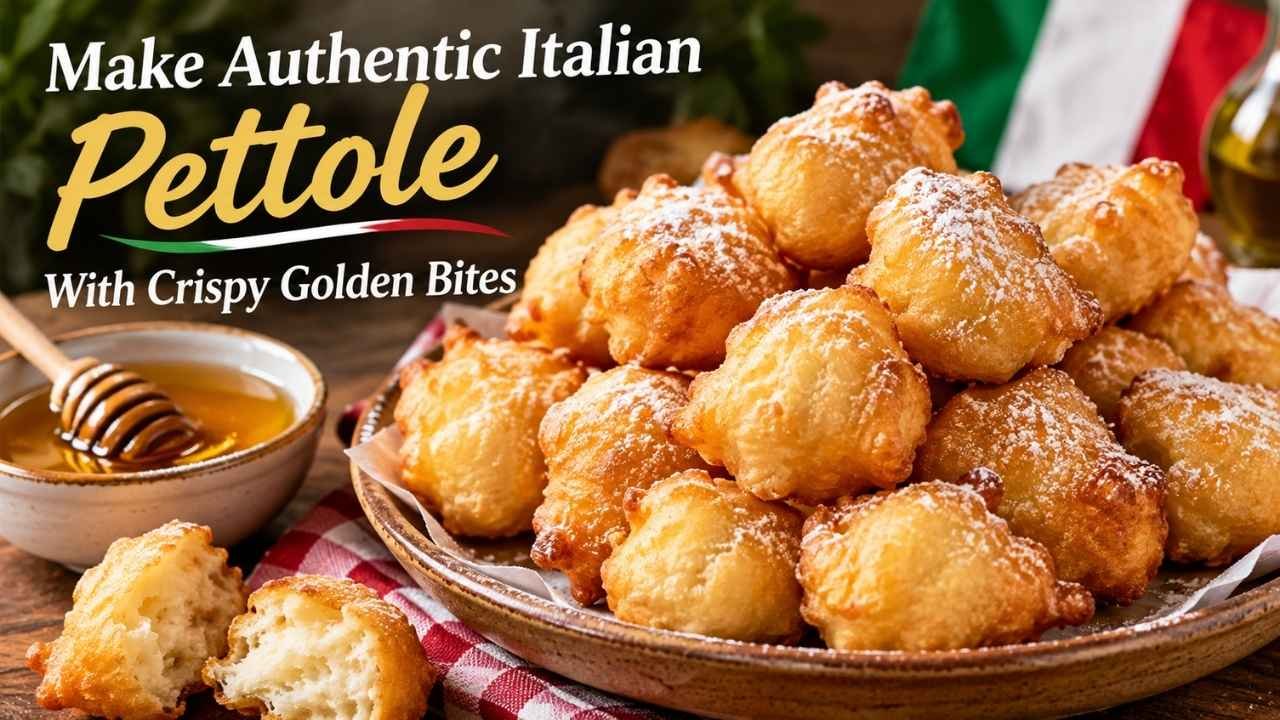
If you want to make authentic Italian Pettole With Crispy Golden Bites , you are in for a simple and delicious taste of Puglia. These traditional Italian fried dough balls are soft, airy, and golden on the outside, making them perfect for sharing with family and friends.
Known as pettole pugliesi or pittule in some parts of southern Italy, they are made with a soft, leavened dough and fried until beautifully crisp. What makes this authentic pettole recipe special is its simple method and many regional variations.
You can enjoy savory pettole with olives, anchovies, or vegetables, or try sweet pettole with sugar, honey, or vincotto. In this guide, you will learn how to make traditional Italian pettole at home, including the right dough texture, proofing time, frying method, and easy tips for light, fluffy, and crispy results.
Quick Answer
To make authentic Italian pettole, prepare a soft, sticky dough with flour, yeast, water, and salt. Let it rise until light and airy, then shape small portions with wet hands or spoons. Fry the Puglian pettole in hot oil until golden and crisp outside. Serve them warm as savory pettole with olives or anchovies, or enjoy sweet pettole with sugar, honey, or vincotto.
What Are Authentic Italian Pettole?
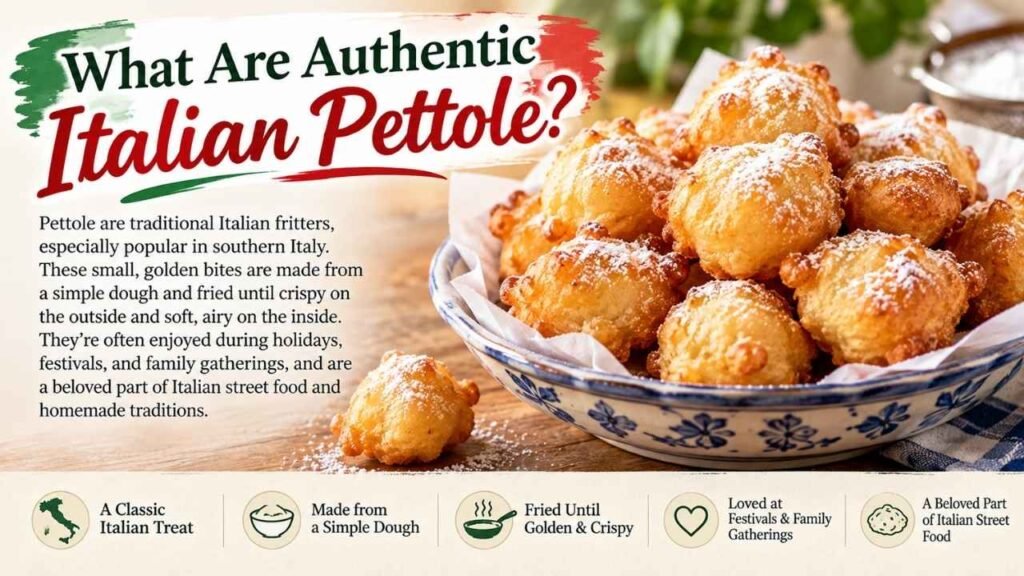
Authentic Italian pettole are small balls of soft, leavened dough that are deep-fried until golden and crisp. They are especially linked with Puglia, a region in southern Italy, where they are also known as pettole pugliesi or pittule in some areas.
The outside becomes lightly crisp while the inside stays soft, airy, and tender. Traditional pettole can be served plain, sweet, or savory, depending on the area and family recipe. Some versions include olives, anchovies, vegetables, or other simple ingredients.
Sweet versions may be finished with sugar, honey, or vincotto. While recipes can vary, the heart of a traditional Italian Pettole With Crispy Golden Bites is simple: make a soft yeast dough, let it rise well, then fry small portions until beautifully golden.
What Makes Pettole Authentic?
What makes authentic pettole special is not one strict ingredient list. Puglia has many family and regional recipes, so the dough and fillings can change from one place to another. The basic method usually starts with flour, yeast, water, and salt, followed by proper proofing and deep frying.
Some recipes also use potato or different types of flour. The most important part is the texture: the dough should become light and airy before frying. Authentic Puglian pettole are usually small, irregular, and golden rather than perfectly shaped.
This rustic look is part of their charm. So, when you make traditional pettole at home, focus on the soft dough, good rise, hot oil, and fresh flavor instead of trying to make every piece identical.
Ingredients for Traditional Italian Pettole
- Flour – all-purpose flour or 00 flour
- Yeast – fresh yeast or dry yeast
- Water – preferably lukewarm
- Salt – for seasoning the dough
- Oil – neutral oil with a high frying point
- Potato – optional, depending on the regional recipe
- Olives – optional for savory pettole
- Anchovies – optional for a savory version
- Capers – optional for extra flavor
- Vegetables – optional, such as cauliflower or greens
- Sugar – optional for sweet pettole
- Honey – optional for serving
- Vincotto – optional for a traditional sweet finish
How to Make Authentic Italian Pettole
Start by combining the flour and yeast, then slowly add lukewarm water while mixing. Add salt and continue working the dough until it becomes smooth, soft, and sticky. Do not add too much extra flour just because the dough feels wet.
This soft texture helps create airy Puglian pettole. Cover the bowl and leave the dough in a warm place until it rises well. Once it has become light and bubbly, heat the frying oil. Use wet hands or two spoons to take small portions of dough and carefully drop them into the hot oil. Fry in small batches until golden brown. Drain the finished pettole on paper towels and serve them warm for the best texture and flavor.
How Should Pettole Dough Look and Feel?
The correct pettole dough may look different from ordinary bread dough. It should be soft, sticky, and quite loose, rather than firm enough to roll out. This wet texture helps the finished pettole become light and airy. When you lift the dough with a spoon, it should stretch and slowly fall back instead of holding a stiff shape.
If the dough is extremely runny, add a little flour. If it feels very firm, a small amount of water may help. Avoid adding lots of flour during mixing because this can make the fried dough heavy. Learning the right dough consistency is one of the most useful steps when making authentic Italian pettole at home.
How Long Should Pettole Dough Rise?
After mixing, the dough needs enough time to proof and become airy. Place the covered bowl somewhere warm and allow it to rise until it has increased greatly in size. Depending on the yeast, room temperature, and recipe, this can take around one to three hours.
Instead of watching the clock alone, look at the dough. It should appear noticeably larger, soft, bubbly, and full of air. If the room is cold, the dough may need more time. Under-proofed dough can produce dense pettole, while proper fermentation helps create a soft center. Once the dough has risen well, handle it gently so you do not lose too much of the air that developed during proofing.
How to Shape and Fry Pettole
Once the dough has risen, heat the frying oil to about 340–355°F (170–180°C). Wet your hands or use two spoons to take small portions of the sticky dough. Carefully drop each portion into the hot oil, keeping enough space between them so they can cook evenly. Fry the Italian fried dough balls in small batches until puffed and golden.
Turn them gently when needed so all sides cook evenly. Avoid overcrowding the pan because adding too much dough can quickly lower the oil temperature. When the pettole are crisp and golden, remove them with a slotted spoon and place them on paper towels. Serve them warm for the best crisp outside and soft, airy center.
How to Make Pettole Light, Crispy, and Airy
The secret to light and fluffy pettole starts before the frying begins. First, keep the dough soft and avoid adding too much flour. Give the yeast enough time to work so the dough becomes airy and well-risen. When frying, keep the oil hot but not smoking.
If the oil is too cool, the pettole can absorb excess oil and become greasy. If it is too hot, the outside may brown before the center cooks properly. Fry small batches and leave enough space around each piece. These simple steps help create the ideal contrast: a golden, crispy outside with a soft, airy inside. Freshly fried pettole should feel light rather than heavy when you pick them up.
Sweet vs Savory Pettole
One of the best things about traditional pettole is that they can be enjoyed in both sweet and savory forms. Savory pettole are often made with ingredients such as olives, anchovies, capers, or vegetables, making them a tasty appetizer or snack. Sweet pettole are usually served with sugar, honey, or vincotto for a simple dessert-style treat.
The basic fried dough can remain the same, so you can prepare one batch and choose different toppings or additions. This flexibility has helped pettole become part of many family celebrations in Puglia. If you are making them for the first time, try a plain batch first. Once you understand the dough and frying method, you can explore both sweet and savory versions.
Traditional Savory Pettole Variations
Savory pettole are a classic way to enjoy this Puglian fried dough. Regional recipes can include simple ingredients that add salty, rich, or fresh flavors to the soft dough. Olives and anchovies are two well-known choices, while vegetables and seafood can also be used.
The additions can be mixed into the dough before frying or used in different traditional preparations. Keep the fillings balanced so they do not make the dough too heavy or wet. Small pieces usually work best because they spread through the dough more easily. Serve savory pettole warm as an appetizer, party snack, or part of a festive Italian meal. These variations show how one simple dough can become many different traditional dishes.
Pettole With Olives
Olive pettole are a simple savory variation with a pleasant salty flavor. Use chopped green or black olives and mix them gently into the prepared dough before frying. Keep the pieces small so they spread evenly without weighing down the dough. The olives add enough flavor that you usually do not need many extra seasonings. Fry the pettole in small batches until golden and crisp, then drain well. Serve them warm as an appetizer or snack.
Pettole With Anchovies
For a stronger savory flavor, anchovy pettole are a traditional choice. Small pieces of anchovy can be folded into the dough before frying, adding a rich and salty taste to every bite. Use them in moderation because anchovies are naturally quite salty. The soft dough balances their bold flavor beautifully. Fry the pettole until golden, drain them well, and serve while warm for the best texture.
Pettole With Salted Cod and Vegetables
Some Puglian recipes add salted cod or vegetables to pettole for a heartier version. Cauliflower, turnip greens, cherry tomatoes, and other vegetables can also be used in regional recipes. Make sure vegetables are well drained before adding them so they do not make the dough too wet. Cut larger ingredients into small pieces and mix gently. These savory pettole work especially well for festive meals and family gatherings.
Traditional Sweet Pettole Variations
Although many people know pettole as a savory food, sweet pettole are also a traditional treat. Their simple fried dough makes a great base for sweet toppings without needing a complicated dessert recipe. After frying, you can coat warm pettole with sugar or drizzle them with honey.
Vincotto, a rich cooked grape must syrup often used in southern Italian cooking, is another traditional choice. Sweet pettole are especially enjoyable when served fresh and warm. Their crisp outside and soft center pair beautifully with sweet toppings. If you prefer a mild flavor, start with sugar. For a richer finish, try honey or vincotto. These easy options give the same traditional dough a completely different taste.
Pettole With Sugar
Sugar-coated pettole are one of the easiest sweet versions to make. After frying and draining the dough balls, toss them lightly in granulated sugar while they are still warm. The sugar sticks naturally to the crisp surface. You can serve them as a simple dessert, snack, or festive treat. For extra flavor, a small amount of cinnamon can be used, although plain sugar keeps the preparation closer to its simple traditional style.
Pettole With Honey
Warm pettole taste delicious with a light drizzle of honey. Choose a mild honey so it complements rather than covers the flavor of the fried dough. Let the pettole cool slightly before adding honey so it stays on the surface instead of running off too quickly. This version is soft, sweet, and comforting. Serve honey pettole immediately as a dessert or special snack.
Pettole With Vincotto
Vincotto gives sweet pettole a deep, fruity flavor that works especially well with the crisp fried dough. Drizzle a small amount over freshly fried pettole just before serving. Because vincotto has a strong, rich taste, you do not need much. This is a lovely option when you want something more traditional and distinctive than plain sugar. Serve the pettole warm for the best contrast between the crisp dough and sweet syrup.
Common Pettole Mistakes and How to Fix Them
Making authentic pettole is simple, but a few common mistakes can affect the final texture. If the dough is too firm, the pettole may become heavy. If it does not rise enough, they can turn out dense instead of airy. Oil that is too cool can make them greasy, while oil that is too hot can brown the outside too quickly. Overcrowding the pan can also lower the temperature and lead to uneven cooking. The best approach is to work with a soft dough, allow enough proofing time, maintain steady oil heat, and fry small batches. If your first batch is not perfect, use its texture and color as a guide and adjust the next batch.
How to Serve Pettole
Fresh Italian pettole are best served while they are still warm. Savory versions make a wonderful appetizer or snack and can be placed on a large serving plate for everyone to share. They pair well with simple Italian foods and can be enjoyed alongside other small dishes. Sweet pettole can be finished with sugar, honey, or vincotto and served as a light dessert.
Because the dough is crispest soon after frying, avoid leaving it uncovered for too long. For a festive meal, you can offer both sweet and savory pettole so guests can try different flavors. Their rustic shape and golden color also make them feel naturally homemade, which is part of the charm of this traditional Puglian food.
How to Store, Freeze, and Reheat Pettole
Pettole are best when freshly fried, because their outside is crisp and their center is soft and airy. If you have leftovers, allow them to cool completely before placing them in an airtight container. Keep them at room temperature for short-term storage, although they will gradually lose their crisp texture.
To reheat them, use an oven or air fryer rather than a microwave when possible. This helps bring back some of their crispness. You can also prepare the dough ahead and fry the pettole closer to serving time. Freezing cooked pettole is possible, but the texture may not be exactly like freshly fried dough. For the best results, make and fry them close to when you plan to serve them.
When Are Pettole Traditionally Served?
Pettole are strongly connected with festive food traditions in Puglia, but the exact occasion varies by area. They may appear during Christmas celebrations, Christmas Eve meals, St. Martin’s Day, St. Cecilia celebrations, and other family gatherings.
This regional variety is part of what makes pettole interesting. In some places, they are closely linked with religious or seasonal celebrations, while families may also prepare them whenever they want a special homemade treat.
Both sweet and savory versions can appear during festive occasions. Rather than thinking of pettole as food for only one holiday, it is better to see them as a traditional Puglian celebration food with different local customs. Their simple ingredients make them especially suitable for sharing with family and friends.
FAQs
What are Italian pettole?
Pettole are small balls of leavened dough that are deep-fried until golden and crisp. They are traditional in Puglia and may be served sweet or savory.
Are pettole and pittule the same?
They are closely related names for the same type of Puglian fried dough, although names and recipes can vary between regions.
Should pettole dough be sticky?
Yes. Traditional pettole dough is usually soft and sticky, which helps create a light and airy texture after frying.
Why are my pettole greasy?
Greasy pettole are often caused by oil that is too cool. Keep the oil hot and fry in small batches.
Can pettole be sweet?
Yes. Sweet pettole can be finished with sugar, honey, or vincotto after frying.
How do you keep pettole crispy?
Serve them fresh and warm, and avoid overcrowding the frying pan. Proper oil temperature also helps create a crisp exterior.
Conclusion
Learning how to make authentic Italian pettole is a wonderful way to enjoy a simple taste of Puglia at home. The recipe starts with a soft, yeast-based dough and ends with small golden pieces of fried dough that are crisp outside and airy inside. The beauty of traditional pettole is their flexibility.
You can keep them plain, make them savory with olives or anchovies, or turn them into a sweet treat with sugar, honey, or vincotto. Most importantly, do not worry about making every piece perfectly shaped.
Their rustic appearance is part of their traditional charm. Give the dough enough time to rise, keep the frying oil at the right temperature, and serve the pettole fresh for the best homemade result.