
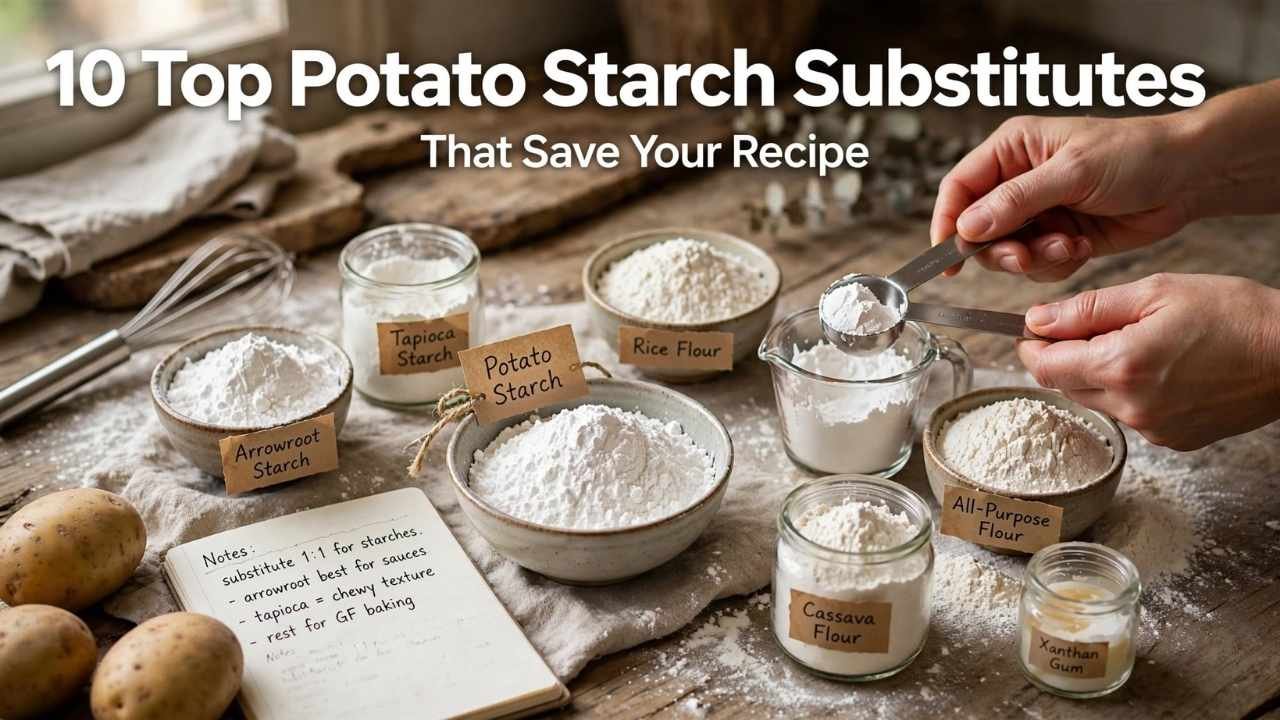
The best potato starch substitutes is usually cornstarch, especially for soups, sauces, gravies, and other recipes that need thickening. For gluten-free baking, tapioca starch and rice flour are useful alternatives, while arrowroot powder works well when you want a smooth, clear, and glossy sauce.
The right potato starch alternative depends on what you are making and the texture you want. Some substitutes are better for thickening, while others work best for baking or frying. Always consider the substitution ratio because different ingredients absorb moisture and behave differently during cooking.
What Is Potato Starch?
Potato starch is a fine white powder made by extracting starch from potatoes. It has a mild and mostly neutral taste, so it usually does not change the flavor of a recipe. It is commonly used to thicken soups, sauces, gravies, and pie fillings.
Potato starch is also useful for making fried foods light and crispy. In baking, it can improve moisture, softness, and texture. Because it does not contain gluten, it is also popular in many gluten-free recipes.
It is important not to confuse potato starch with potato flour. Potato flour is made from whole potatoes, so it has a stronger potato flavor and behaves differently. If you run out of potato starch, the best replacement depends on the job it performs in your recipe.
What Does Potato Starch Do in Recipes?
Potato starch has several functions in cooking and baking. Its most common purpose is thickening liquids. When heated with liquid, it can create a smooth texture in sauces, gravies, soups, and fillings.
It can also help fried foods develop a crisp outer coating without adding a strong flavor. In baking, potato starch may improve moisture, softness, and structure, particularly in gluten-free recipes.
Because it can perform different jobs, choosing a substitute should always depend on the recipe. Cornstarch may be ideal for gravy, while tapioca starch can be more useful in gluten-free baking. Understanding the purpose of potato starch makes it easier to choose the right alternative.
10 Best Potato Starch Substitutes
There is no single potato starch substitutes that works perfectly in every recipe. Different alternatives have different strengths, textures, and cooking properties. Here are 10 useful options to consider.
1. Cornstarch
Cornstarch is one of the easiest and most reliable potato starch alternatives. It works particularly well in soups, sauces, gravies, and pie fillings. In many thickening applications, you can begin with a 1:1 substitution, then adjust if needed.
Cornstarch creates a smooth texture and has a mild flavor. It is also naturally gluten-free. For sauces and gravies, mix it with a small amount of cold water first to create a slurry before adding it to hot liquid.
It can also be used for frying and may create a crisp coating, although the final texture can be slightly different from potato starch.
2. Tapioca Starch
Tapioca starch, also known as tapioca flour, is especially useful for gluten-free baking. It can also work in sauces, pie fillings, and some fried foods.
One advantage of tapioca starch is that it can add softness and a slightly chewy texture. However, using too much can make food sticky or gummy, particularly in baking.
It is naturally gluten-free and has a mild taste. If you are making gluten-free bread, cakes, or similar baked foods, tapioca starch can be a very useful potato starch alternative.
3. Arrowroot Powder
Arrowroot powder is an excellent option when you want a smooth, clear, and glossy sauce. It can be used in gravies, sauces, soups, glazes, and fruit fillings.
Mix arrowroot with cool liquid before adding it to a hot recipe. This helps prevent lumps and creates a smoother result.
Arrowroot is naturally gluten-free, but it may not be ideal for recipes that require long cooking or repeated reheating. For a clear and attractive sauce, however, it is one of the best alternatives to potato starch.
4. Rice Flour
Rice flour is especially useful for frying and some gluten-free baked foods. It can create a light and crispy coating on vegetables, chicken, fish, and other fried foods.
Rice flour behaves differently from potato starch and may not produce the same smooth texture in sauces. For this reason, it is usually better suited to frying and baking than delicate gravies.
If your main goal is crispiness, rice flour can be a practical choice. It has a mild flavor and is naturally gluten-free.
5. Potato Flour
Although the names sound similar, potato flour and potato starch are different ingredients. Potato flour is made from whole potatoes, so it contains more potato material and has a stronger flavor.
It can work in some baked and savory recipes, especially when extra potato flavor or moisture is welcome. However, it absorbs moisture differently and may make foods heavier or denser.
Potato flour should therefore not automatically be used as a 1:1 potato starch substitutes. It is not usually the best option for clear sauces or delicate thickening.
6. Sweet Rice Flour
Sweet rice flour, sometimes called glutinous rice flour, is useful when you want a soft and chewy texture. Despite the name, it does not contain gluten.
It works particularly well in desserts, cakes, doughs, and other baked foods where chewiness is desirable. However, it is not usually the best choice for sauces because it can create a heavier or stickier texture.
If your recipe benefits from softness and chew, sweet rice flour can be a useful potato starch alternative.
7. Mochiko Flour
Mochiko flour is another type of sweet rice flour. It is made from glutinous rice and is known for creating a soft, sticky, and chewy texture.
It can be useful in desserts and baked recipes where chewiness is wanted. However, it does not behave like a regular starch and may make food denser.
Mochiko should not be treated as an automatic 1:1 replacement for potato starch. Use it when the desired texture matches its natural properties.
8. All-Purpose Flour
All-purpose flour is a convenient pantry substitute when other options are unavailable. It can thicken soups, sauces, and gravies, but it generally creates a heavier texture than pure starch.
For sauces, flour is often cooked with butter or another fat to make a roux before liquid is added. This helps remove the raw flour taste.
Remember that regular wheat flour contains gluten, so it is not suitable for gluten-free recipes. If gluten is not a concern, however, it can be a practical everyday alternative.
9. Instant Mashed Potatoes
Plain instant mashed potatoes can provide thickness and mild potato flavor in selected recipes. They may work well in soups, stews, savory dishes, and some baked foods.
Choose plain instant mashed potatoes without added seasonings or strong flavors. Since they contain more than pure starch, they do not behave exactly like potato starch.
They can make a dish thicker, softer, or heavier, so start with a small amount and add more if needed.
10. Xanthan Gum
Xanthan gum is a specialized option, particularly for gluten-free baking. Unlike cornstarch or tapioca starch, it is not a direct 1:1 replacement.
Instead, xanthan gum helps provide binding, structure, and elasticity to doughs and batters. Only a small amount is usually needed, and using too much can make food gummy.
It is most useful when potato starch is helping provide structure rather than simply thickening a sauce.
Best Potato Starch Substitute for Baking
The best potato starch substitute for baking depends on the baked food and the texture you want. Tapioca starch is a strong option for many gluten-free recipes because it can add softness and flexibility.
Sweet rice flour can provide chewiness, while rice flour may create a lighter or slightly crisp texture. Potato flour can also work in selected baked foods, but it adds more potato flavor and may make the result heavier.
For gluten-free baking, you may also need a binding ingredient such as xanthan gum. There is no universal substitution ratio for every baked recipe, so moisture, structure, and texture should all be considered.
Best Potato Starch Substitute for Frying
For frying, the main goal is often a crisp and light coating. Rice flour and cornstarch are two of the most useful choices.
Rice flour can create a light, dry coating, while cornstarch can produce a crisp outer layer. Tapioca starch can also work, although it may produce a slightly softer or chewier texture.
Moisture and oil temperature also matter. Even the right potato starch alternative may not become crispy if the coating is too wet or the oil is not properly heated. Testing a small batch can help you find the texture you prefer.
Best Substitute for Sauces and Gravy
For sauces and gravy, cornstarch is one of the simplest choices. It creates a smooth texture and has a mild flavor. Arrowroot powder is another good option when you want a clear and glossy finish.
To prevent lumps, mix the starch with a small amount of cold water before adding it to hot liquid. This creates a slurry that blends more evenly.
Add the slurry slowly while stirring. If the sauce becomes too thick, add more liquid. If it remains too thin, add a little more prepared slurry. This gives you better control over the final consistency.
Best Substitute for Soups and Stews
Cornstarch is often the easiest potato starch substitute for soups and stews. It thickens liquid without adding much flavor and works well when you want a smooth finish.
Rice flour can also be useful, while instant mashed potatoes can provide both thickness and a mild potato flavor. If you want a hearty, thicker result, instant mashed potatoes can be a convenient option.
Always add your substitute gradually. This allows you to control the consistency and prevents the soup or stew from becoming too thick.
Best Substitute for Pie Filling
For pie fillings, useful alternatives include tapioca starch, cornstarch, and arrowroot powder. These options can thicken fruit juices while maintaining a pleasant texture.
Tapioca can create a slightly glossy finish, while cornstarch gives a familiar thick texture. Arrowroot can also produce a clear and smooth filling.
The amount required depends on how much liquid the fruit releases. Very juicy fruit may need more thickening power, while drier fillings may require less. Consider the fruit and recipe before choosing your substitution amount.
Best Substitute for Gluten-Free Baking
For gluten-free baking, useful potato starch alternatives include tapioca starch, rice flour, sweet rice flour, and cornstarch.
Each ingredient affects texture differently. Tapioca can provide softness and flexibility, while rice flour can give a lighter or slightly crisp result. Sweet rice flour is better when chewiness is desirable.
Gluten-free baking can require more than one ingredient because wheat normally provides structure. Depending on the recipe, xanthan gum may help bind ingredients together.
Always check product labels if you need strict gluten-free food, especially with packaged ingredients.
How to Choose the Right Potato Starch Substitute
The easiest way to choose the right potato starch alternative is to identify what the potato starch is doing in the recipe.
If it is being used mainly to thicken a sauce, choose cornstarch or arrowroot. If it is being used to create a crispy coating, rice flour or cornstarch may be better.
For baking, think about the texture you want. Tapioca starch can add softness and chew, while rice flour can provide a lighter texture. If the recipe is gluten-free and needs structure, xanthan gum may also be useful.
You should also consider cooking temperature, cooking time, reheating, freezing, and dietary requirements before making the substitution.
Potato Starch Substitute Ratios
There is no single potato starch substitution ratio that works for every ingredient. Some alternatives can be used in similar amounts, while others need more or less.
Cornstarch can often be used as a starting 1:1 substitute for potato starch in many thickening applications. However, other ingredients behave differently. For example, wheat flour generally needs more than pure starch to create a similar level of thickening.
The safest method is to start with a reasonable amount and adjust gradually. If the mixture is too thin, add more prepared slurry. If it becomes too thick, add a little more liquid.
Can You Always Substitute Potato Starch 1:1?
No, you cannot always substitute potato starch 1:1. Different ingredients absorb moisture differently and can change the texture of the final dish.
Cornstarch may work as a 1:1 starting point in some recipes, but that does not mean every alternative should be measured the same way. Wheat flour generally needs a larger amount, while xanthan gum is much more powerful and is used in very small quantities.
The recipe also matters. A ratio that works for gravy may not work for cake or frying. Treat substitution ratios as starting points and make small adjustments based on the final texture.
Common Mistakes and Tips When Substituting Potato Starch
One of the most common mistakes is assuming that every potato starch substitute works at a 1:1 ratio. Different ingredients have different thickening powers and moisture requirements.
Another mistake is confusing potato flour with potato starch. Although their names are similar, they behave differently. Using too much tapioca starch or xanthan gum can also create a sticky or gummy texture.
You should also think about the final texture. A substitute that thickens gravy may not make fried food crispy. Likewise, an ingredient that works well in cookies may not be suitable for soup.
When using starches in hot liquids, make a cold-water slurry first. This simple step helps prevent lumps and creates a smoother result.
FAQs
What is the best substitute for potato starch?
Cornstarch is one of the best overall choices for sauces, soups, and gravies. For baking, tapioca starch may be a better option.
Can I use cornstarch instead of potato starch?
Yes. Cornstarch can often replace potato starch, especially in thickening recipes. A 1:1 starting ratio may work in many applications.
Can I use tapioca starch instead of potato starch?
Yes. Tapioca starch is particularly useful in gluten-free baking, sauces, and some fried foods. Avoid using too much because it can become sticky.
Is potato flour the same as potato starch?
No. Potato flour is made from whole potatoes, while potato starch is mainly extracted starch. They have different textures, flavors, and uses.
What is the best potato starch substitute for frying?
Rice flour and cornstarch are strong choices when you want a crisp coating.
What is the best gluten-free potato starch substitute?
Cornstarch, tapioca starch, arrowroot, and rice flour are useful gluten-free options, depending on the recipe.
Can I use regular flour instead of potato starch?
Yes, in some recipes, especially sauces and gravies. However, wheat flour contains gluten and may create a heavier texture.
Can rice flour replace potato starch?
Yes. Rice flour is particularly useful for frying and some gluten-free baking recipes, although it may not provide the same smooth texture in sauces.
Can I use arrowroot instead of potato starch?
Yes. Arrowroot powder works especially well for clear, glossy sauces and some fruit fillings.
Why did my potato starch substitute become gummy?
You may have used too much tapioca starch or xanthan gum, or the substitute may not be suitable for the recipe. Reducing the amount can help.
Conclusion
There are many useful potato starch substitutes, but the best choice depends on what your recipe needs. Cornstarch is one of the best all-around options for sauces, soups, and gravies. Tapioca starch is useful for gluten-free baking, while arrowroot powder works well when you want a clear and glossy sauce.
For frying, rice flour and cornstarch can help create a crisp coating. Potato flour and instant mashed potatoes can work in selected recipes when you want extra potato flavor, although they can change the final texture.
The most important rule is simple: choose the substitute based on what potato starch is doing in your recipe. Check the ratio, consider the desired texture, and make small adjustments when necessary. This approach will help you get the best result from your potato starch alternative.