
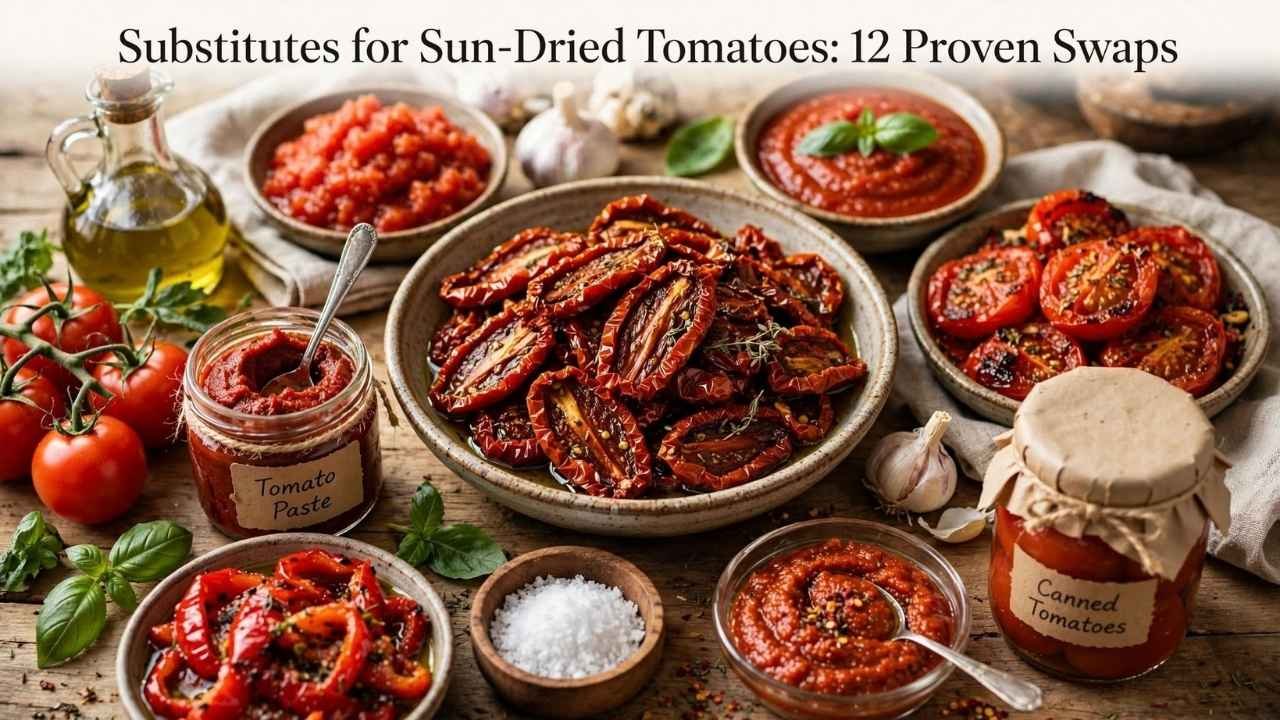
If your recipe calls for sun-dried tomatoes and you do not have any on hand, there are plenty of simple options to try. The best substitute for sun-dried tomatoes depends on what you want to replace, such as their rich tomato flavor, sweetness, chewy texture, or savory taste.
Some of the most useful sun-dried tomato substitutes include semi-dried tomatoes, roasted tomatoes, tomato paste, tomato powder, fresh tomatoes, and roasted red peppers. Each option works a little differently, so choosing the right one can help your dish keep its intended flavor and texture.
In this guide, you will find practical alternatives to sun-dried tomatoes for pasta, salads, pizza, pesto, sauces, soups, sandwiches, and other recipes. We will also cover substitution ratios, oil-packed and dry-packed tomatoes, and non-tomato substitutes so you can choose an easy replacement based on what you already have in your kitchen.
Quick Answer
The best substitute for sun-dried tomatoes depends on your recipe and the flavor or texture you need. Semi-dried tomatoes are one of the closest swaps, while roasted tomatoes offer a similar rich tomato taste. For sauces, tomato paste or tomato powder works well. If you need a non-tomato substitute, try roasted red peppers, olives, or tamarind paste. Fresh tomatoes can also work when extra moisture is not a problem.
What Makes Sun-Dried Tomatoes Different?

Sun-dried tomatoes have a stronger taste than fresh tomatoes because much of their water is removed during drying. This creates a concentrated tomato flavor that is sweet, slightly tangy, savory, and rich. They also have a soft but chewy texture that makes them stand out in many dishes.
Another important quality is umami, which gives food a deep and savory taste. Oil-packed sun-dried tomatoes can also add extra richness from the oil around them.
Because they bring several qualities at once, there is no single sun-dried tomato substitute that works perfectly for every recipe. Tomato paste can replace the strong tomato taste, while semi-dried tomatoes can provide a closer texture. Roasted red peppers can add sweetness and color, while olives can bring saltiness and umami.
Best Substitutes for Sun-Dried Tomatoes at a Glance
Choosing the right sun-dried tomato substitute becomes easier when you know what each option can add to your dish. Semi-dried tomatoes are a great choice when you want a similar tomato taste and soft, chewy texture. Roasted tomatoes also offer rich flavor with a softer texture.
For sauces, soups, and stews, tomato paste is useful because it has a strong, concentrated flavor. Tomato powder is another good option when you want tomato flavor without adding much moisture.
If you prefer a non-tomato substitute, roasted red peppers provide sweetness and color, while olives add saltiness and a savory taste. Tamarind paste can add acidity and depth to certain dishes.
The best alternative depends on your recipe, so consider flavor, texture, moisture, and richness before making your choice.
Semi-Dried Tomatoes
Semi-dried tomatoes are one of the closest alternatives to sun-dried tomatoes because they still have a concentrated tomato flavor and a soft, slightly chewy texture. They contain more moisture than fully dried tomatoes, so the final dish may be a little softer.
You can often use semi-dried tomatoes as a 1:1 substitute for sun-dried tomatoes, especially in pasta, salads, sandwiches, pizza, and antipasto dishes. They work particularly well when the tomato pieces are an important part of the recipe.
Their flavor is usually mild, sweet, and rich, making them a practical replacement when you want to keep the tomato character of the dish. If your recipe uses oil-packed sun-dried tomatoes, choose semi-dried tomatoes packed in oil when possible. This helps maintain a similar richness and moisture level without making major changes to the recipe.
Oven-Roasted or Slow-Roasted Tomatoes
Oven-roasted tomatoes are another useful sun-dried tomato substitute, especially when you want a rich tomato taste without using dried tomatoes. Roasting removes some moisture and brings out the tomatoes’ natural sweetness.
You can use cherry tomatoes, Roma tomatoes, plum tomatoes, or grape tomatoes. Smaller tomatoes become soft and flavorful, while Roma and plum tomatoes can become more concentrated after longer roasting.
Roasted tomatoes work well in pasta, pizza, salads, sandwiches, bruschetta, and grain bowls. They are also useful when fresh tomatoes seem too watery for your recipe.
Keep in mind that roasted tomatoes still contain more moisture than sun-dried tomatoes. If your dish needs a firm, chewy texture, roast them longer or let them cool before adding them. For a closer match, lightly season them with olive oil, salt, and herbs.
Tomato Paste
Tomato paste is one of the easiest substitutes for sun-dried tomatoes when the main goal is to add a strong, concentrated tomato flavor. Because it contains very little water compared with fresh tomatoes, it can add depth without making a sauce too thin.
It works especially well in pasta sauces, soups, stews, curries, casseroles, and other cooked dishes. A useful starting point is about 1 tablespoon of tomato paste for every 4–5 sun-dried tomatoes, although the exact amount can vary depending on the recipe.
The main difference is texture. Tomato paste is smooth, while sun-dried tomatoes are soft and chewy. If the recipe needs tomato pieces, tomato paste alone may not be enough.
You can also add a little olive oil, herbs, or a small amount of acidity to create a richer flavor closer to the original ingredient.
Tomato Powder
Tomato powder is a convenient option when you want strong tomato flavor without adding much liquid. It is made from dried tomatoes that have been ground into a fine powder, so it works especially well in recipes where moisture needs to stay low.
You can use it in soups, sauces, dressings, dips, spice blends, and casseroles. It can also help boost tomato flavor in a dish without changing its texture too much.
Unlike whole sun-dried tomatoes, tomato powder will not provide chewy pieces. However, it can deliver a concentrated taste similar to dried tomatoes. Start with a small amount and add more until the flavor is strong enough.
This is a useful sun-dried tomato alternative for people who keep dried ingredients in their pantry. It is also easy to mix into liquids, making it practical for recipes where whole tomato pieces would not work well.
Fresh Tomatoes
Fresh tomatoes can replace sun-dried tomatoes when you want a lighter and fresher tomato taste. They work particularly well in salads, sandwiches, bruschetta, wraps, and fresh pasta dishes where their juicy texture fits the recipe.
The main difference is moisture. Fresh tomatoes contain much more water and have a less concentrated flavor than sun-dried tomatoes. Adding the same amount can therefore make a dish wetter and milder.
For better results, choose flavorful tomatoes such as Roma, plum, cherry, or grape tomatoes. You can also roast fresh tomatoes first to remove some moisture and increase their sweetness.
Fresh tomatoes are not the closest substitute, but they are an easy choice when you already have them at home. If the recipe depends on strong tomato flavor, consider adding a little tomato paste along with the fresh tomatoes.
Canned Tomatoes and Tomato Purée
Canned tomatoes and tomato purée can work as a sun-dried tomato substitute when the tomatoes are mainly used to build flavor in a sauce, soup, stew, or curry. They provide a familiar tomato taste but contain much more moisture.
Because of this, they are not ideal when the recipe needs chewy tomato pieces. Adding too much can also make the finished dish thinner than intended.
Tomato purée is especially useful for smooth sauces because it blends easily into the other ingredients. Canned tomatoes work better when some tomato pieces are welcome.
If you use either option, you may need to reduce the added liquid elsewhere in the recipe. Cooking the mixture for a little longer can also help remove extra water and create a richer flavor.
For stronger tomato taste, combine canned tomatoes or purée with tomato paste.
Roasted Red Peppers
Roasted red peppers are one of the best non-tomato substitutes for sun-dried tomatoes when you want sweetness, color, and a soft texture. They have a mild roasted taste that can fit many Mediterranean and Italian-style dishes.
They work well in pasta, salads, sandwiches, pizza, wraps, bruschetta, and grain bowls. Their soft texture can replace some of the bite that sun-dried tomatoes provide.
However, roasted red peppers do not have the same concentrated tomato flavor. They are better viewed as a replacement for the sweet, roasted, colorful, and slightly chewy qualities of sun-dried tomatoes.
For a richer result, you can combine roasted peppers with a little tomato paste if your recipe allows tomatoes. This gives you some of the missing tomato depth while keeping the sweetness and soft texture of the peppers.
Kalamata Olives and Other Savory Alternatives
Kalamata olives can be a useful substitute when the main purpose of sun-dried tomatoes is to add a salty, savory, and slightly chewy element. They do not taste like tomatoes, but they can add similar depth to many Mediterranean dishes.
Olives work especially well in salads, pasta, grain bowls, sandwiches, pizza, and antipasto dishes. Use them when saltiness and umami are more important than strong tomato flavor.
Other options include artichoke hearts, mushrooms, and certain dried ingredients. Mushrooms can provide a rich savory taste, while artichoke hearts add a soft texture and mild flavor.
Because these are not direct tomato replacements, taste your dish as you go. You may need to adjust the salt, acidity, or herbs to keep the flavors balanced. This approach works best when sun-dried tomatoes are one supporting ingredient rather than the main feature.
Tamarind Paste
Tamarind paste is an interesting non-tomato substitute for sun-dried tomatoes because it brings a strong sweet-and-sour flavor. It does not copy the tomato taste or chewy texture, but it can provide the acidity and depth that some recipes need.
It works particularly well in curries, sauces, soups, stews, and other dishes with bold flavors. Because tamarind is quite strong, start with a small amount and add more if needed.
Tamarind is especially useful when the sun-dried tomatoes are helping balance a dish with sweetness and acidity. It is less suitable for recipes where the tomato flavor or chewy pieces are the main focus.
If the dish becomes too sour, balance it with a little sweetness, salt, or additional ingredients. This makes tamarind a flexible option when you need a deeper flavor rather than an exact ingredient match.
Non-Tomato Substitutes for Sun-Dried Tomatoes
Sometimes you may need a non-tomato substitute for sun-dried tomatoes because you do not have tomato products available or simply want a different flavor. In this case, choose an alternative based on the quality you need.
For sweetness and color, roasted red peppers are a good choice. For saltiness and umami, try Kalamata olives. Mushrooms can add savory depth, while artichoke hearts provide a soft texture.
Tamarind paste can help replace acidity and complexity in stronger dishes such as curries and sauces. You can also combine ingredients when one substitute cannot provide everything you need.
For example, roasted red peppers with a little olive oil can provide sweetness and richness, while olives can add salt and umami. This function-based approach helps you create a balanced dish without trying to copy the original ingredient exactly.
How to Choose a Substitute Based on Your Recipe
The best sun-dried tomato substitute can change depending on the dish. For pasta, semi-dried tomatoes, roasted tomatoes, and tomato paste are useful choices. For salads, fresh tomatoes, roasted red peppers, and olives work well because their texture and flavor fit lighter dishes.
For pizza, roasted or semi-dried tomatoes are good options because they hold their shape and add concentrated flavor. Pesto can work with roasted tomatoes or tomato powder, depending on the texture you want.
For soups, sauces, stews, and curries, tomato paste, tomato purée, or tomato powder can add depth without needing whole tomato pieces. Sandwiches and wraps pair well with roasted red peppers, fresh tomatoes, or olives.
Always consider whether your recipe needs tomato flavor, sweetness, acidity, umami, texture, or richness before choosing an alternative.
Sun-Dried Tomato Substitute Ratios
There is no single sun-dried tomato substitution ratio that works for every ingredient. Semi-dried or roasted tomatoes can often be used close to a 1:1 ratio, while concentrated ingredients such as tomato paste and tomato powder require much smaller amounts.
As a starting point, use around 1 tablespoon of tomato paste for every 4–5 sun-dried tomatoes. For canned tomatoes, you may need considerably more because they contain extra water. Fresh tomatoes also require adjustments because they are less concentrated.
For non-tomato options such as roasted red peppers or olives, start with an amount similar to the sun-dried tomatoes called for and adjust according to taste.
The most important rule is to start with less and add more. Salt, acidity, moisture, and flavor strength can all change the final result, so taste your dish before adding the full amount.
Oil-Packed vs. Dry-Packed Sun-Dried Tomatoes
Oil-packed sun-dried tomatoes are stored in oil, which gives them a softer texture and adds extra richness. Dry-packed sun-dried tomatoes have less moisture and are usually firmer and chewier. Knowing which type your recipe uses can help you choose a better substitute.
If replacing oil-packed tomatoes, semi-dried tomatoes packed in oil can provide a closer result. You can also add a small amount of olive oil when using a drier alternative.
Dry-packed tomatoes may need to be rehydrated before use, depending on the recipe. If you replace them with a wetter ingredient, such as fresh or canned tomatoes, you may need to reduce other liquids.
This difference is important because the same sun-dried tomato substitute can behave differently depending on whether the original tomatoes were oil-packed or dry-packed.
What If You Need to Replace the Texture Instead of the Flavor?
Sometimes the main reason a recipe uses sun-dried tomatoes is their soft, chewy texture. In that case, smooth ingredients such as tomato paste, tomato purée, or tomato powder may not be the best substitutes.
Semi-dried tomatoes are one of the closest choices because they offer a soft and slightly chewy bite. Olives can also work when a salty, chewy element fits the dish. Roasted red peppers provide a soft texture but are more tender and juicy.
Think about how the tomato pieces are used in the recipe. If they are mixed through pasta, salad, or a sandwich, choose an ingredient that can remain in small pieces. If they are blended into a sauce, texture becomes less important.
Choosing based on texture can make a bigger difference than choosing an ingredient with a similar name.
What If You Need to Replace the Flavor Instead of the Texture?
If the main purpose of sun-dried tomatoes is to add deep tomato flavor, choose a concentrated tomato ingredient. Tomato paste, tomato powder, and roasted tomatoes are strong options because they provide more intense flavor than fresh tomatoes.
Tomato paste works especially well in cooked sauces, soups, and stews. Tomato powder is useful when you want strong flavor without adding much liquid. Roasted tomatoes offer a balance of rich tomato taste and natural sweetness.
If the replacement tastes too mild, you can build more depth with olive oil, herbs, salt, or a small amount of acidity. However, add these gradually so the dish does not become too salty or sour.
The goal is not always to copy sun-dried tomatoes exactly. Instead, choose a substitute that provides the main flavor role they play in your particular recipe.
Can You Make a Sun-Dried Tomato Substitute at Home?
You can make a simple homemade sun-dried tomato substitute by slowly roasting fresh tomatoes in the oven. This method removes moisture while bringing out their natural sweetness and rich tomato flavor.
Start with Roma, plum, cherry, or grape tomatoes. Slice larger tomatoes or leave small tomatoes whole, then place them on a baking sheet. Add a little olive oil, salt, and herbs if desired. Roast them at a low temperature until they become soft, wrinkled, and noticeably less moist.
The result will not be exactly the same as traditionally sun-dried tomatoes, but it can work well in pasta, salads, pizza, sandwiches, and bruschetta.
For a more concentrated result, roast the tomatoes for longer. Let them cool before adding them to your recipe, especially when you want them to provide a soft, chewy texture.
Common Substitution Mistakes to Avoid
One common mistake is treating every sun-dried tomato substitute as a 1:1 replacement. Ingredients have different levels of moisture, flavor, salt, and acidity, so the amount may need to change.
Another mistake is using fresh or canned tomatoes in a recipe that needs concentrated flavor. Their extra water can also make sauces or fillings too thin. On the other hand, using tomato paste when the recipe needs chewy pieces will change the texture.
Do not forget the oil when replacing oil-packed sun-dried tomatoes. A dry alternative may need a little olive oil to provide similar richness.
Finally, taste before adding more seasoning. Some alternatives, especially olives, can add plenty of salt, while tamarind can add strong acidity. Small adjustments will help keep your dish balanced.
FAQs
Here are quick answers to common questions about sun-dried tomato alternatives.
What is the closest substitute for sun-dried tomatoes?
Semi-dried tomatoes are one of the closest options because they provide a similar tomato flavor and soft, chewy texture. Roasted tomatoes are another good choice.
Can I use tomato paste instead of sun-dried tomatoes?
Yes. Tomato paste works well when you mainly need concentrated tomato flavor, especially in sauces, soups, and stews. It will not replace the chewy texture.
Can I use fresh tomatoes instead?
Yes, but fresh tomatoes contain more water and have a milder flavor. They work best in salads, sandwiches, and fresh dishes.
What is the best substitute for sun-dried tomatoes in pasta?
Semi-dried tomatoes, roasted tomatoes, or tomato paste are useful choices. Pick based on whether you need pieces or mainly tomato flavor.
What can I use instead of sun-dried tomatoes in a salad?
Try fresh tomatoes, roasted red peppers, semi-dried tomatoes, or olives. The best choice depends on the texture and flavor you want.
Can roasted red peppers replace sun-dried tomatoes?
Yes. They provide sweetness, color, and a soft roasted texture, although they do not have the same concentrated tomato flavor.
What is a good non-tomato substitute?
Roasted red peppers, olives, mushrooms, artichoke hearts, and tamarind paste can work depending on the role of the tomatoes in your recipe.
Conclusion
Finding the right substitute for sun-dried tomatoes is easier when you first decide what the ingredient adds to your dish. If you want a close overall replacement, semi-dried tomatoes or roasted tomatoes are practical choices. For strong tomato flavor, tomato paste or tomato powder works better.
If you need sweetness and color, try roasted red peppers. For saltiness and umami, olives can be useful, while tamarind paste can add acidity and depth to certain recipes.
Remember that moisture, flavor, texture, and richness all affect the final result. A substitute that works beautifully in pasta may not be ideal for a salad or sauce. Start with a small amount, taste as you go, and adjust the seasoning when needed. This simple approach will help you find the best sun-dried tomato alternative for almost any recipe.