
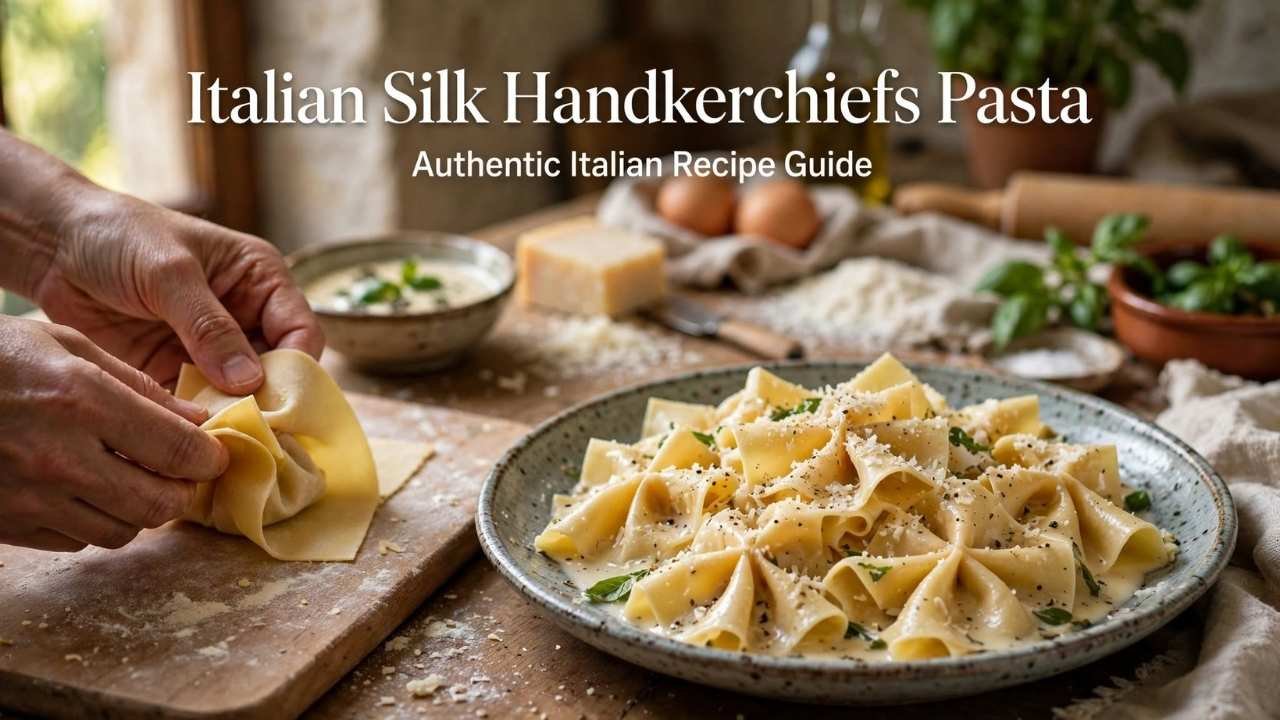
Italian Silk Handkerchiefs Pasta is a delicate type of fresh Italian pasta known for its thin, soft sheets that look like little silk handkerchiefs. In Liguria, this pasta is also called Mandilli de Sea or Mandilli de Saea, while fazzoletti pasta is another name used for its handkerchief-like shape.
Unlike thick pasta shapes, these silky pasta sheets are rolled paper-thin, then cut into large squares or rectangles. Their delicate texture makes them perfect for holding a light, flavorful sauce, especially pesto Genovese.
Making this homemade handkerchief pasta may seem difficult at first, but the process is simple once you understand how to prepare, rest, roll, and cut the pasta dough. In this guide, you’ll learn how to make silk handkerchief pasta, how thin to roll it, how to cook it, and the best sauces to serve with it.
Quick Answer
Italian Silk Handkerchiefs Pasta is a delicate fresh Italian pasta made from thin sheets that resemble silk handkerchiefs. Also known as Mandilli de Sea or fazzoletti pasta, it comes from Liguria and is often served with pesto Genovese. Its soft, paper-thin texture makes it special and perfect for simple sauces. This guide explains how to make silk handkerchief pasta, roll it thin, cook it, and serve it.
What Is Italian Silk Handkerchiefs Pasta?
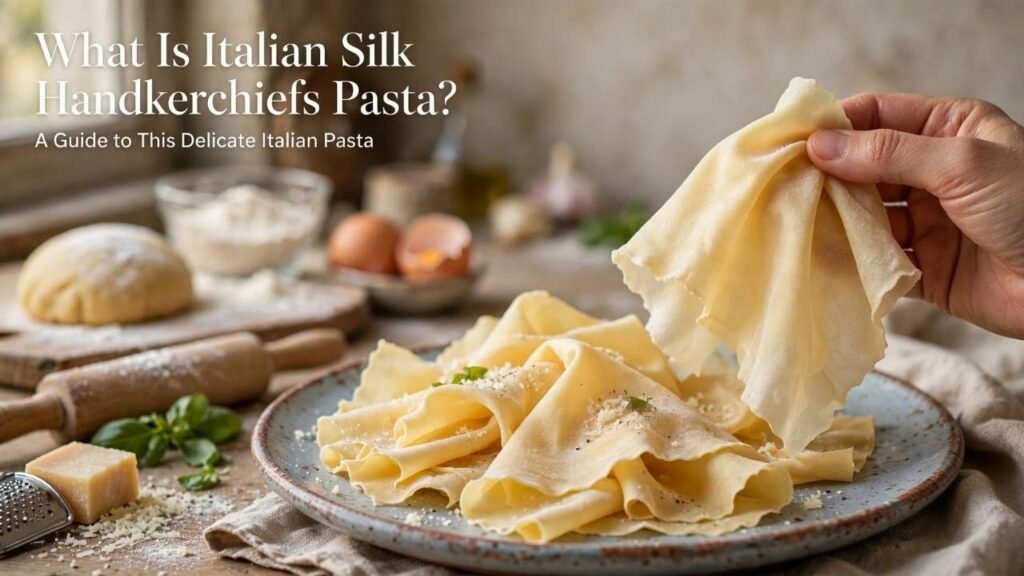
Italian Silk Handkerchiefs Pasta is a type of fresh Italian pasta made from very thin sheets of dough. These sheets are usually cut into large squares or soft rectangles, giving them a shape similar to a small handkerchief.
In Italy, this pasta is known as Mandilli de Sea or Mandilli de Saea, names linked to the local language of Liguria. You may also see it called fazzoletti pasta, which means handkerchiefs. The main feature of this pasta is its paper-thin texture.
Unlike thicker pasta shapes, these delicate pasta sheets cook quickly and become soft and silky. Their flat surface also helps them hold sauces well. Traditionally, silk handkerchief pasta with pesto is a popular pairing, especially with pesto Genovese. Its simple shape, soft texture, and fresh flavor make it a lovely homemade pasta choice.
What Does “Mandilli de Sea” Mean?
Mandilli de Sea is the traditional Ligurian name often used for Italian Silk Handkerchiefs Pasta. The name refers to the pasta’s thin, delicate shape, which looks much like a small silk handkerchief. In the local language, “mandilli” is linked with the idea of handkerchiefs, while “sea” refers to silk.
This simple name tells you a lot about the pasta before you even cook it. The sheets are meant to be very thin, soft, and light, rather than thick like some other fresh pasta shapes. You may also find the pasta called Mandilli de Saea or fazzoletti pasta in recipes and food guides.
These names can vary because of regional language and cooking traditions. Knowing these terms is helpful when searching for a Mandilli de Sea recipe or learning more about traditional Ligurian pasta.
Where Does Silk Handkerchief Pasta Come From?
Silk handkerchief pasta comes from Liguria, a region in northwestern Italy known for fresh pasta, herbs, seafood, and pesto. It is closely linked with Genoa, the region’s well-known coastal city. In local cooking, Mandilli de Sea is valued for its simple shape and very thin texture.
The pasta is also connected with Genovese cuisine, where fresh pasta is often served with flavorful sauces made from local ingredients. One of the best-known pairings is pesto Genovese, made with fresh basil, pine nuts, garlic, olive oil, and cheese.
The light pasta sheets are perfect for catching this rich sauce without feeling too heavy. While recipes can vary from one cook to another, the connection between Ligurian pasta, fresh pasta dough, and basil pesto remains strong. This regional background gives Italian Silk Handkerchiefs Pasta its special character.
What Does Silk Handkerchief Pasta Taste Like?
Silk handkerchief pasta has a mild, fresh flavor that lets the sauce take center stage. Because the pasta sheets are rolled very thin, their texture is soft, light, and almost silky when cooked correctly. Homemade dough made with 00 flour and eggs can have a gentle richness, while an egg-free version may taste simpler and more neutral.
The real flavor often comes from the sauce. When served with pesto Genovese, the delicate pasta picks up the fresh taste of basil, garlic, pine nuts, olive oil, Parmesan, and Pecorino. This creates a balanced dish without making the pasta feel too heavy.
The thin sheets also absorb sauce well, so every bite can have plenty of flavor. If you enjoy fresh pasta, light sauces, and simple Italian cooking, this homemade handkerchief pasta is worth trying at home.
Ingredients for Italian Silk Handkerchiefs Pasta
You only need a few simple ingredients to make Italian Silk Handkerchiefs Pasta at home. For the fresh pasta dough, 00 flour is a popular choice because it helps create smooth and thin pasta sheets. You will also need eggs, egg yolks, olive oil, and salt.
Some versions use water instead of eggs, so you can choose an egg-free pasta dough if preferred. For the traditional sauce, pesto Genovese is the classic choice. It usually includes fresh basil, pine nuts, garlic, extra virgin olive oil, Parmesan, Pecorino, and salt.
These ingredients create a fresh and rich sauce that works well with delicate pasta sheets. Keep your ingredients fresh, especially the basil. Good-quality ingredients can make a big difference in the taste of this simple homemade handkerchief pasta recipe.
What Is the Best Flour for Silk Handkerchief Pasta?
Choosing the right flour can help you make smooth and flexible silk handkerchief pasta. 00 flour is one of the most common choices because it creates a soft dough that is easy to roll into thin pasta sheets.
You can also use semola rimacinata, which gives the dough a slightly firmer texture and more bite. If you do not have Italian flour, all-purpose flour can work for a simple homemade version. The important thing is to create a dough that is smooth enough to roll very thin without tearing.
Some Mandilli de Sea recipes use eggs, while others use only flour and water. Both methods can work, although the final texture will be different. For beginners, 00 flour with eggs is a simple option. It gives you soft, fresh pasta that works especially well with pesto Genovese.
Do You Need a Pasta Machine?
A pasta machine is helpful when making Italian Silk Handkerchiefs Pasta, but you do not need one. Its main job is to help you create very thin and even pasta sheets. Since this pasta should be almost paper-thin, a machine can make the process faster and easier.
Start with a thick setting, then slowly move to thinner settings until the dough reaches the right thickness. If you do not have a pasta roller, you can use a rolling pin instead. Divide the dough into smaller pieces and roll each piece slowly until it becomes very thin.
Try to keep the sheet even from edge to edge. A sharp knife or pasta cutter can then be used to create the handkerchief shape. For beginners, a machine offers more control, but making homemade handkerchief pasta by hand can also be rewarding.
How to Make the Pasta Dough
To make silk handkerchief pasta, start by preparing a smooth and flexible fresh pasta dough. Place your 00 flour on a clean work surface and make a small well in the center. Add the eggs, egg yolks, olive oil, and a little salt. Slowly bring the flour into the wet ingredients until a rough dough forms.
If the dough feels too dry, add a few drops of water. If it feels too sticky, add a small amount of flour. Knead the dough until it becomes smooth and firm but still flexible. This step helps create a dough that can later be rolled into paper-thin pasta sheets.
Once the dough is ready, cover it tightly and let it rest. Resting gives the dough time to relax, making it much easier to roll. A well-prepared dough is the first step toward tender Mandilli de Sea.
How to Knead and Rest the Dough
After mixing your ingredients, the dough needs proper kneading and resting before you start rolling it. Knead the dough on a lightly floured surface until it becomes smooth and elastic. At first, it may feel rough or stiff, but it should become softer as you work it.
Avoid adding too much flour because a very dry dough can be difficult to roll. Once the dough feels smooth, shape it into a ball and wrap it tightly in plastic wrap or cover it with an airtight cover. Let it rest for about 30 minutes at room temperature.
This resting time allows the dough to relax and makes it easier to stretch. Well-rested dough is less likely to shrink while rolling. For homemade silk handkerchief pasta, this small step can make a big difference in getting smooth, thin, and even pasta sheets.
How to Roll the Pasta Very Thin
Rolling the dough thin enough is the most important part of making Italian Silk Handkerchiefs Pasta. Divide the rested dough into small portions so each piece is easier to handle. If you are using a pasta machine, begin with a wider setting and pass the dough through several times. Slowly move to thinner settings until the sheet becomes almost transparent.
If you are using a rolling pin, roll from the center toward the edges and turn the dough often. The goal is a paper-thin pasta sheet, usually around 1 mm or thinner. Try to keep the thickness even because thick areas will need more cooking time.
Use only a light dusting of flour to prevent sticking. Properly rolled silk handkerchief pasta should feel delicate but still be strong enough to handle without tearing.
How to Cut the Pasta Into Handkerchief Shapes
Once your pasta sheet is thin enough, it is time to create the classic handkerchief shape. Lightly dust the sheet with flour and place it on a clean surface. Using a sharp knife, pizza cutter, or pasta wheel, cut the sheet into large squares.
A size of around 15 cm is a useful guide, but you can make the pieces slightly smaller or larger. Some cooks also make long rectangular sheets instead of traditional squares. The goal is to create pieces that are large, thin, and easy to fold.
Do not worry if every piece looks exactly the same. Handmade fazzoletti pasta often has small differences, which can make the dish feel more natural. After cutting, separate the sheets carefully and dust them lightly with flour. Keep them apart until you are ready to cook your Mandilli de Sea.
How Thin Should Silk Handkerchief Pasta Be?
The thinness of the dough is what makes silk handkerchief pasta special. The sheets should be much thinner than many other fresh pasta shapes. A thickness of around 1 mm or thinner is a useful target, although some recipes roll the dough even thinner.
When held up to the light, a properly rolled sheet should look very thin and slightly see-through. It should still be strong enough to lift without breaking. If your pasta is too thick, it may feel heavy and take longer to cook. If it is too thin and fragile, it may tear during cutting or cooking.
The right balance comes with practice. Whether you use a pasta machine or rolling pin, focus on even thickness across the whole sheet. Thin, smooth dough helps create the soft texture that gives Italian Silk Handkerchiefs Pasta its name.
How to Make Traditional Pesto Genovese
Pesto Genovese is one of the best-known sauces for Italian Silk Handkerchiefs Pasta. It has a fresh, rich flavor that works beautifully with delicate pasta sheets. To make it, combine fresh basil leaves, pine nuts, garlic, salt, Parmesan, Pecorino, and extra virgin olive oil.
Traditionally, these ingredients are crushed together until they form a smooth but slightly textured sauce. You can use a food processor for convenience, but avoid blending for too long because too much heat can affect the fresh basil. The finished pesto should be thick enough to coat the pasta but loose enough to spread easily.
Before serving, mix a little pasta cooking water into the pesto. This helps create a smooth sauce that clings to every sheet. The simple combination of fresh basil, cheese, garlic, and olive oil makes pesto alla Genovese a natural partner for Mandilli de Sea.
How to Cook Silk Handkerchief Pasta
Because silk handkerchief pasta is very thin, it cooks much faster than many other fresh pasta shapes. Bring a large pot of water to a full boil and add enough salt to season the water. Carefully place the pasta sheets into the pot, making sure they have enough room to move freely.
Fresh Mandilli de Sea may need only a short cooking time, often around one to three minutes depending on thickness. Instead of relying only on a timer, taste a piece to check for a soft but slightly firm texture.
Avoid overcooking because the delicate sheets can become too soft and tear easily. Before draining, save some pasta cooking water for the sauce. This starchy water helps pesto or another sauce coat the pasta smoothly. Handle the cooked sheets gently when transferring them to your serving bowl.
How to Combine the Pasta With Pesto
Once your silk handkerchief pasta is cooked, it is time to bring everything together. First, place your pesto Genovese in a large bowl and add a small amount of reserved pasta water. Stir until the pesto becomes smooth and easy to spread.
Gently add the hot pasta sheets and carefully toss them with the sauce. Because Mandilli de Sea is very delicate, avoid stirring too hard or the sheets may tear. Add more pasta water if the sauce looks too thick or dry. The goal is to lightly coat every sheet without covering its soft texture with too much sauce.
Finish with a little Parmesan or Pecorino and a few fresh basil leaves if desired. Serve the pasta immediately while it is warm. This simple method creates a flavorful dish of Italian Silk Handkerchiefs Pasta with pesto.
FAQs
What is Italian Silk Handkerchiefs Pasta?
It is a delicate fresh Italian pasta made from very thin sheets, usually cut into large squares. It is also known as Mandilli de Sea or fazzoletti pasta.
Why is it called silk handkerchief pasta?
The name comes from the pasta’s thin, soft sheets, which look like small silk handkerchiefs.
What sauce goes with silk handkerchief pasta?
Pesto Genovese is the classic choice. Its fresh basil flavor works especially well with the delicate pasta.
How thin should silk handkerchief pasta be?
Try to roll the sheets to around 1 mm or thinner. They should look very thin without becoming too fragile.
Can I make it without a pasta machine?
Yes. A rolling pin works well if you roll the dough slowly and evenly.
How long does it take to cook?
Fresh sheets usually cook quickly, often in one to three minutes, depending on thickness.
Can I freeze silk handkerchief pasta?
Yes. Separate the sheets with parchment paper, freeze them, and cook them directly from frozen when needed.
Conclusion
Italian Silk Handkerchiefs Pasta is a simple yet special dish that brings the charm of Ligurian pasta to your kitchen. Also known as Mandilli de Sea or fazzoletti pasta, it gets its name from its thin, soft sheets that resemble silk handkerchiefs.
Making this homemade handkerchief pasta takes some care, especially when rolling the dough very thin, but the result is worth the effort. Pairing the delicate pasta with pesto Genovese creates a fresh and flavorful Italian meal.
Remember to avoid overcooking the sheets and handle them gently when mixing with sauce. Whether you use a pasta machine or rolling pin, you can make this fresh pasta at home with simple ingredients and a little practice. Once you try it, this elegant silk handkerchief pasta recipe may become a favorite for special meals.